Paper Lamp Guide: How to Choose, Hang and Care for Rice Paper Lights
What size your paper lamp needs, which bulb goes inside, how to clean rice paper and how globe, UFO shape and lantern look in a room.
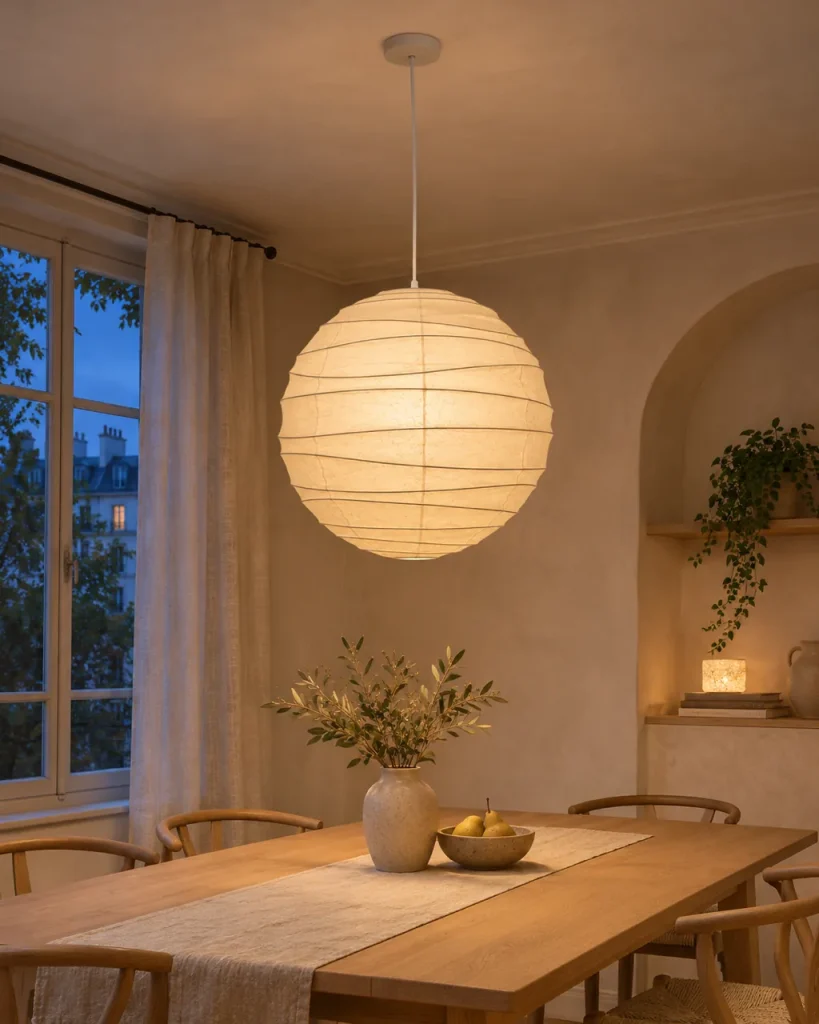
A rice paper lamp spreads light softly and evenly in every direction, because the whole paper shell acts like one big diffuser and no bulb is visible. For a hallway, kids’ room or bedroom, a globe 30 to 40 cm (12 to 16 in) in diameter is usually enough; over the dining table or in the living room, 50 to 60 cm (20 to 24 in) looks right. Fit every paper lamp with a warm white LED (2700 to 3000 K): it barely gets warm, protects the paper and makes the fibers glow golden.
What is a paper lamp, and why is its light so soft?
A paper lamp is made of thin, translucent paper stretched over a frame of ribs. The ribs are wire or bamboo and run horizontally or in a spiral around the body. Its model is the Japanese paper lantern, which used to be lit by candles. From the 1950s, it became a design classic: sculptural lights in paper and bamboo that float in the room like little moons.
So-called rice paper in lamps usually isn’t made from rice, but from long plant fibers, traditionally from the bark of the mulberry tree. The long fibers make the paper tear-resistant and give it the cloudy texture that only shows when the lamp is on.
The light looks soft because it’s spread over a large surface. A paper globe 50 cm (20 in) across has a surface of around 0.8 m² (8.6 sq ft). Each square inch therefore glows only faintly, and the lamp hardly glares, even if you look straight into it. The downside: a paper lamp gives almost no directed light. For reading, cooking or working, you also need a reading or task light.
What shapes of paper lamps are there?
The shape decides where the light falls. Globes glow all around, flat shapes give more light downward and to the sides, and table lamps bring a warm spot of light to eye level.
| Shape | Effect of the light | Especially suited to | Example from our collection |
|---|---|---|---|
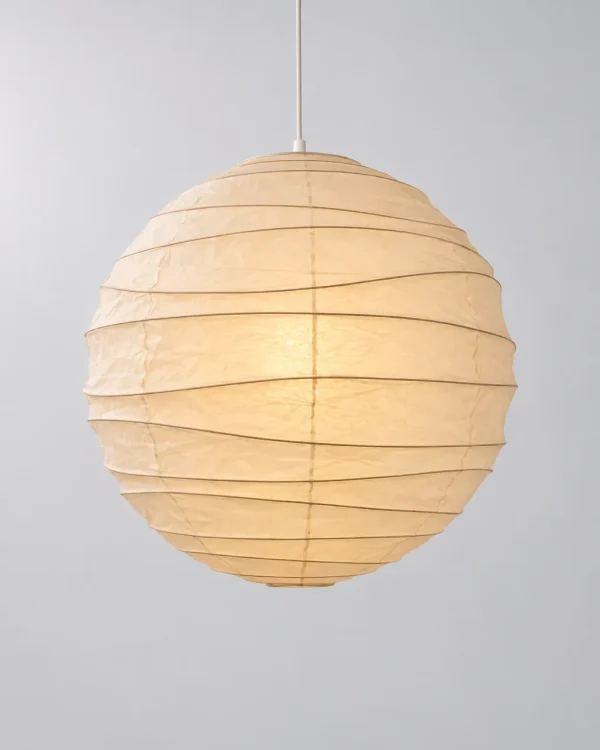
| Globe | even all around, very soft | living room, bedroom, dining table | FREJA, 30, 40, 50 or 60 cm (12, 16, 20 or 24 in) |
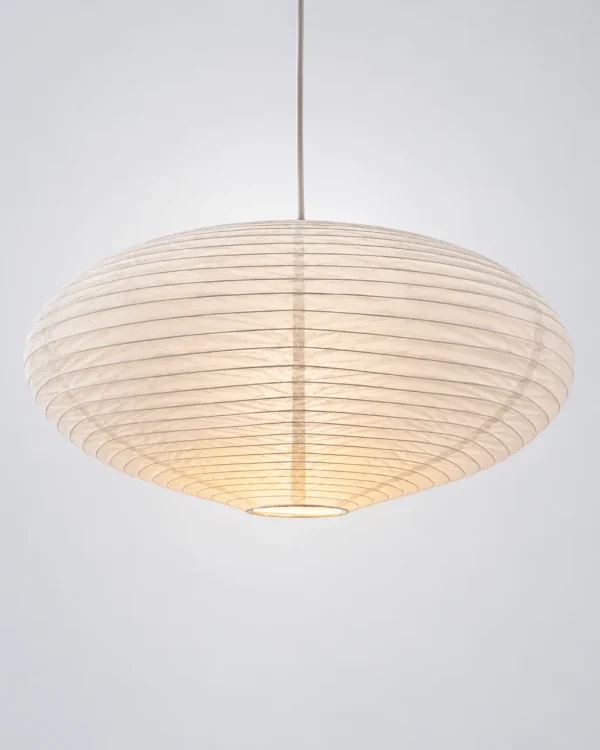
| Flat (UFO shape) | wide, more light downward and to the sides | low ceilings, round dining table | FRIGG, 50 × 23 cm (20 × 9 in) or 60 × 25 cm (24 × 10 in) |
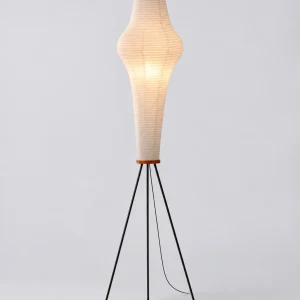
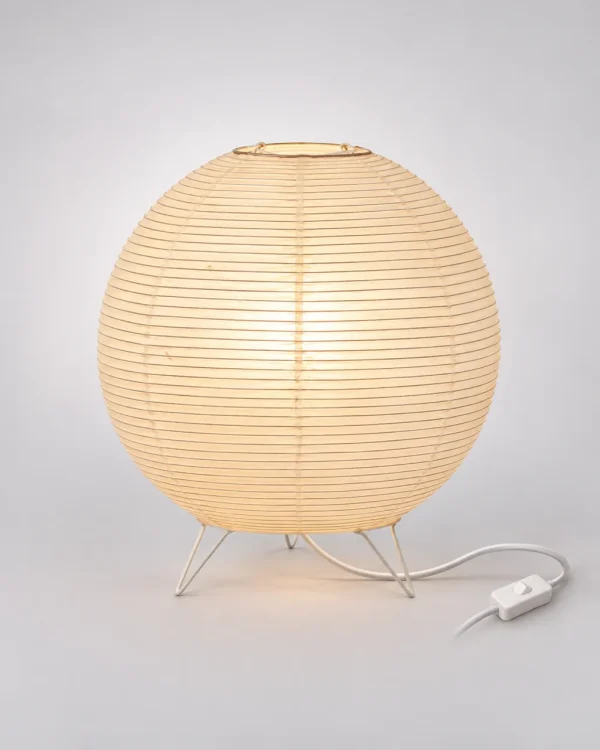
| Lantern on legs | small, warm point of light | nightstand, windowsill, shelf | SIGNE, 24 or 33.5 cm (9.5 or 13 in) tall |
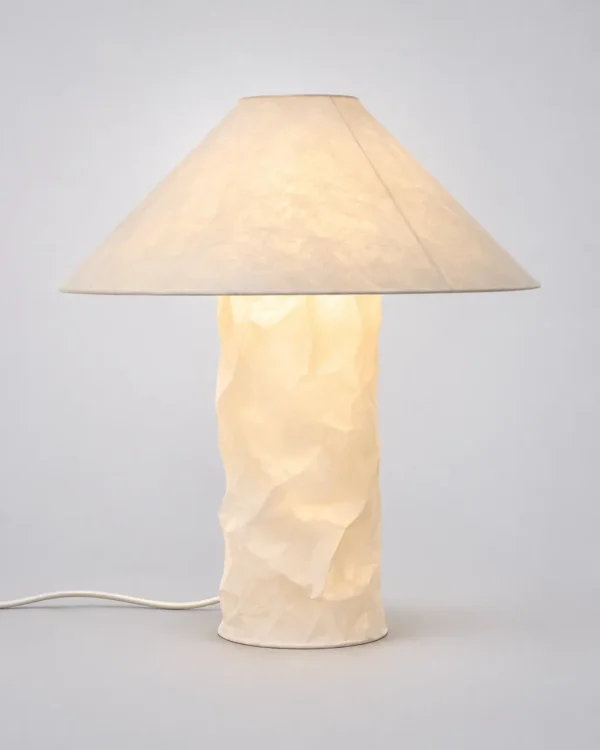
| Mushroom, sculpture | shade glows downward, column shimmers | sideboard, media console, large rooms | SELMA, 50 or 75 cm (20 or 30 in) across |
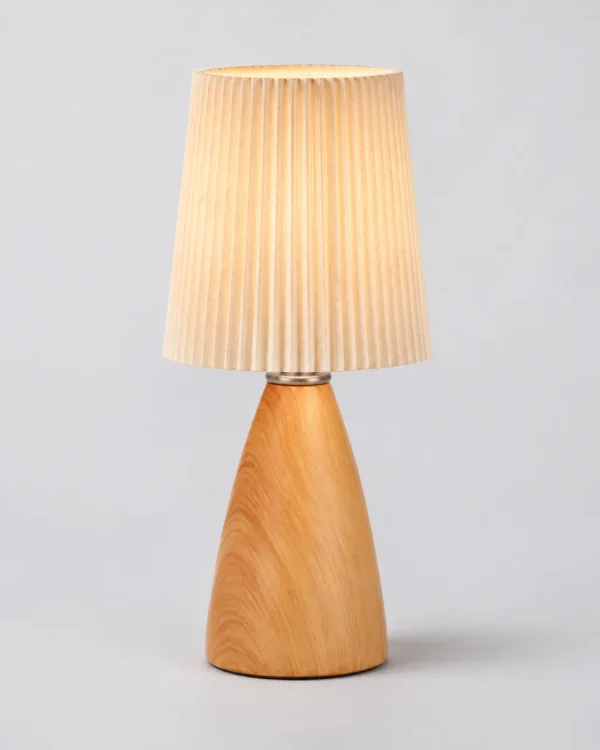
| Pleated | filtered light with fine lines | nightstand, console table, bookshelf | RIIKA, 31 cm (12 in) tall |
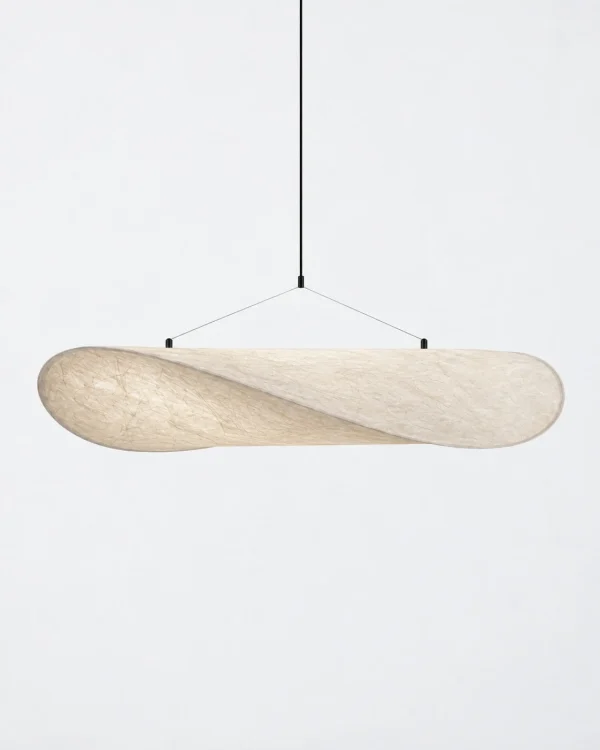
| Organic cloud | broad silhouette, built-in LED | open-plan living areas, sloped ceilings | MOTRA, 40 to 100 cm (16 to 39 in) wide |
You’ll find all our paper models together in the Paper Lamps collection.
 Collection · 7 designsPaper LampsView all 7 designs
How big should a paper pendant lamp be?
If the paper globe is the only light on the ceiling, the proven rule of thumb helps: (room length + room width in meters) × 8 = diameter in centimeters. In a 3 × 4 m (10 × 13 ft) bedroom, that gives around 56 cm (22 in). Paper globes look very light, so you can go to the upper end. A globe that’s too small quickly looks lost, while a large one still feels airy. We explain the formula in detail in our guide Living Room Ceiling Lights.
| Use | Diameter | Height |
|---|---|---|
| Hallway, alcove, storage room | 30–40 cm (12–16 in) | lower edge at least 2.00 m (6 ft 7 in) above the floor |
| Bedroom or kids’ room, 10–14 m² (108–150 sq ft) | 40–50 cm (16–20 in) | lower edge at least 2.00 m (6 ft 7 in) where people walk |
| Living room, 18–25 m² (195–270 sq ft) | 50–60 cm (20–24 in) or a cluster of 2–3 globes | lower edge 2.00–2.20 m (6 ft 7 in to 7 ft 3 in), lower over an armchair |
| Dining table for 4 | 40–50 cm (16–20 in) | 60–75 cm (24–30 in) above the tabletop |
| Dining table 180–220 cm (71–87 in) long | 2 × 40–50 cm (16–20 in) or one flat shape at 60 cm (24 in) | 60–75 cm (24–30 in) above the tabletop |
| Ceiling under 2.40 m (7 ft 10 in) | flat shape, shade no more than 25 cm (10 in) high | as high as possible, shorten the cord |
Over the dining table, the same rule applies as for any pendant: 60 to 75 cm (24 to 30 in) between the tabletop and the lower edge. Keep the diameter at least 30 cm (12 in) narrower than the table, so no one bumps into it when getting up. All the details are in our guide Pendant Lights Over the Dining Table.
FREJA is the classic rice paper globe lamp: cream rice paper over slightly irregular ribs, in four diameters from 30 to 60 cm (12 to 24 in). According to the specs, a warm white 3000 K LED bulb is included. FRIGG is the flat version, 50 × 23 cm (20 × 9 in) or 60 × 25 cm (24 × 10 in), with an E26 socket; its low height means it also fits under low ceilings. MOTRA is made of technical paper, fiberglass and steel, has a built-in LED with three color temperatures and a 150 cm (59 in) height-adjustable cord, and suits sloped ceilings up to 30°.
Paper table lamp or floor lamp: what goes where?
As a table lamp, a paper lamp brings light to seated eye level, exactly where it feels coziest. Our Paper Table Lamps come in three clearly different sizes:
- SIGNE stands like a small lantern on white wire legs. The teardrop shape measures 22 × 33.5 cm (9 × 13 in), the globe 24 × 24 cm (9.5 × 9.5 in). E12 socket, LED included, switch on the cord. Ideal for the nightstand, windowsill and shelf.
- RIIKA combines a pleated rice paper shade (16 cm / 6 in across) with a ceramic base in a wood look. It’s 31 cm (12 in) tall, needs only 10 cm (4 in) of surface space and comes with an LED.
- SELMA is a large mushroom lamp made entirely of paper over a metal frame: 50 × 51 cm (20 × 20 in) or 75 × 76 cm (30 × 30 in). The crinkled column glows while the shade directs the light downward. E26, bulb not included.
You’ll find more ideas for mushroom shapes in our guide How to Style Mushroom Lamps.
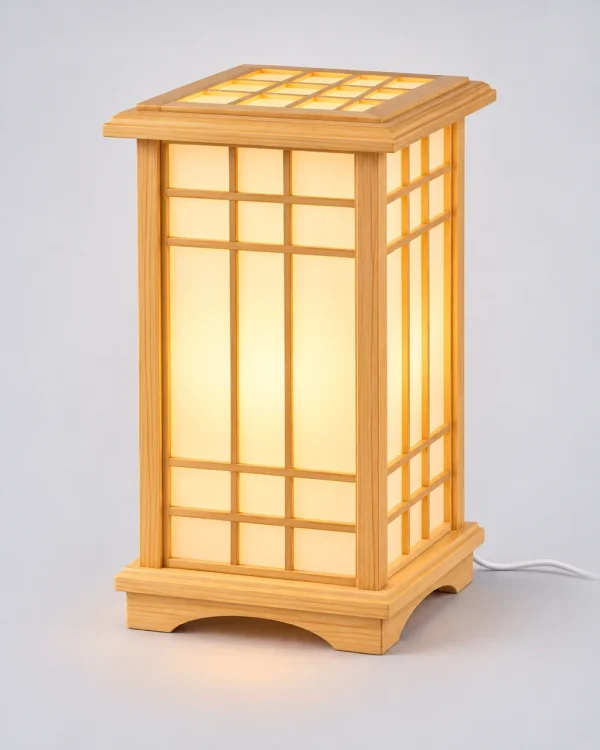
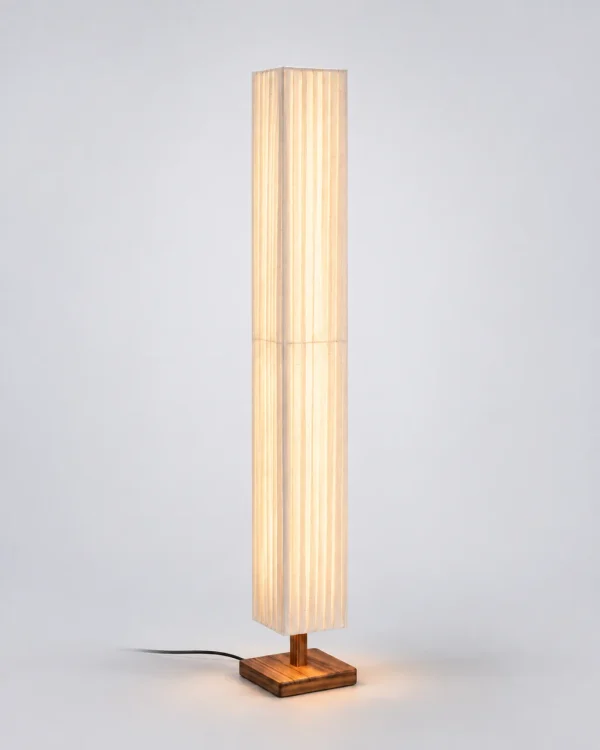
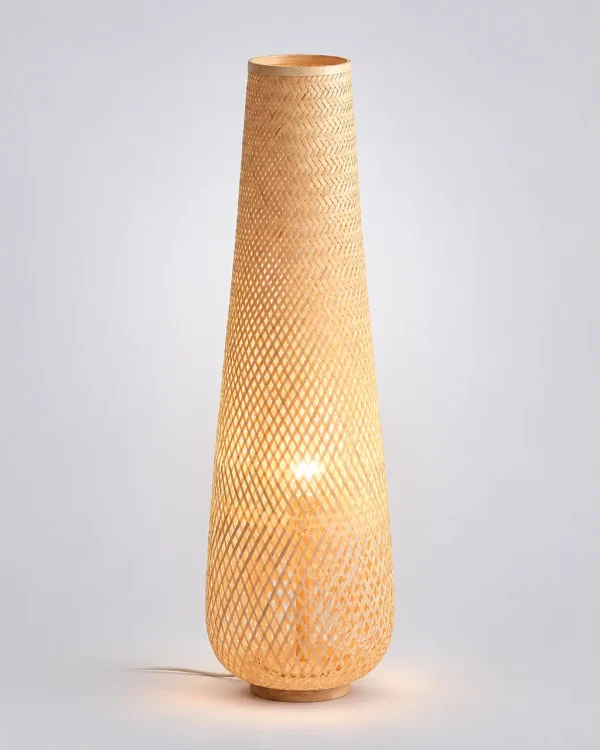
Paper floor lamp: freestanding paper lights on the floor are delicate, because they stand where people walk and easily get bumped. A sturdy option with similarly soft light is KIRA, a Japanese floor lantern in light wood with a shoji grid. Instead of paper, milky acrylic panels diffuse the light. It’s 45, 60 or 90 cm (18, 24 or 35 in) tall with a 25 × 25 cm (10 × 10 in) footprint. The slim fabric column HEDA (14 cm / 5.5 in wide, 120 or 160 cm / 47 or 63 in tall) and the bamboo light ARNE (93 cm / 37 in, 28 cm / 11 in across) bring the same lantern mood to corners where a paper globe would be too wide.
Which bulb goes in a paper lamp?
- Always LED. An 806-lumen LED bulb uses only about 8 W and produces much less heat than a 60 W incandescent bulb of similar brightness.
- Warm white at 2700 to 3000 K. Cream paper tints the light slightly warmer still. Neutral white at 4000 K quickly looks pale behind paper.
- Frosted or opal bulb. A clear bulb draws a bright spot on the paper; a frosted bulb makes the whole surface glow evenly.
- Brightness by size: for globes 30 to 40 cm (12 to 16 in) across, 470 to 806 lumens is enough; for 50 to 60 cm (20 to 24 in), choose 806 to 1,521 lumens.
- Respect the maximum wattage. The rating on the socket always applies. The bulb sits in the center and doesn’t touch the paper.
If you want to dim, you need a dimmable LED bulb and a compatible dimmer. Which kelvin values go where is shown in our guide How to Choose Color Temperature and Lumens. How built-in LEDs and dimmers work together is explained in our guide Dimmable LED Ceiling Lights.
How do you clean and care for a paper lamp?
Rice paper is sturdier than it looks, but it can’t take water. With these rules, your paper lamp will stay beautiful for years:
- Dust it regularly: once a month, work from top to bottom along the ribs with a wide, soft brush or a feather duster. A hair dryer on the cold setting blows dust out of the grooves.
- No damp cloth: water makes the paper ripple and leaves rings. At most, you can carefully lighten marks with a soft eraser.
- Keep it away from steam and grease: don’t hang the lamp directly above the cooktop or kettle. Greasy vapor settles into the paper.
- No harsh sun: UV light darkens paper over time. In front of a south-facing window, it ages faster.
- Patch small tears: glue a piece of thin Japanese tissue or silk paper on from the inside with a little paste. Against the light, the spot is barely visible afterward.
Where does a paper lamp work, and where doesn’t it?
Paper lamps are light, shatterproof and glare-free. That makes them suitable for almost any living space:
- Bedroom: a globe 40 to 50 cm (16 to 20 in) across gives calm general lighting, complemented by a small table lamp on the nightstand. More in our guide Bedroom Lighting.
- Kids’ room: paper is light and can’t shatter. How to combine general lighting, night light and reading light is covered in our guide Kids’ Room Lighting.
- Living and dining room: a large globe or a flat UFO shape over the table, plus a paper table lamp on the sideboard.
- Hallway: globes 30 or 40 cm (12 or 16 in) across, several in a row, 1.5 to 2 m (5 to 6.5 ft) apart.
A paper lamp is not suitable for the bathroom, outdoors or the spot directly above the stove. Moisture and grease damage the paper.
How do you style paper lamps in Japandi and wabi-sabi rooms?
Paper is the signature material of the Japandi style. It goes with light wood, linen, ceramics, travertine and rattan. Three rules help when combining:
- Clusters in three sizes: hang globes of 30, 40 and 50 cm (12, 16 and 20 in) with 15 to 25 cm (6 to 10 in) of height difference in a corner or over a kitchen island. That looks livelier than three identical globes.
- Repeat shapes: the globe on the ceiling and the small SIGNE globe on the sideboard speak the same language.
- Mix natural fibers: paper next to rattan or bamboo looks calm as long as the tones stay warm. You’ll find ideas in our guides Rattan Lamps and Japandi and Wabi-Sabi Lamps.
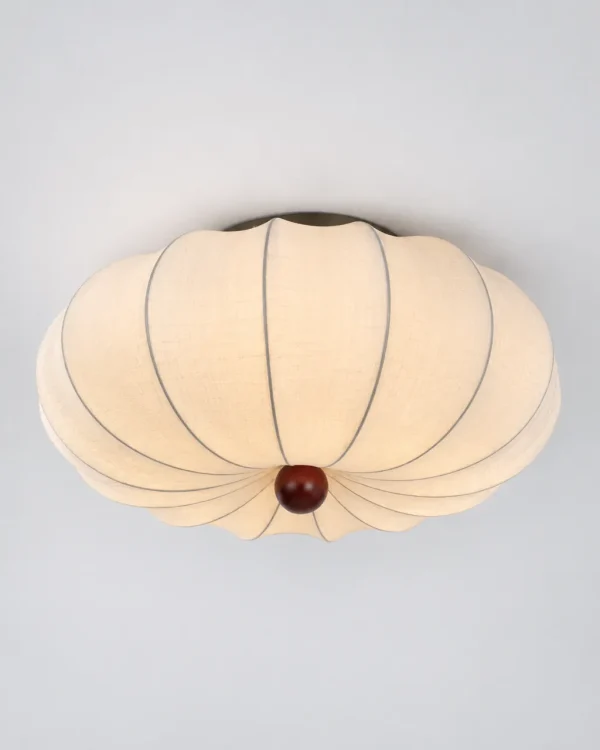
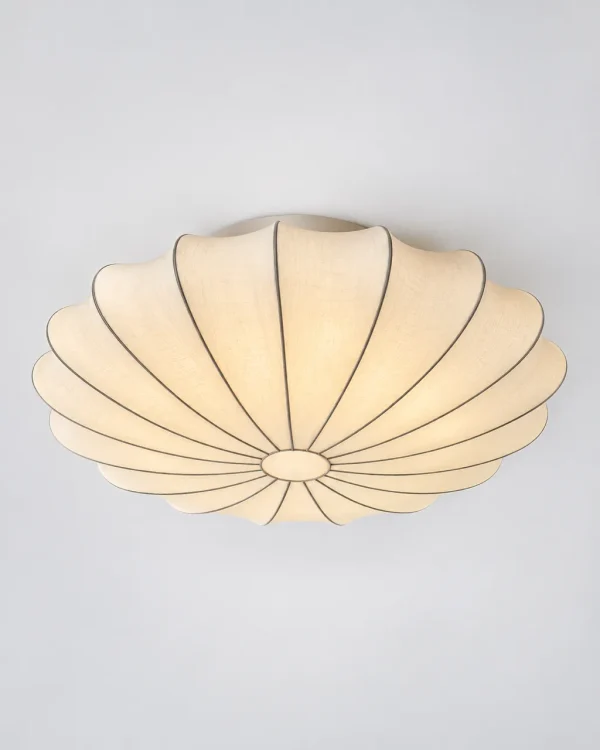
Where paper is too delicate, for example in a home with pets, silk and pleated fabric give a similar effect. KLARA is a rounded silk shade in ivory (40, 50 or 60 cm / 16, 20 or 24 in across) with a warm white LED included. KELDA stretches cream silk over 15 ribs (40 × 20 cm / 16 × 8 in to 60 × 25 cm / 24 × 10 in). LILJA is a flat, radially pleated fabric shade from 50 to 100 cm (20 to 39 in) across.
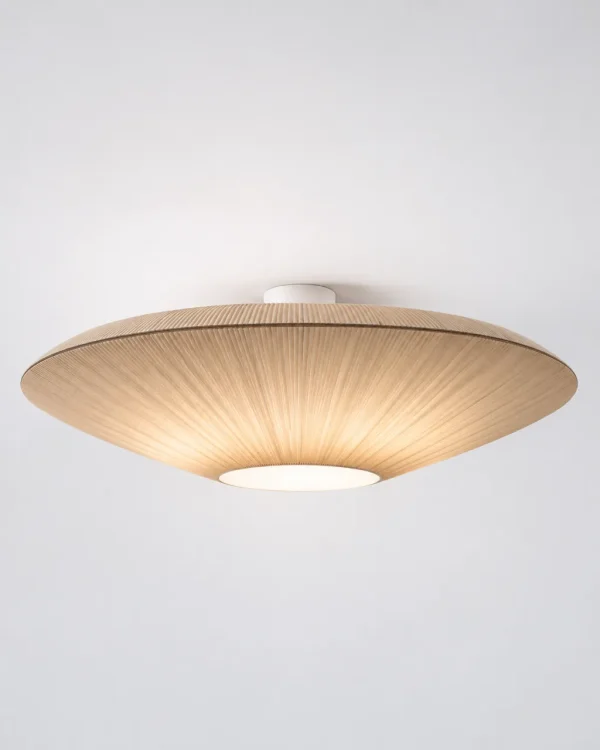
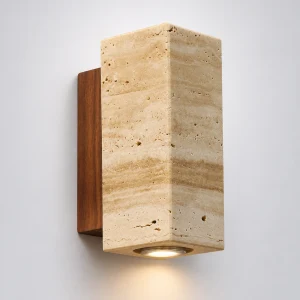 Collection · 18 designsWabi-Sabi LampsView all 18 designs
Paper lamps give soft general lighting. How to combine them with wall sconces and floor lamps into an atmospheric layer of light is shown in our guide Indirect Lighting in the Living Room.
Frequently asked questions
What is the difference between a paper lamp and a rice paper lamp?
In everyday use, both terms mean the same thing: a light with a shade of thin, translucent paper. Rice paper is the common name for fiber-rich paper, usually made from plant fibers such as mulberry bark. It’s more tear-resistant than ordinary paper and shows a cloudy texture when lit.
Are paper lamps a fire hazard?
With an LED bulb that sits in the center and doesn’t touch the paper, the shell barely gets warm. Stick to the maximum wattage listed for the socket, and don’t use high-wattage incandescent or halogen bulbs. Candles never belong in a paper lamp.
How do I clean a paper lamp?
Remove dust dry with a soft brush, a feather duster or a hair dryer on the cold setting. Don’t use water or a damp cloth, because the paper ripples and gets rings. Patch small tears from the inside with thin Japanese tissue and a little paste.
How big should a paper lamp be in the living room?
Add room length and room width in meters and multiply by 8; the result is the diameter in centimeters. For a 4 × 5 m (13 × 16 ft) living room, that’s around 70 cm (28 in). Alternatively, hang two or three globes of 40 to 60 cm (16 to 24 in) as a cluster.
How bright is a paper lamp?
The brightness depends on the bulb, not the paper. For a globe 30 to 40 cm (12 to 16 in) across, 470 to 806 lumens is enough; for 50 to 60 cm (20 to 24 in), 806 to 1,521 lumens works well. The paper swallows a little light, but spreads the rest very evenly.
Can I use a paper lamp in the bathroom or outdoors?
No, paper can’t handle moisture or rain. In the bathroom and outdoors, it ripples and loses its shape. Outdoors, you need a light with a suitable protection rating, like our outdoor wall lights.
Does rice paper turn yellow over time?
Direct sun darkens paper a little over the years. So don’t hang the lamp in full midday sun in front of a south-facing window. A slight patina makes the light warmer and, in the wabi-sabi style, is part of the material’s character.