Japandi Lamp and Wabi-Sabi Lamp: Lighting for Calm Rooms
Travertine, rice paper, silk and wood: how to recognize a wabi-sabi lamp, how big a Japandi light should be and how to plan the lighting.
A wabi-sabi lamp shows the beauty of imperfection, with porous travertine, textured ceramic, rice paper or silk, organic shapes and a soft, warm light that glows rather than shines, while a Japandi lamp combines this Japanese calm with Scandinavian clarity: light wood, straight lines and paper or fabric shades. For both styles, the rule is the same: warm white light at 2700 to 3000 kelvin, hidden bulbs and several low points of light instead of one bright ceiling light.
In this guide you’ll learn how to tell the two styles apart, which materials really suit wabi-sabi, how big a Japandi ceiling light should be and how to bring floor, table and wall lamps together into a calm lighting plan.
Wabi-sabi or Japandi: what’s the difference?
Wabi-sabi is a Japanese aesthetic that values transience, patina and irregularity. Japandi is an interior style that combines Japanese and Scandinavian design. Both share a love of natural materials, but they set different accents:
| Feature | Wabi-sabi | Japandi |
|---|---|---|
| Shapes | organic, asymmetric, as if grown | clean, geometric, pared back |
| Surfaces | rough, porous, textured, matte | smooth to finely grained |
| Materials | travertine, ceramic, clay and stone looks, silk | light wood, rice paper, bamboo, linen |
| Colors | earth tones, sand, cement gray, brown | cream, oak, black as an accent |
| Light | muted, downward, shadows welcome | even, diffused, through paper or fabric |
| Typical light | stone mushroom lamp, pebble shape, ceramic shade | lantern with shoji grid, paper globe, wooden tripod |
In practice, the styles mix: a Japandi living room with oak furniture gets a wabi-sabi note from a travertine light, and a wabi-sabi bedroom looks brighter and lighter with a paper lamp. The Wabi-Sabi Lamps collection shows a selection of both directions.
Which materials make a wabi-sabi lamp?
The material decides how the light feels. Stone lets no light through and sends it downward; paper and silk glow themselves; ceramic reflects warmly.
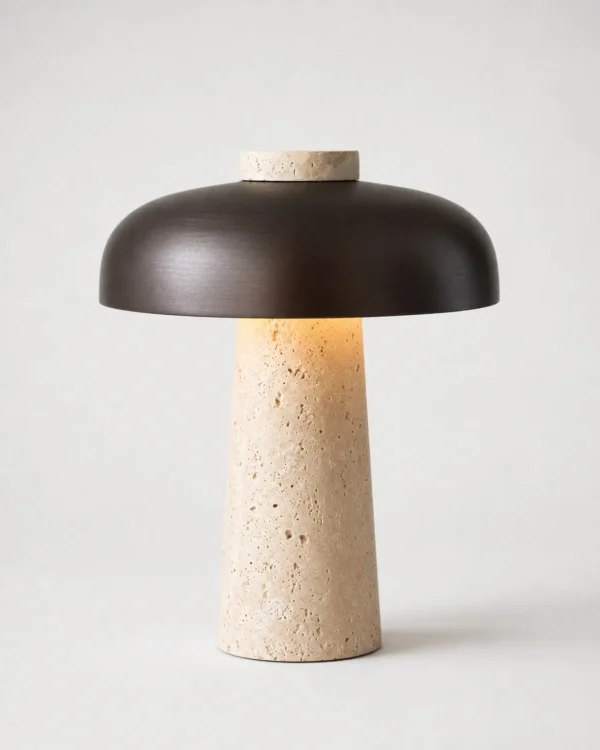
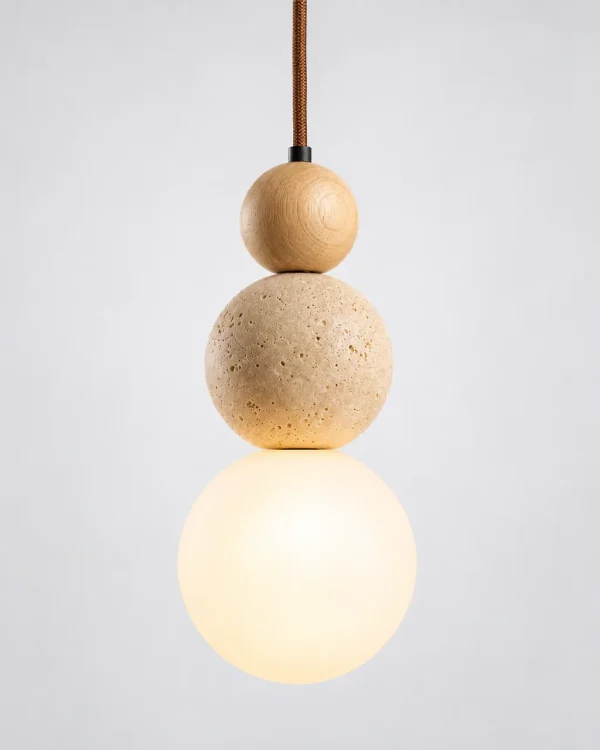
- Travertine: the porous natural stone, with its holes and layers, is the wabi-sabi material par excellence. SAGAR is a mushroom lamp with a travertine base and an enameled metal shade, 31 cm (12 in) tall, with a 25 cm (10 in) shade, weighing around 3.8 kg (8.4 lb). HANNE stacks wood, travertine and a matte glass globe (11 cm / 4 in across); the 7 W warm white G9 LED bulb is included.
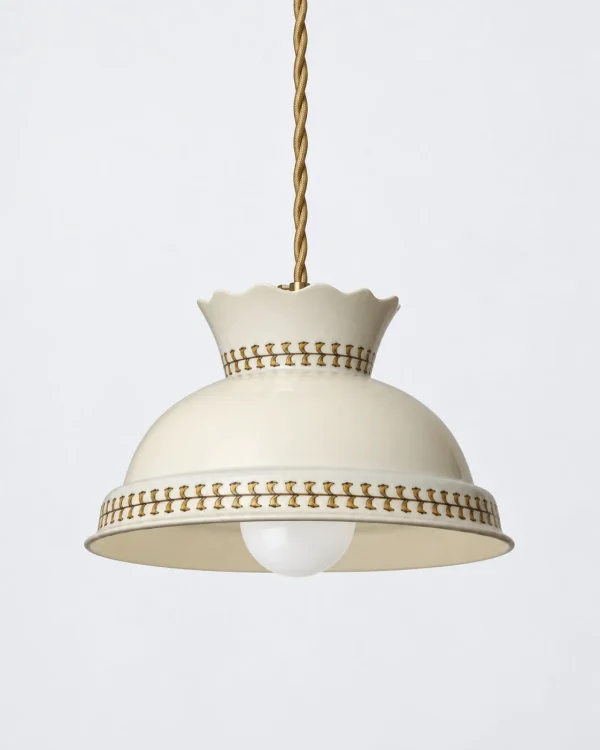
- Textured ceramic: GODIA has a glazed ceramic shade 22 cm (9 in) across with a lively surface and brass details, 200 cm (79 in) cord, adjustable in height.
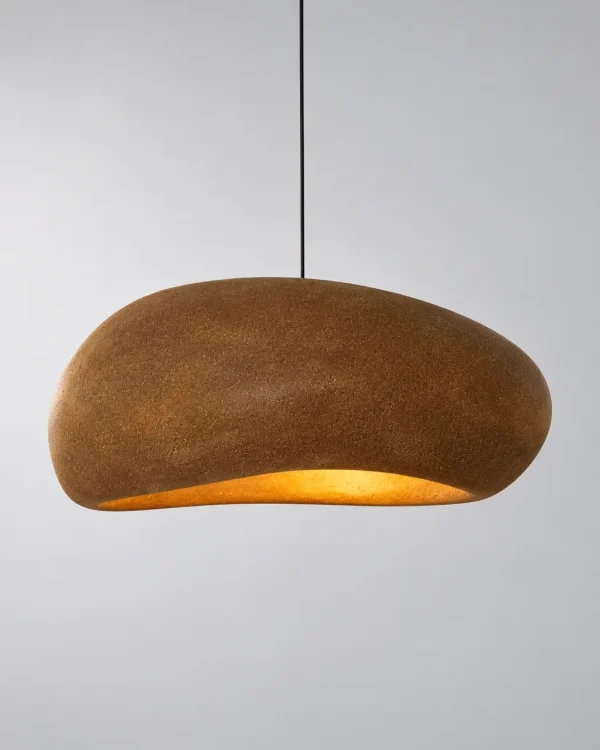
- Stone look: FLORA and LENA look like washed pebbles, but are made of lightweight plastic with a mineral texture. The advantage: even large sizes up to 80 cm (31 in) wide stay relatively light.
You’ll find everything about real stone, weight and care in our guide Travertine, Alabaster and Marble Lamps.
Japandi ceiling light and pendant: how big should they be?
For a Japandi ceiling light, the proven formula applies: (room length + room width in meters) × 8 = diameter in centimeters. It suits lights with volume, such as paper globes or silk shades. Flat models can be about a third smaller. The full explanation is in our guide Living Room Ceiling Lights.
| Room (example) | Area | Pendant, paper or silk shade | Flush ceiling light |
|---|---|---|---|
| Bedroom 3 × 3.5 m (10 × 11.5 ft) | approx. 10.5 m² (113 sq ft) | 50 cm (20 in) across | 30–40 cm (12–16 in) across |
| Home office 3 × 4 m (10 × 13 ft) | 12 m² (130 sq ft) | 50–60 cm (20–24 in) across | 35–40 cm (14–16 in) across |
| Living room 3.5 × 5 m (11.5 × 16 ft) | 17.5 m² (190 sq ft) | 60–70 cm (24–28 in) across | 45–50 cm (18–20 in) across |
| Living room 4 × 5.5 m (13 × 18 ft) | 22 m² (237 sq ft) | 70–80 cm (28–31 in) across | 50–60 cm (20–24 in) across |
| Over the dining table | table 90 × 180 cm (35 × 71 in) | 50–60 cm (20–24 in) on its own, or 2–3 small pendants | not recommended |
Over the dining table, the lower edge hangs 60 to 75 cm (24 to 30 in) above the top; more in our guide Pendant Lights Over the Dining Table.
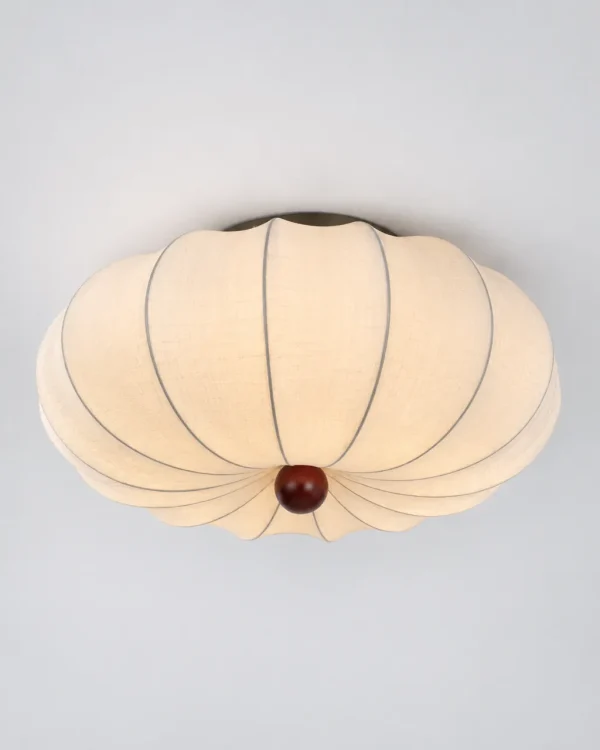
- KLARA is a rounded silk shade in ivory with dark ribs and a reddish-brown knob, 40, 50 or 60 cm (16, 20 or 24 in) across, warm white LED (3000 K) included. A lantern for the ceiling.
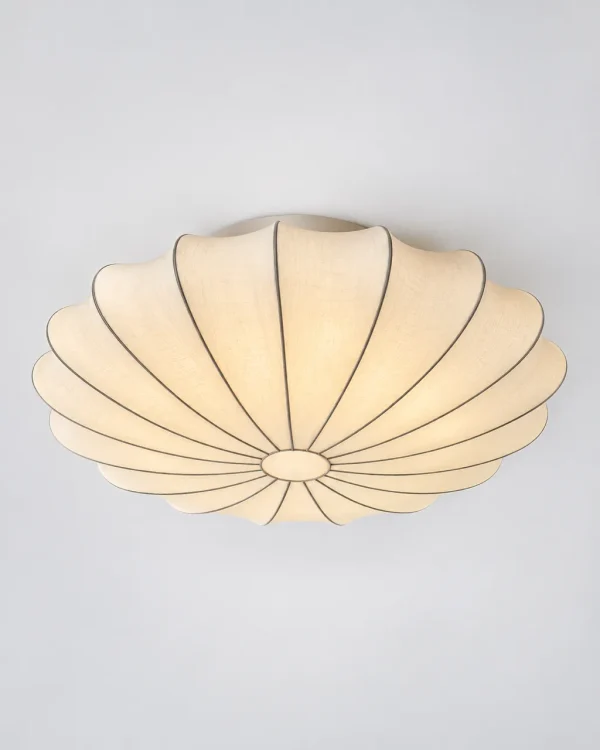
- KELDA stretches cream silk over metal ribs: 40 × 20 cm (16 × 8 in), 50 × 23 cm (20 × 9 in) or 60 × 25 cm (24 × 10 in), so it stays restrained even with lower ceilings.
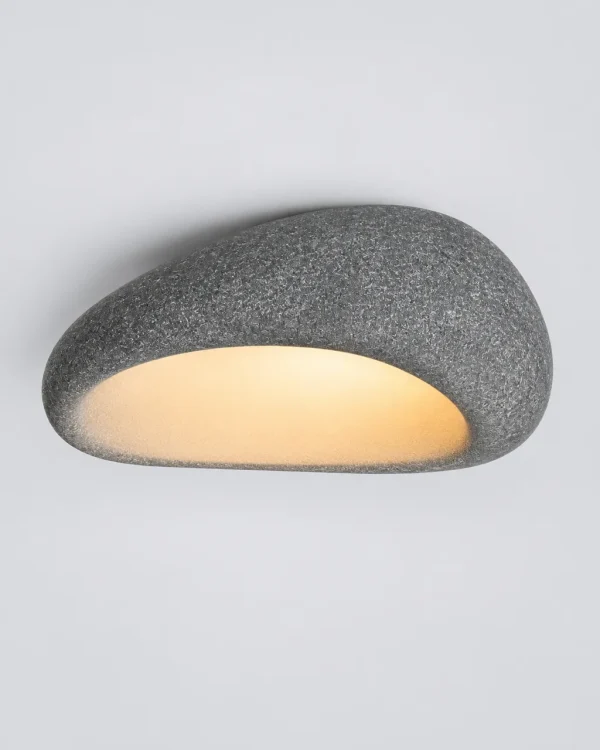
- LENA is the pebble shape, 30 to 80 cm (12 to 31 in) wide, in white, gray or speckled; the light comes out of an oval opening on the underside.
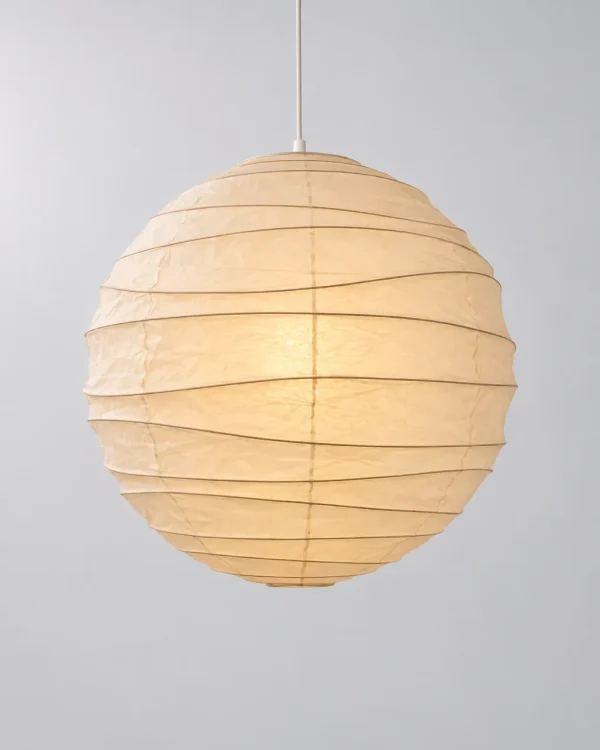
- FREJA is the classic rice paper globe with slightly irregular ribs, 30 to 60 cm (12 to 24 in) across, warm white LED (3000 K) included.
If you’re looking for a Japandi-style pendant light over a kitchen island or dining table, KIIA is a dome of fluted glass with a wooden cap (21.5, 25 or 30 cm / 8.5, 10 or 12 in across, 200 cm / 79 in cord). Paper shades are covered in depth in our guide Rice Paper Lamps, and natural weave in our guide Rattan Lamps.
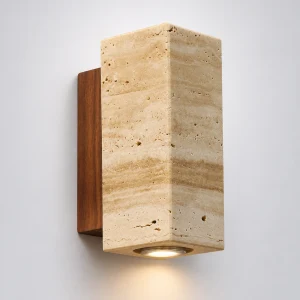 Collection · 18 designsWabi-Sabi LampsView all 18 designs
Japandi floor lamp: lantern, bamboo or wooden tripod?
A Japandi floor lamp is rarely tall and bright. Typical are low lanterns that lay a warm pool of light on the floor and wall beside a sofa or futon, or slim fabric cylinders on wooden legs.
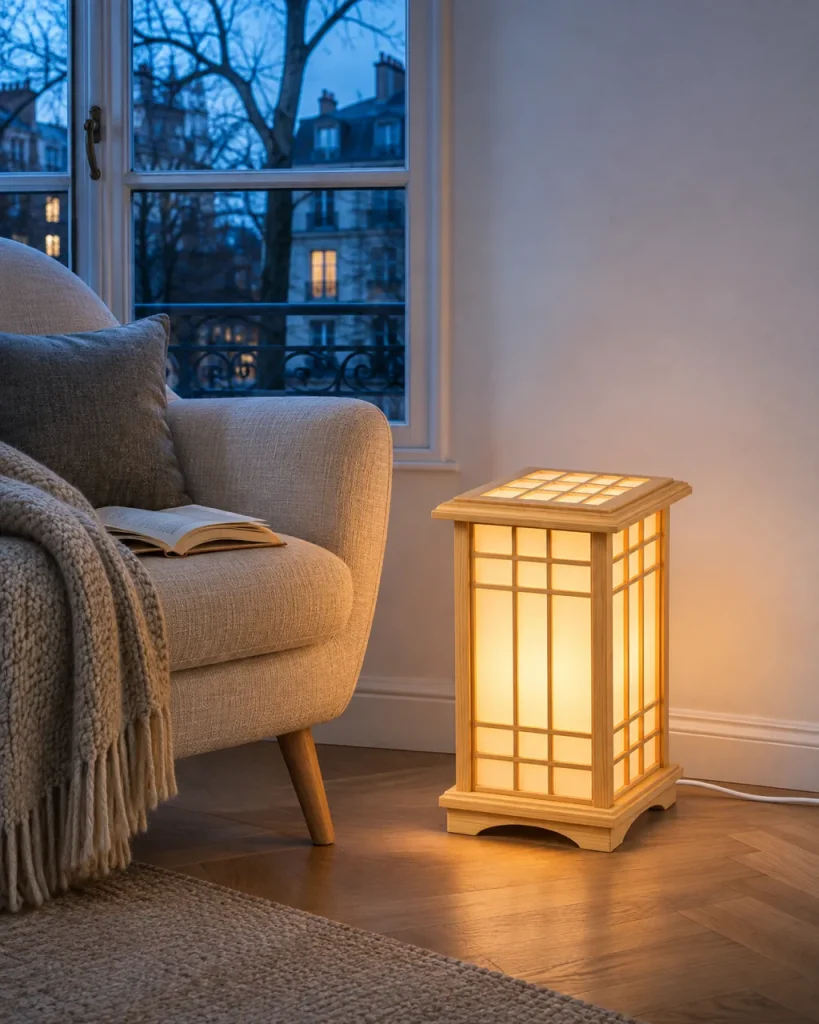
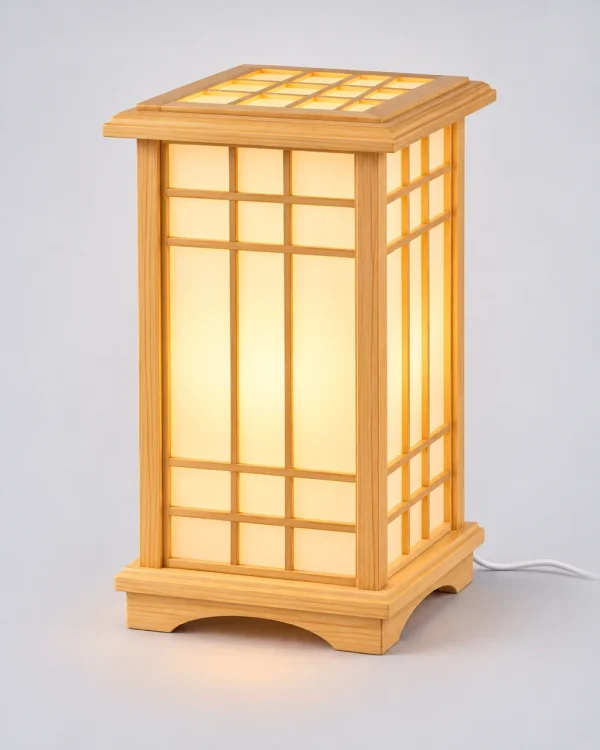
- KIRA is a Japanese wooden lantern with a shoji grid and milky acrylic panels, 45, 60 or 90 cm (18, 24 or 35 in) tall, with a 25 × 25 cm (10 × 10 in) footprint. The 45 cm (18 in) version belongs next to a low bed, the 90 cm (35 in) version in the corner by the sofa.
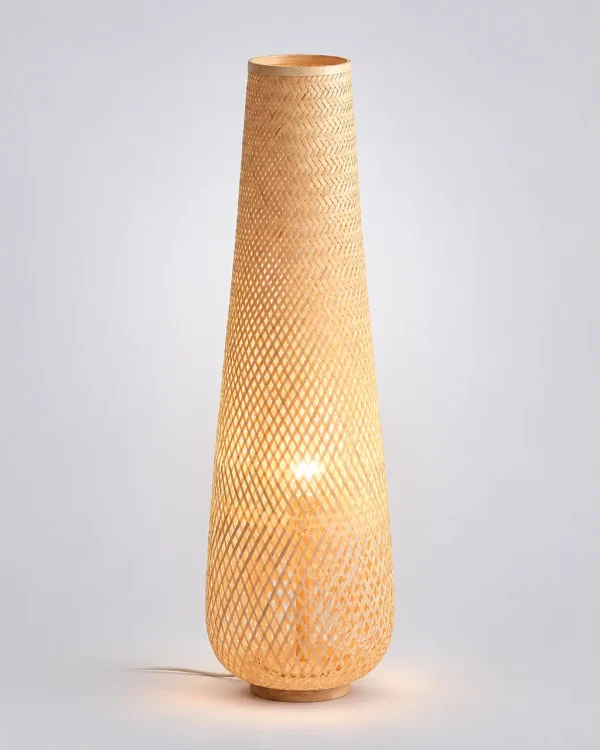
- ARNE is made of diamond-woven bamboo in natural or black, 93 cm (37 in) tall, with a body 28 cm (11 in) across. The weave throws a pattern on the wall.
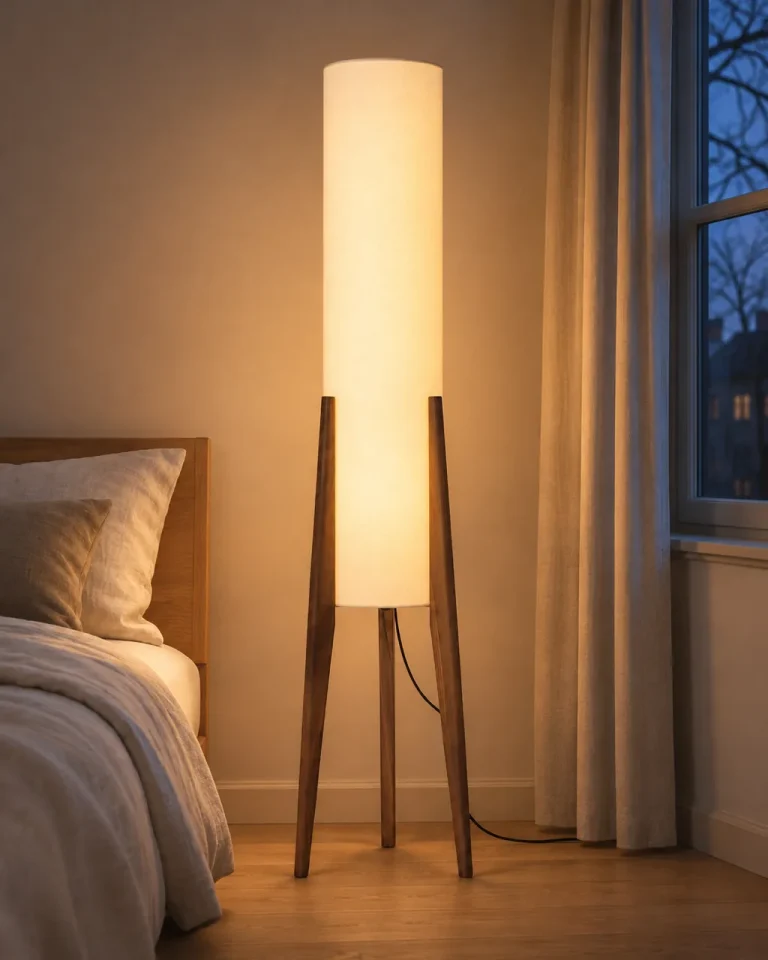
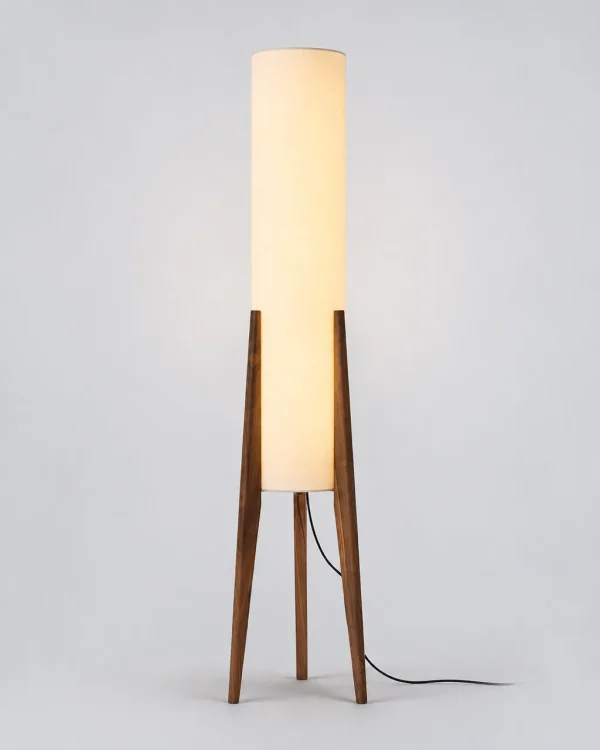
- MAJA sets an 85 cm (33 in) tall fabric cylinder (17.5 cm / 7 in across) on three wooden legs, 128 cm (50 in) tall overall. It needs only 29 cm (11 in) of floor space.
- INGA is a ribbed fabric column in cream on a wooden base, 120 cm (47 in) tall, with a 16 cm (6 in) wide base.
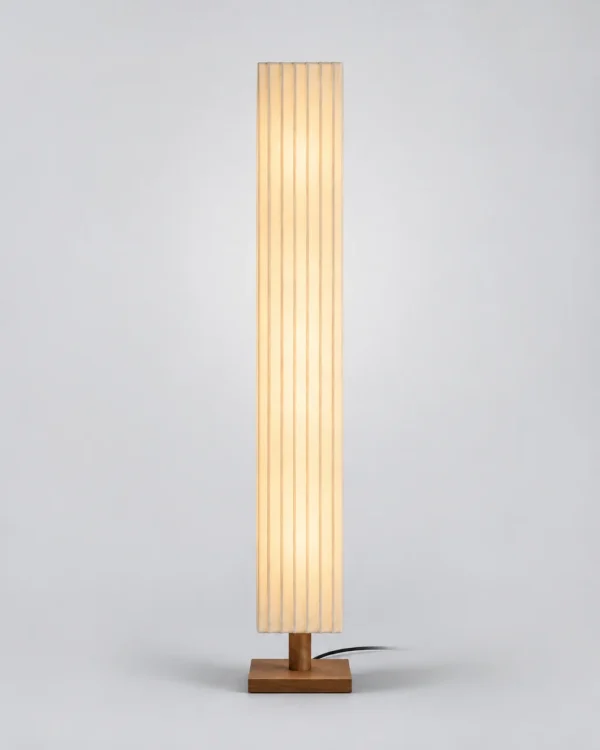
You’ll find more models with wood under Wood Floor Lamps.
Japandi table lamps and wall sconces: what goes where?
A Japandi-style table lamp stands on a sideboard, nightstand or media console and should hide the bulb. On a nightstand, a height of 30 to 45 cm (12 to 18 in) is enough; on a sideboard, it can be more.
- RIIKA combines a pleated rice paper shade (16 cm / 6 in across, 31 cm / 12 in tall) with a ceramic base in a wood look, LED included. Ideal for narrow nightstands.
- WOODI is a cordless rechargeable lamp in solid wood (beech or sapele), 37.5 cm (15 in) tall and only around 500 g (1.1 lb). It moves from the desk to the dining table.
- PIRJO and ARLA are small travertine wall sconces, 16 cm (6 in) tall, as a block (6.5 × 6.5 cm / 2.6 × 2.6 in) or cylinder (6.5 cm / 2.6 in across), with light pointing down. PIRJO has a white or wood-colored bracket and a 3000 K LED; ARLA a bracket in light wood, walnut or white metal.
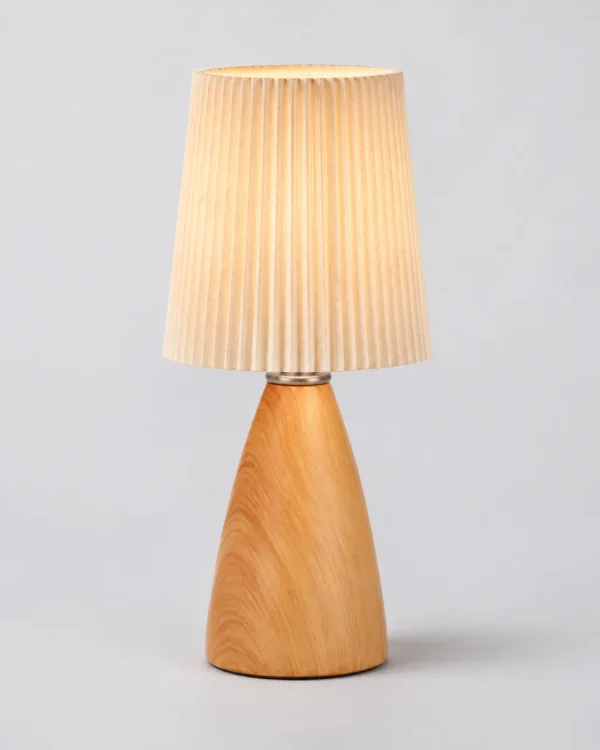
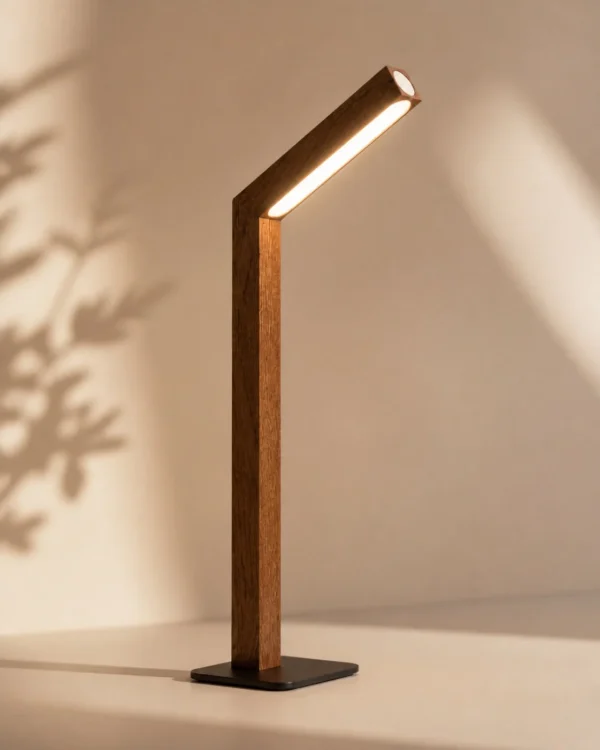
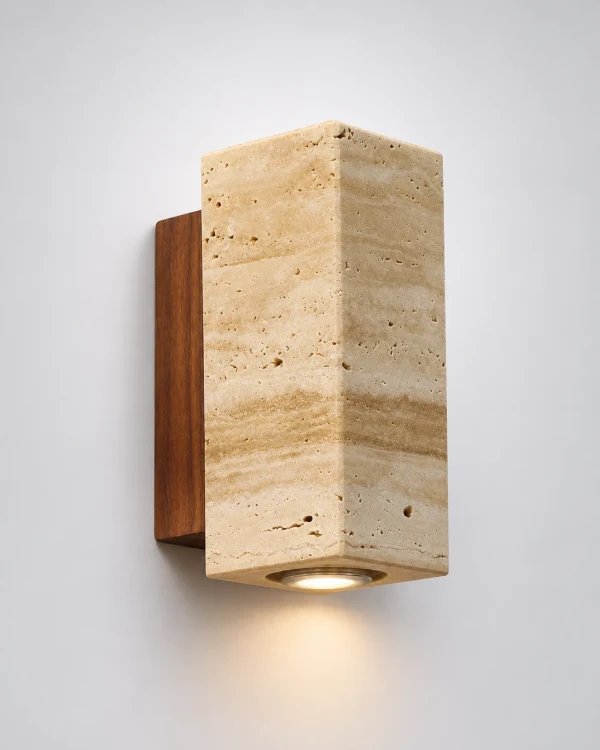
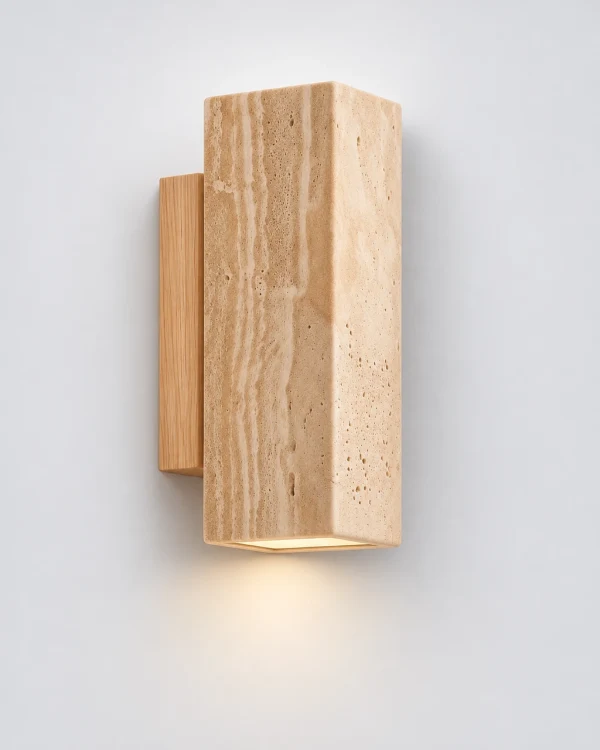
As a pair beside the bed, PIRJO or ARLA replace the bedside lamp and keep the surface clear; the right heights are explained in our guide Bedroom Lighting.
Which Japandi lamp suits which room?
Not every light fits everywhere. This overview helps you choose:
- Living room: one large light with volume as the centerpiece, such as a silk shade like KLARA or the pebble-shaped LENA at 60 to 80 cm (24 to 31 in), plus a lantern in the corner and a travertine table lamp on the sideboard.
- Bedroom: a flat, soft ceiling light, with small stone wall sconces or a low paper lamp to the left and right of the bed. Pendants beside the bed keep the nightstands clear.
- Dining room and kitchen: a rice paper globe of 50 to 60 cm (20 to 24 in) over a wooden table, or two to three small pendants like KIIA in a row over the island.
- Hallway and entryway: a flush ceiling light with natural stone such as FELO (travertine with walnut arcs, 50 cm / 20 in across, only 9 cm / 3.5 in deep) and a small wall sconce next to the mirror or coat rack.
- Work corner: a table lamp with directed light such as WOODI, complemented by a soft light in the background, so the contrast with the screen isn’t too harsh.
How do you plan the lighting in a Japandi or wabi-sabi room?
The goal is a calm room with warm islands of light. Here’s how to go about it:
- Keep the general lighting soft. A paper, silk or pebble light on the ceiling gives diffused light without harsh shadows.
- Bring the light down. Two to three low points of light at 40 to 90 cm (16 to 35 in), such as a lantern, table lamp and wall sconce, set the mood in the evening.
- One color temperature. Stay at 2700 to 3000 K throughout the room, so wood and stone look warm. The background is explained in our guide Color Temperature and Kelvin.
- Repeat materials. Travertine on the wall, travertine on the sideboard: two to three repetitions are enough; more looks forced.
- Hide the bulbs. Bare bulbs contradict the calm of the style.
Common mistakes with wabi-sabi and Japandi lamps
- Cool white light: 4000 K makes travertine look gray and rice paper bluish.
- Too many statement lights: one sculptural light per room is enough; the rest stays restrained.
- Too many glossy surfaces: chrome and high gloss break the matte, natural mood.
- Only ceiling light: without low points of light, even the most beautiful Japandi room looks flat.
Frequently asked questions
What is a wabi-sabi lamp?
A wabi-sabi lamp emphasizes natural, irregular surfaces such as porous travertine, textured ceramic or an organic pebble shape. Its light is warm and muted and usually falls downward. During the day it looks like an object, and in the evening like a calm island of light.
What makes a Japandi lamp?
A Japandi lamp combines Japanese materials such as rice paper, bamboo or a shoji grid with Scandinavian clarity: light wood and simple shapes. It diffuses the light evenly through paper, fabric or acrylic and hides the bulb.
What color temperature suits Japandi and wabi-sabi?
Warm white at 2700 to 3000 kelvin works best, because it makes wood, stone and paper glow warmly. Cool white light from 4000 K quickly looks sterile in these styles. What matters is using the same color temperature throughout the room.
How big should a Japandi ceiling light be?
Add room length and room width in meters and multiply by 8; the result is the diameter in centimeters. For a 3.5 × 5 m (11.5 × 16 ft) living room, that gives around 68 cm (27 in) for a light with volume. Flush ceiling lights can be about a third smaller.
Is a stone-look lamp real stone?
Not always. Some wabi-sabi lights such as FLORA or LENA are made of plastic with a mineral-looking texture, which keeps them light. Real travertine, as in SAGAR, PIRJO or ARLA, is heavier and shows natural pores; the material is always stated in the product description.
Can you combine wabi-sabi lamps with other styles?
Yes, especially well with Scandinavian furniture, linen and light wood. Individual vintage pieces in brass or smoked glass also work, as long as the room stays calm. You’ll find ideas in our guide to the vintage lamp.