Stair Lighting: Wall Light Height and Spacing for Stairs and Landings
How high, how many, which colour temperature: how to light stairs and the stairwell safely and without glare, with wall lights, landing lights and a pendant in the void.
Good stair lighting makes the edge of every step visible without dazzling. The best way to achieve this is to fit wall lights 180 to 200 cm above the front edge of the step, every 2 to 3 m along the stairs, with one light at the start and one at the end of the flight. Add to that warm white light at 2700 to 3000 K, a switch at the top and the bottom, and a light with an opal or stone shade, so that you don’t look into a bare bulb as you go up.
What matters most with lighting for stairs?
Stairs are the place in the home where poor light becomes genuinely dangerous. Good lighting for stairs does three jobs:
- Show the edges of the steps: the light should fall so that the front edge of each step forms a clear contrast of light and dark with the next one.
- No glare: going up, you look upwards; going down, you look downwards. In both directions, no bulb should be directly in your field of view.
- No shadow of your own: if the light only comes from behind, you cast your own shadow on the steps as you go down.
For brightness, about 100 to 150 lux on the steps is a common guide value for stairs in a home: considerably more than in the bedroom, but less than in the kitchen. More important than the sheer amount is that the light is spread evenly over all the steps.
Stair wall lights: how high and how far apart?
Stair wall lights are the best solution for most staircases. They sit to the side, light the steps at an angle from above, and can be fitted and maintained above the stairwell void without a ladder. Always measure vertically from the front edge of the step below the light to the centre of the light.
| Situation | Fitting height (from front edge of step) | Spacing and position |
|---|---|---|
| Straight staircase in a house | 180–200 cm | every 2–3 m, first light above the first few steps |
| Quarter-turn or half-turn staircase | 180–200 cm | always one light at the turn, where the steps are narrow |
| Landing or half landing | 170–190 cm from the landing floor | centred on the landing wall or as a ceiling light |
| Low stairs, loft, cellar | 170–180 cm | flush light, projection ideally under 12 cm |
| Step lights as an addition | approx. 20–40 cm above the step | every 2–3 steps, light skims the tread |
| Stairwell over several floors | 180–200 cm per flight | 2–3 wall lights per flight, one at each landing |
A typical straight staircase with 14 to 16 steps has a run of about 3.5 to 4 m. Two wall lights are usually enough, or three for wide or dark stairs. If you fit them on the wall where the handrail is, make sure your hand doesn’t block the beam. The values match the fitting heights in our guide Wall lights: height and spacing.
Which stair light suits the wall?
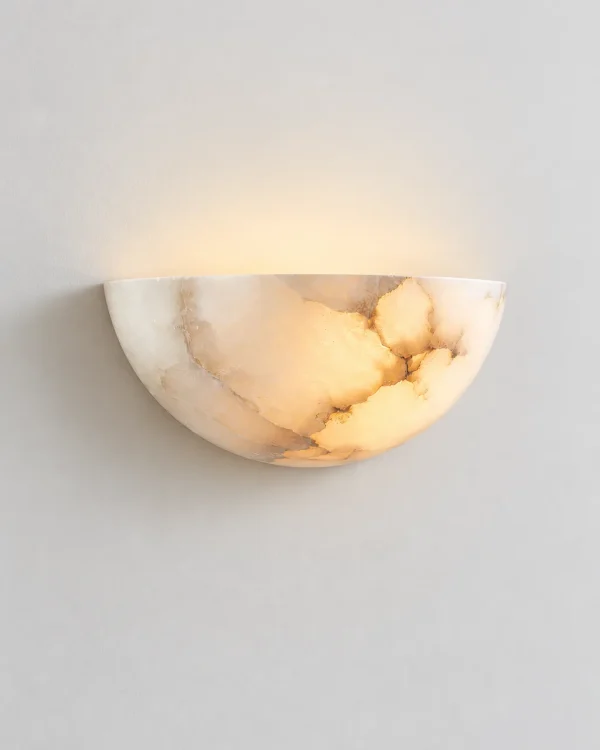
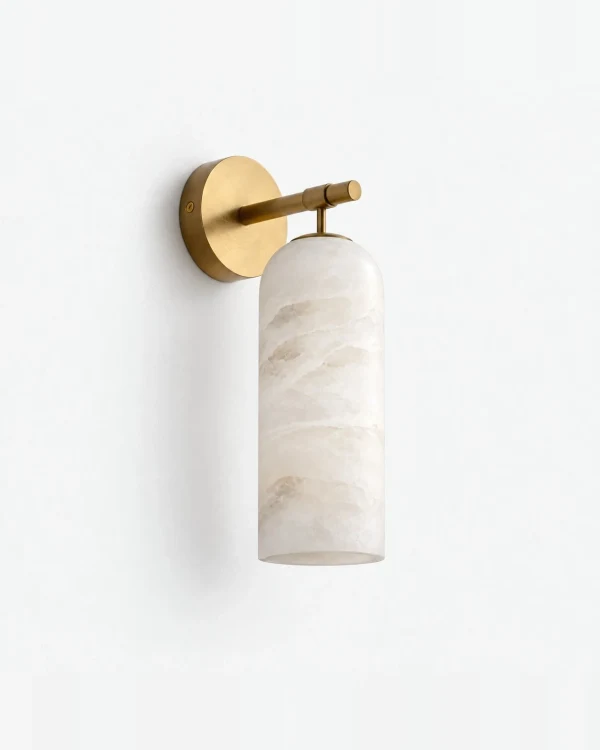
Lights that hide the bulb and don’t project far are ideal. The alabaster half-bowl BOLGO, Ø 25 cm and 13.5 cm high, diffuses its light softly and without glare, and also casts light up the wall. Several bowls at the same height accompany a flight like a calm line of light. BALSARI is an alabaster cylinder, 30 cm high and Ø 10 cm, 15 cm deep overall, with an E14 lamp holder. According to its description, it creates even points of light in a stairwell, on its own or in a row.
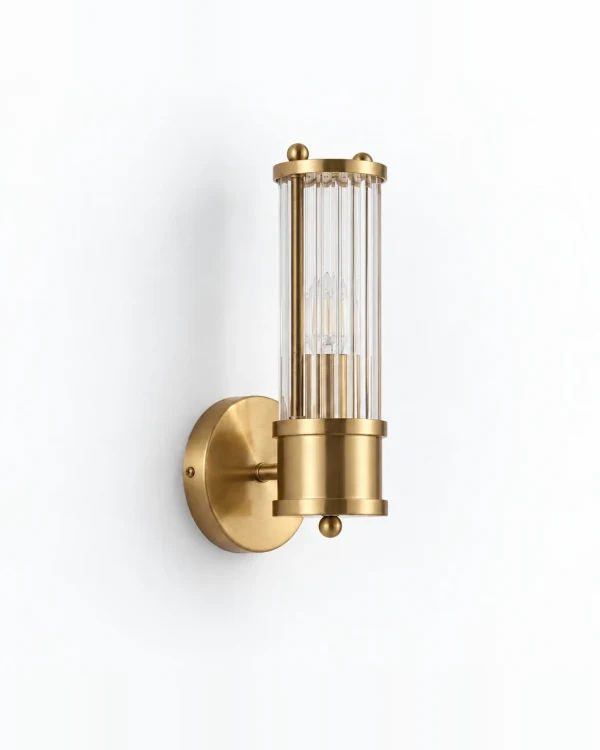
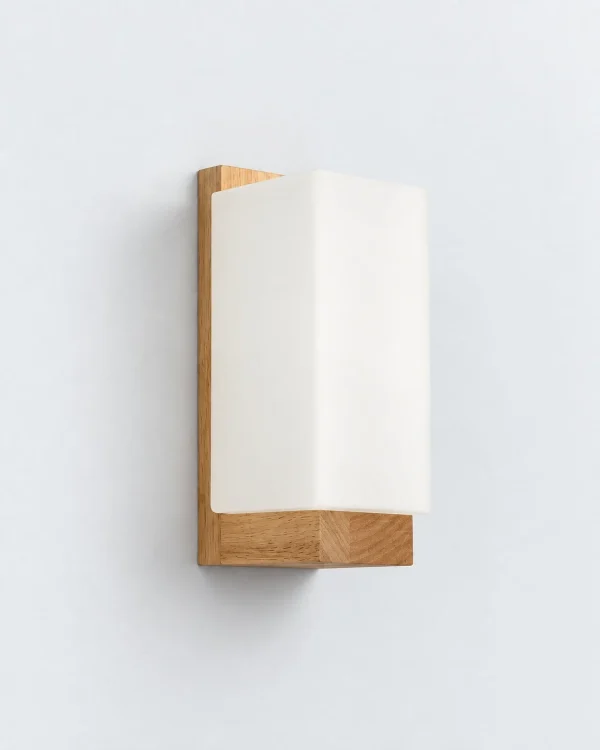
If you prefer glass, choose JOVID in ribbed glass: 27 cm high as a single, 48 cm as a double, each 9 cm wide, LED bulb included. The wooden light SARO with an opal glass shade is 25 cm high, 10 cm wide and 12 cm deep, and thanks to its shallow depth also suits narrow stairs. With the E27 lamp holder, you choose the colour temperature yourself.
You will find more models in the Hallway and stair wall lights collection. Alabaster and opal glass work particularly well here, because they don’t dazzle even when seen from below. More on the stone in our guide Travertine, alabaster and marble lamps.
How do you light a stairwell indirectly?
With indirect light, the light shines onto the wall and the wall passes it on softly to the steps. It doesn’t dazzle and looks calm, but on its own it is rarely enough for walking safely. So combine it with a second light source, or use it as a night and guiding light.
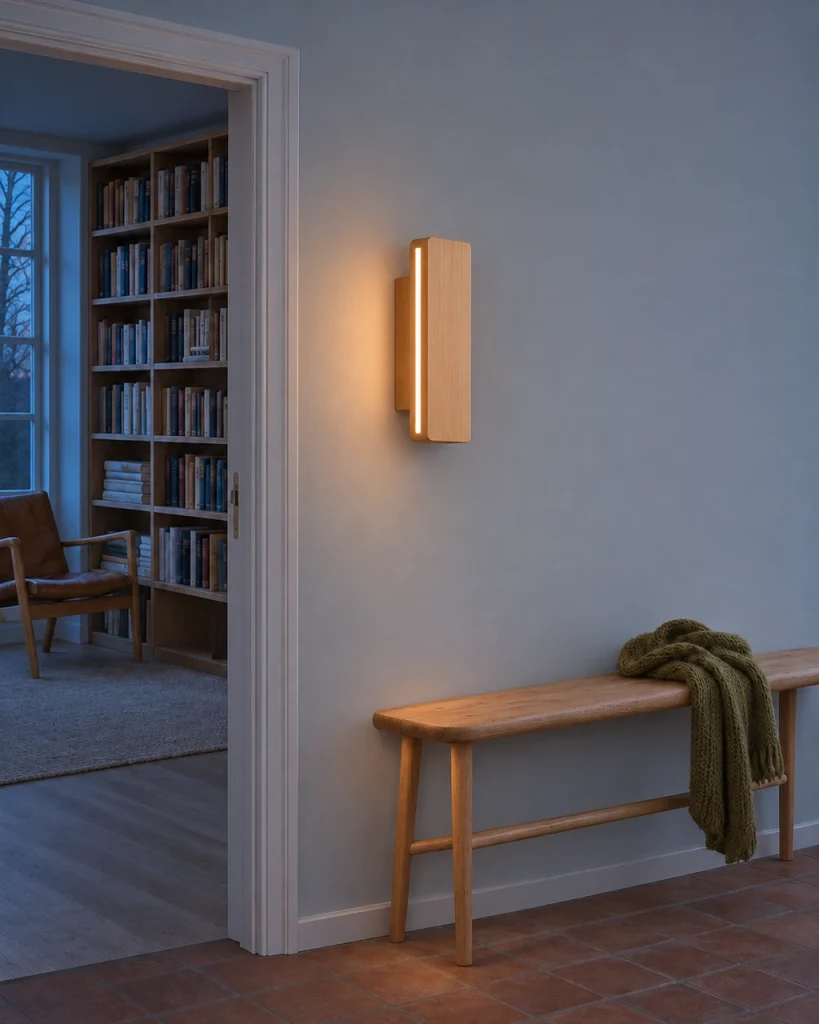
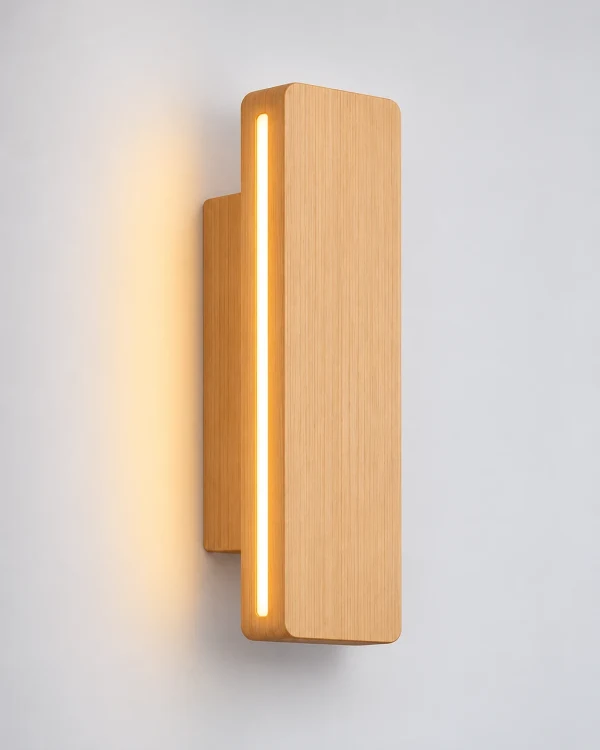
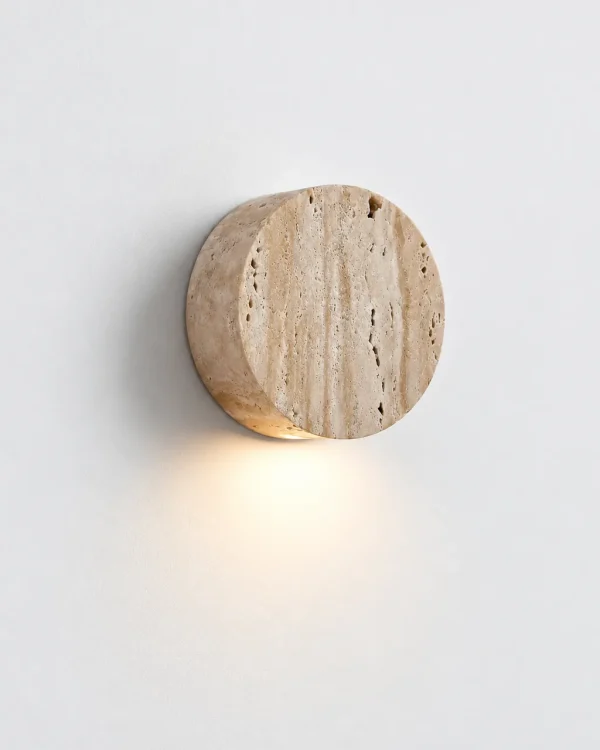
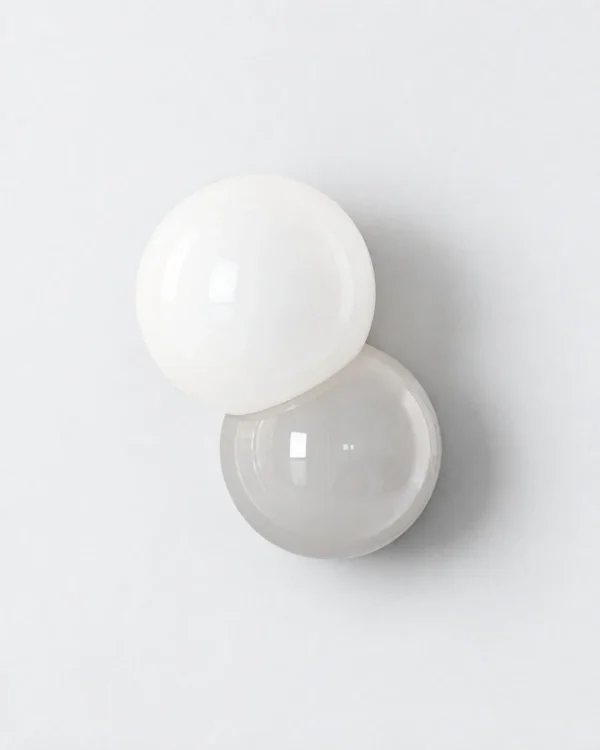
The wooden light HAKON casts a warm strip of light sideways onto the wall, warm white 2700 to 3500 K, in heights of 22, 32 or 52 cm. The body turns, so you decide which way the light falls. The travertine disc HALO measures only 10 × 10 cm and sends a grazing light up or down along the wall. Fitted at knee height, it becomes a discreet step light. KURO, in metal and opal acrylic, is 12.5 cm wide and 20 cm high and can be fitted to the wall or ceiling, in white or yellow.
How uplights and downlights work in a living space is explained in our guide Indirect lighting in the living room.
Lights for a stairwell with a high ceiling or gallery
Open stairs with a gallery, or a stairwell void over two floors, can take a larger piece that works from both levels. Two rules apply here. First: below the pendant, keep at least 2 m of headroom above every step and landing. Second: the light hangs in the open void, not above the walking line, so that you don’t brush it with furniture or removal boxes.
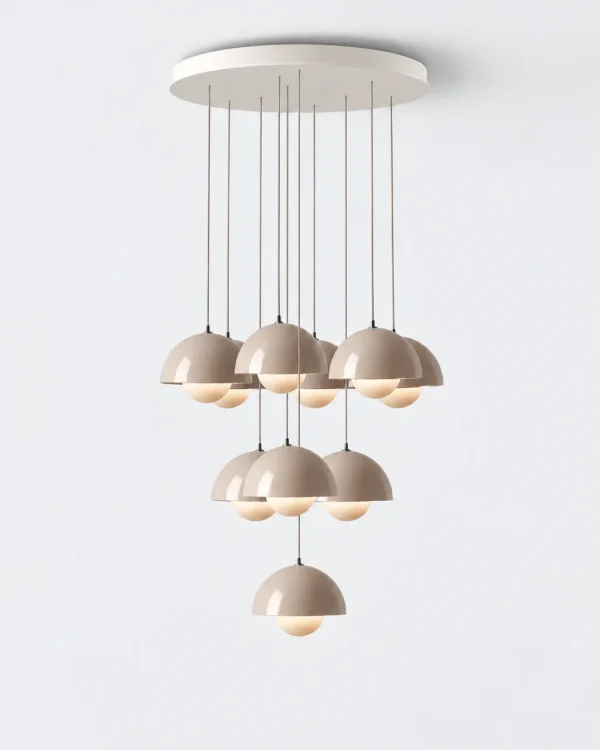
According to its description, the cascade light JARI in the Symphonie edition, with 31 shades, is designed for high ceilings, entrance halls and stairwells: Ø 126 cm and 150 cm high, in eleven colours. The small alabaster globe BOURBON (Ø 10, 12 or 15 cm, cable adjustable up to 200 cm), hung at several heights, forms a cascade of stone globes. The ribbed glass pendant HARDYO with three modules is 105 cm high and emphasises the height of the space. For a tall wall in the stairwell, the wall light LIIS in its 120 cm version stretches the vertical. Note: according to the manufacturer’s diagram, its built-in LED is neutral white.
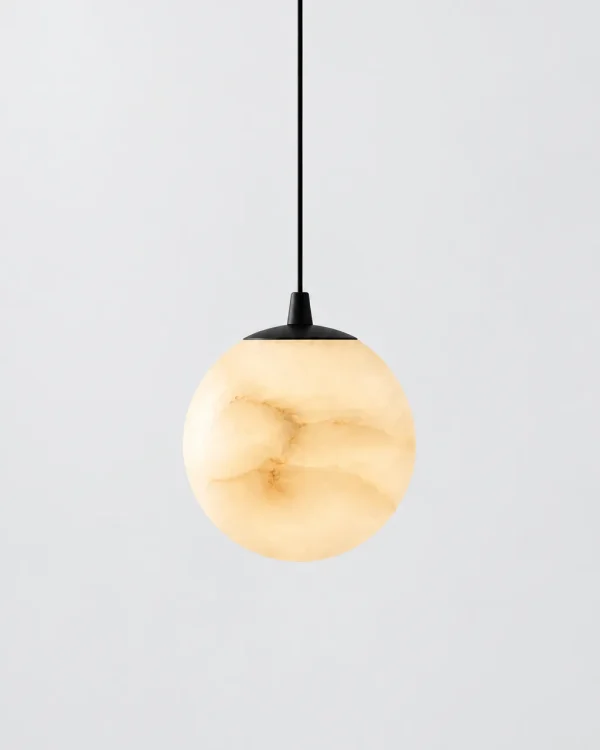
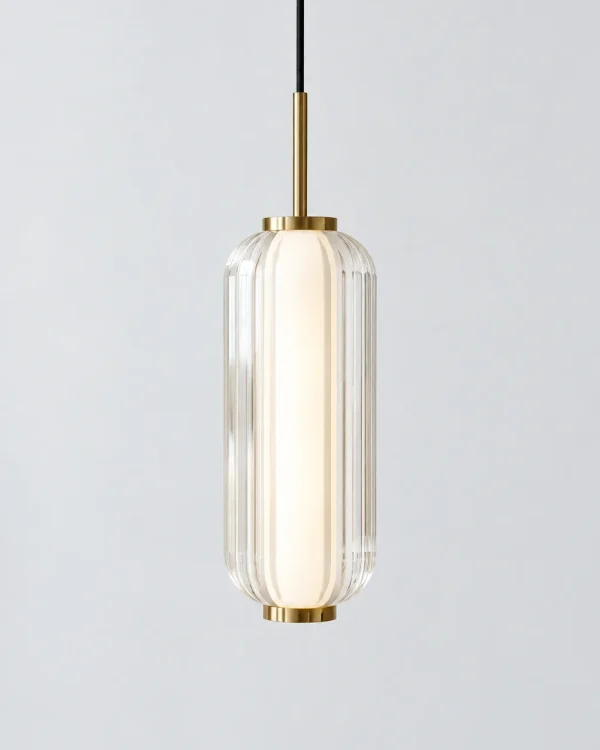
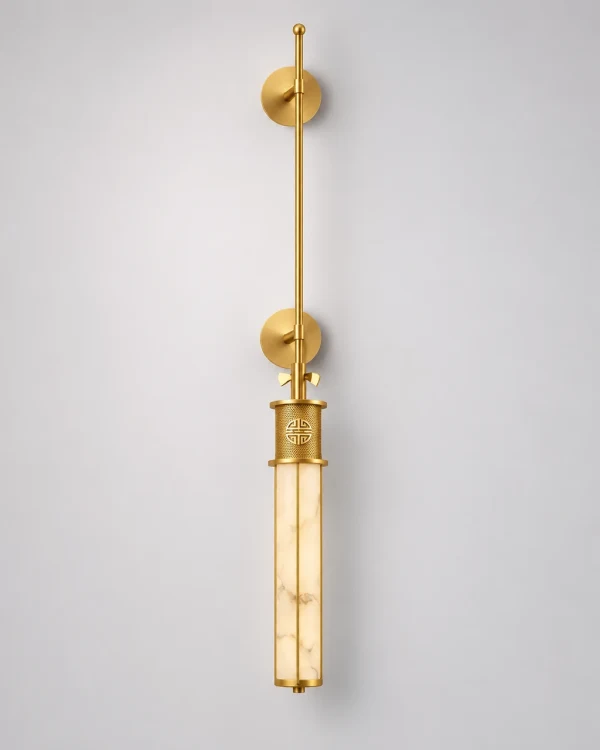
Depending on the model, our pendant lights have 150 to 200 cm of cable. Before buying, check that the length reaches from the ceiling to the height you want. You will find all the models in the Pendant lights collection.
Which ceiling light for the landing?
On the landing and at the top of the stairs, a compact ceiling light that sits close to the ceiling is often enough. What matters is a shade that hides the bulb completely, because from the stairs you look up into it.
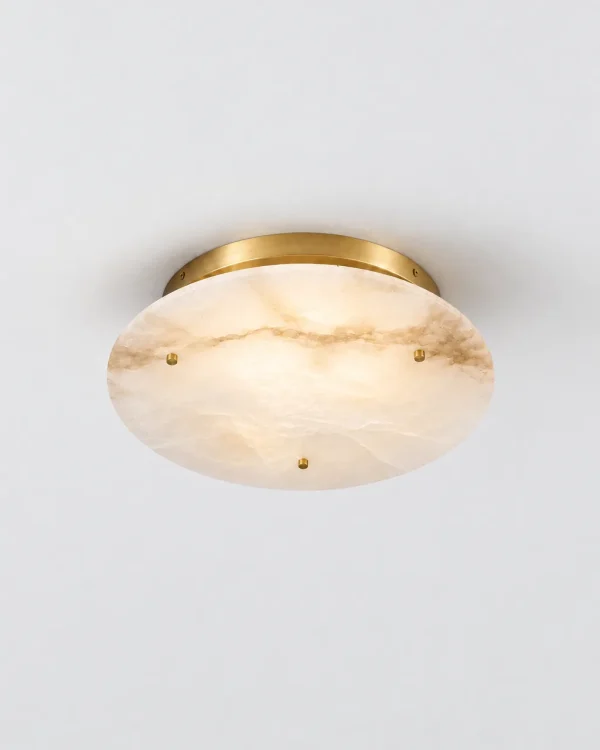
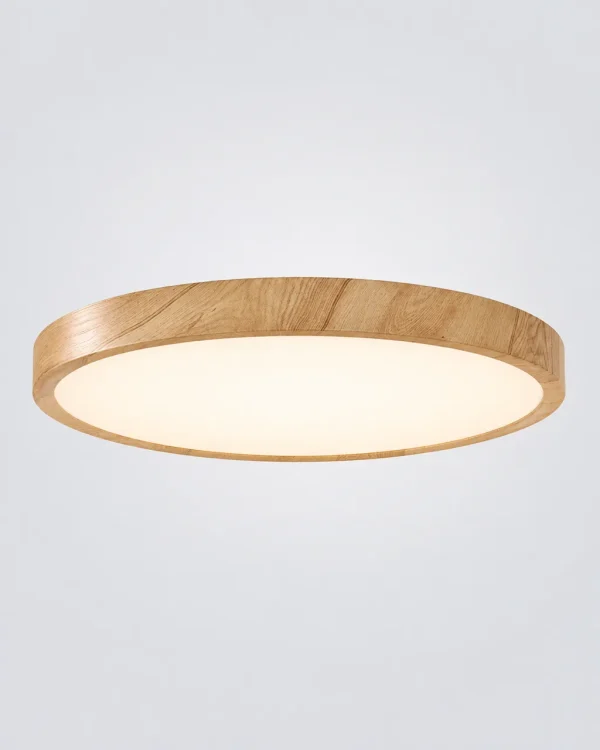
JOLA is an opal white glass globe, Ø 15 or 20 cm, on a light wood base, with an E27 lamp holder. According to its description, it gives friendly general light in the hallway and stairwell. BILPI sets an alabaster disc of Ø 20 to 50 cm on a brass base, only 6.6 cm deep, and is available in a triac-dimmable version. With a very low ceiling above the landing, the LED panel HILDE, 2.4 cm deep, helps.
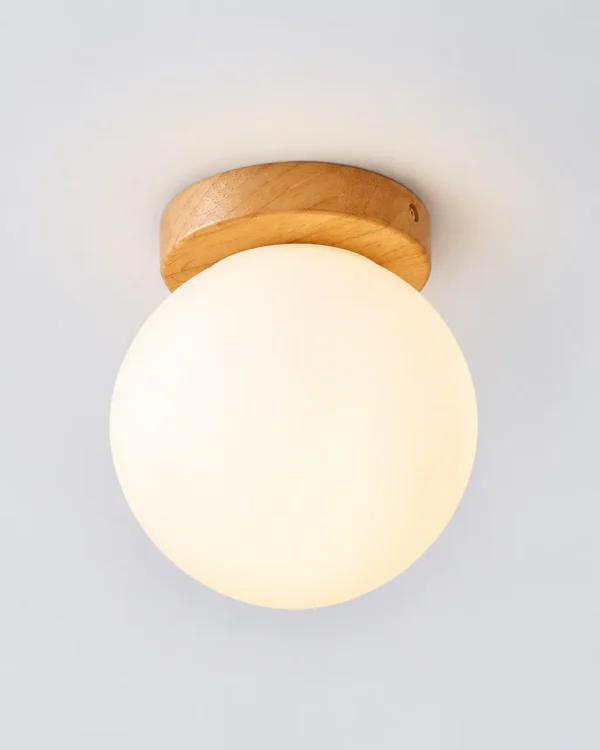
 Collection · 55 designsHallway Ceiling LightsView all 55 designs
How to light long, narrow hallways leading off the stairs is covered in our guide Hallway lights.
Which colour temperature and which switching for the stairs?
Warm white light at 2700 to 3000 K suits the stairwell. It looks welcoming and dazzles less than cool light when you get up at night. Look for a colour rendering of at least Ra 80, so that the stair covering and edges are easy to tell apart. Our guide Colour temperature, kelvin and lumens explains all the values.
When it comes to switching:
- Switch at the top and bottom: two-way switching, with one switch at the start and one at the end of the stairs, is a must for comfort. With more than two floors, add an intermediate switch.
- Motion sensor: it switches the light on automatically as soon as you step onto the stairs. Practical when your hands are full. The bulbs must be suitable for frequent switching, which is generally the case with LEDs.
- Night light: a dimmed or indirect light that glows softly at night replaces the harsh main light on the way to the bathroom or kitchen. How to dim lights is explained in our guide Dimmable LED ceiling lights.
What are the common stair lighting mistakes?
- Only one ceiling light at the top: going down, your own shadow falls right on the steps in front of you.
- Clear glass with a visible bulb: from below, you look straight into the bulb. Opal glass, alabaster or indirect light are better.
- Lights that project too far: on narrow stairs, you bump into them with your shoulder or whatever you are carrying. Keep the projection under 12 cm at tight spots where possible.
- First and last step in the dark: that is exactly where many missteps happen. Both must be well lit.
- Cool white at night: 6000 K is very dazzling after waking up. Stick to warm white.
Frequently asked questions
How high should stair wall lights be fitted?
Stair wall lights usually sit 180 to 200 cm above the front edge of the step below, measured to the centre of the light. On landings, 170 to 190 cm from the landing floor is enough. That way the light doesn’t dazzle and is safely above head height.
How many lights does a staircase need?
For a straight staircase with 14 to 16 steps, two wall lights 2 to 3 m apart are usually enough, or three for wide or dark stairs. Add one light at each landing. What matters is that the first and last steps are well lit.
What is the best light for a stairwell?
Wall lights that hide the bulb, for example in alabaster or opal glass, combined with a compact ceiling light on the landing, work best. They light the steps at an angle from above and don’t dazzle even from below. With galleries, a large pendant in the stairwell void can be added.
Which colour temperature is right for the stairs?
Warm white at 2700 to 3000 kelvin is ideal for stairs in a home. It looks friendly and dazzles less at night than cool light. The colour rendering should be at least Ra 80, so that the edges are easy to see.
How low can a pendant light hang over the stairs?
Below a pendant in the stairwell void, keep at least 2 m of headroom above every step and landing. If the light hangs in the open void beside the walking line, it can reach lower. Check the cable length first; with our models it is usually 150 to 200 cm.
Is a motion sensor worthwhile on the stairs?
Yes, especially if you often walk with your hands full or have children in the house. The light comes on automatically when you step onto the stairs and goes off again after a set time. LED bulbs generally cope well with frequent switching.