Warm White vs Cool White: 2700, 3000 or 4000 K? A Chart per Room
Warm white, neutral white or cool white: which colour temperature in kelvin suits which room, how many lumens per m² you need and what the CRI tells you.

Warm white vs cool white comes down to colour temperature, measured in kelvin (K): the lower the value, the warmer and more yellowish the light looks. For living rooms, dining rooms and bedrooms, 2700 to 3000 K (warm white) suits; for the kitchen, bathroom and workspace, 3000 to 4000 K (neutral white); and values from about 5300 K (daylight white) belong more in a workshop or cellar. You set the brightness separately with the lumens, as general light about 100 to 150 lm per m² in the living room.
What does colour temperature in kelvin mean?
Kelvin describes the colour temperature of a light source. A candle flame is about 1800 to 2000 K, a classic incandescent bulb around 2700 K, and midday sunlight about 5500 to 6500 K. That sounds paradoxical, because the “cooler” colour has the higher kelvin value. Just remember: low kelvin = warm and cosy, high kelvin = cool and alert.
On LED packaging in Europe, you will usually find one of three groups:
- Warm white: below 3300 K, typical values 2700 and 3000 K.
- Neutral white: 3300 to 5300 K, typical value 4000 K.
- Daylight white or cool white: above 5300 K, typical values 5000 to 6500 K.
Colour temperature says nothing about brightness. A 3000 K light can be just as bright as one at 6000 K. Cool white light only looks brighter because it has more blue in it.
Colour temperature chart: which value for which room?
The table below summarises common guide values. The lumen figures apply to general light with a ceiling height of around 2.50 m and light walls. With dark walls or high ceilings, plan 20 to 30% more.
| Room | Colour temperature | General light (lumens per m²) | Note |
|---|---|---|---|
| Living room | 2700–3000 K | 100–150 lm/m² | reading light brighter in specific spots |
| Bedroom | 2700 K, warmer in the evening | 100–150 lm/m² | dimmable is ideal |
| Dining room | 2700–3000 K | 150–250 lm/m² | warm light makes food look appetising |
| Kitchen | 3000 K, worktop up to 4000 K | 250–300 lm/m² | Ra 90 or more at the worktop |
| Bathroom | 3000–4000 K | 200–300 lm/m² | mirror light from the front and sides |
| Study, desk | 4000 K during the day, 3000 K in the evening | 300–500 lm/m² | around 500 lux on the desk |
| Hallway, stairwell | 2700–3000 K | 100–150 lm/m² | even, without glare |
| Child’s room | 2700–3000 K | 150–250 lm/m² | warm and dimmed in the evening |
Rule of thumb: where you relax, choose warm white. Where you need to see precisely, it can be more neutral. Within one room, all the lights should ideally have the same colour temperature, otherwise the ceiling looks bluish and the floor lamp yellow.
Warm white: 2700 K or 3000 K?
2700 kelvin matches the light of an incandescent bulb. It is the warmest common LED white and makes wood, linen and skin look especially soft. Ideal for the bedroom, for floor lamps and for every light that is on in the evening.
3000 kelvin is also warm white, but a touch crisper. White walls look less yellow with it, and natural stone such as alabaster and travertine shows its veining more clearly. For living rooms, dining rooms and kitchens, 3000 K is the most common compromise. Many of our lights with built-in LED use exactly this.
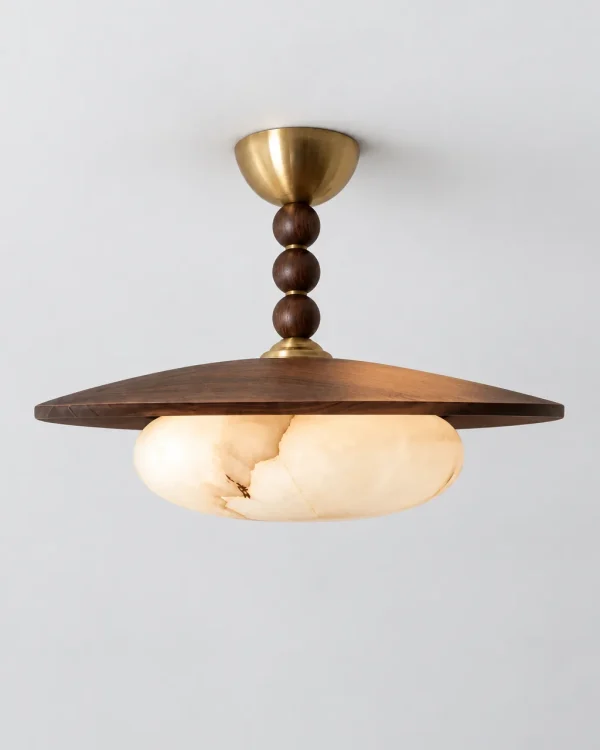
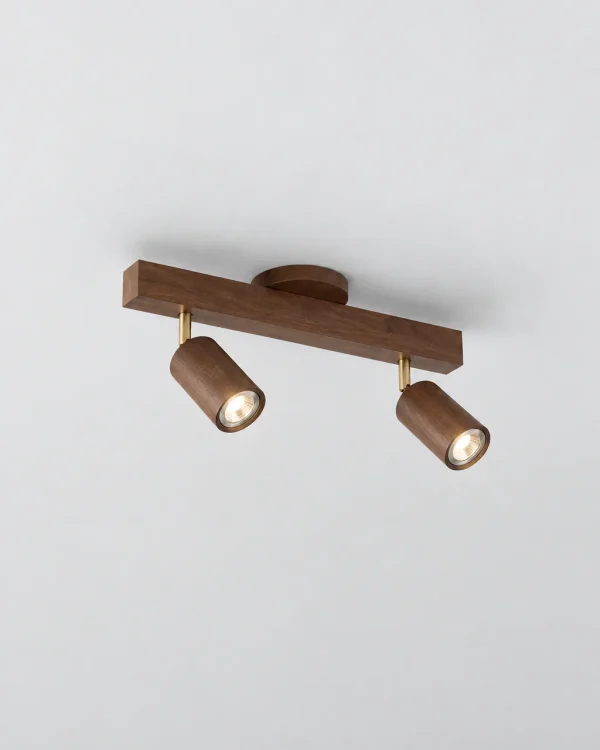
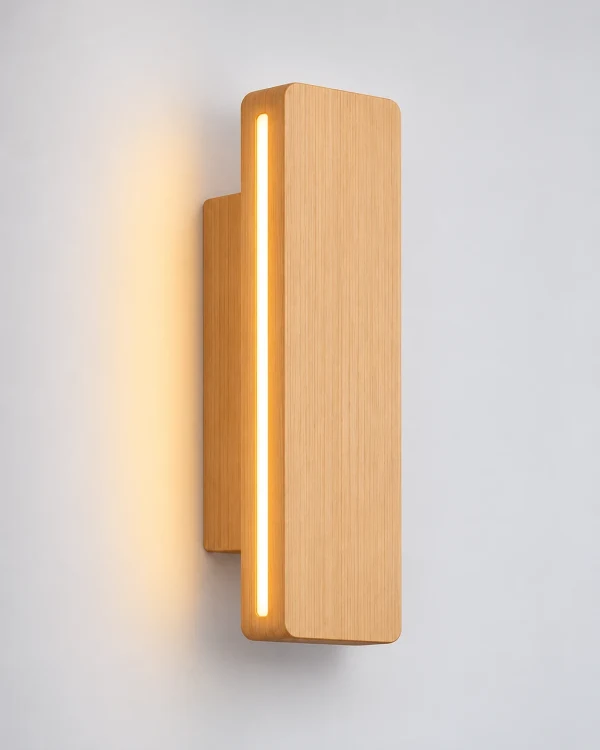
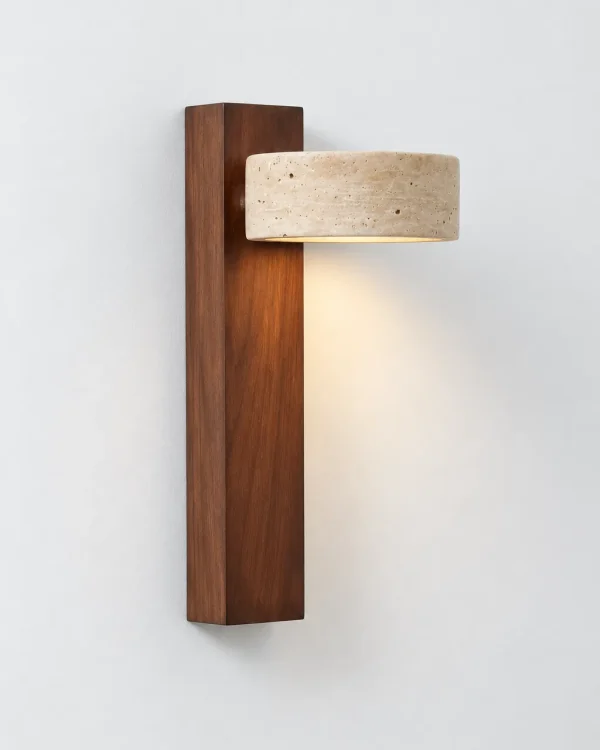
MILATRE hangs a Ø 35 cm wooden disc over an alabaster-effect diffuser and gives warm white light at 3000 K. The solid wood spotlight bar PORIAT carries two to five adjustable spotlights, 42 to 120 cm long, also at 3000 K. The wooden light HAKON casts a narrow strip of light on the wall, according to its description in warm white between 2700 and 3500 K. The travertine wall light SOLRA also states its luminous flux: 640 to 790 lm at 9.1 W, warm white.
When does 4000 kelvin (neutral white) make sense?
4000 kelvin looks matter-of-fact and clear. That is good when you need to concentrate or see colours accurately: at the kitchen worktop, at the desk during the day, in the utility room. In the living room in the evening, on the other hand, neutral white quickly feels like an office.
Some lights let you choose the colour temperature when ordering. The alabaster mosaic light BATRAZ, 5 cm deep and Ø 40 to 60 cm, comes in 3000, 4000 or 6000 K. So does the ribbed glass pendant HARDYO, Ø 12 cm with one to three modules. TSARUK, a square alabaster block from 30 × 30 to 60 × 60 cm, comes in 3000 or 6000 K. The small alabaster globe GOIRTA, Ø 12 cm, comes with a replaceable G9 bulb in 3000, 4000 or 6000 K.
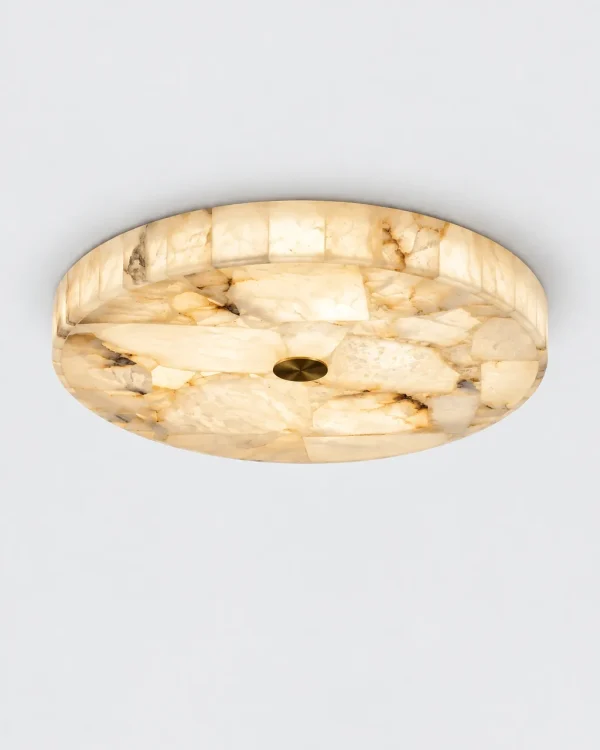
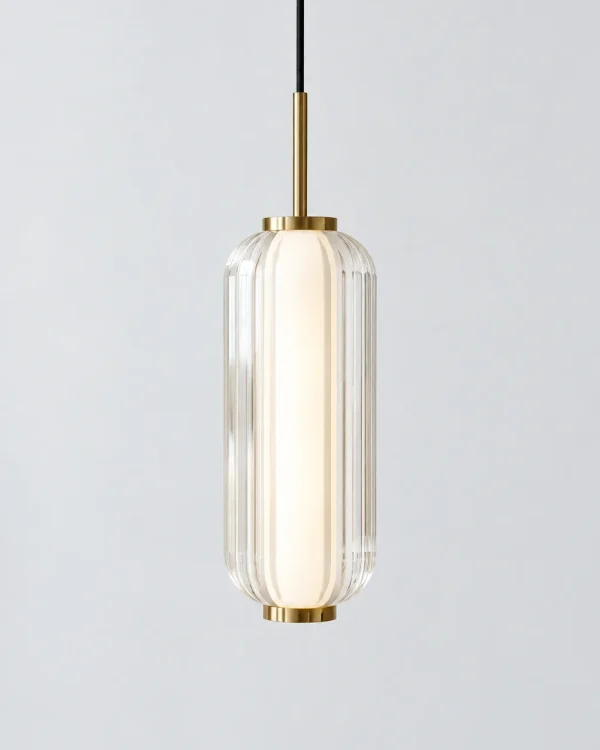
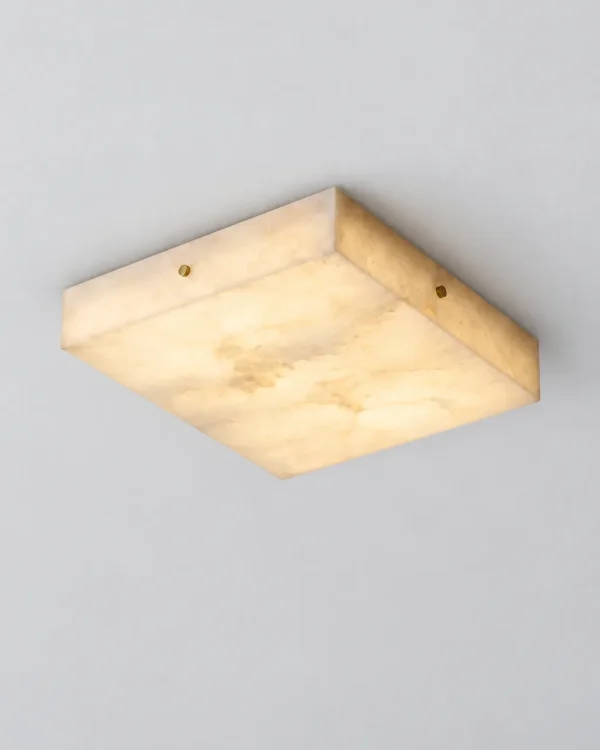
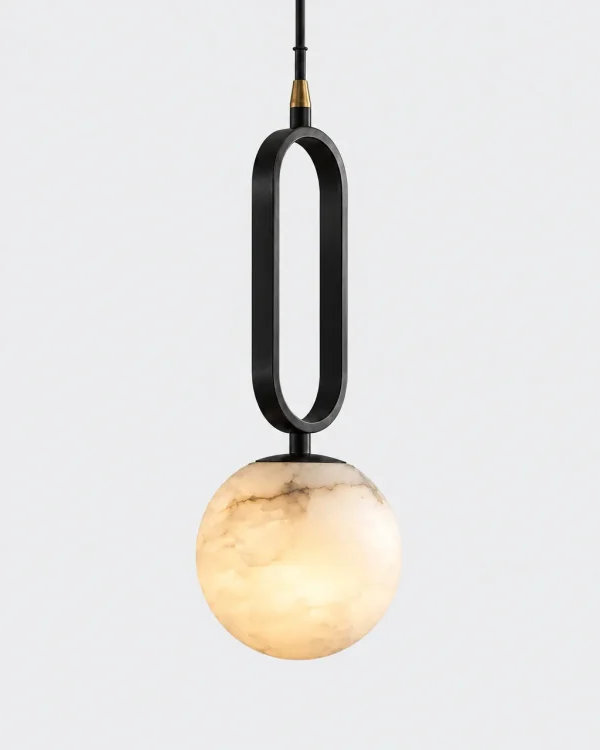
For natural stone, we almost always recommend 3000 K: cool light makes the honey-coloured veins look grey. Neutral white is mainly worthwhile with these models in the kitchen or a work area.
Warm white vs cool white: which is better?
For living spaces, warm white is almost always the better choice. Cool white at 5000 to 6500 K is reminiscent of midday daylight. That can help during the day in windowless workrooms, but in the evening it feels cold and uninviting. Many people also find cool light stimulating in the evening, because it resembles daylight.
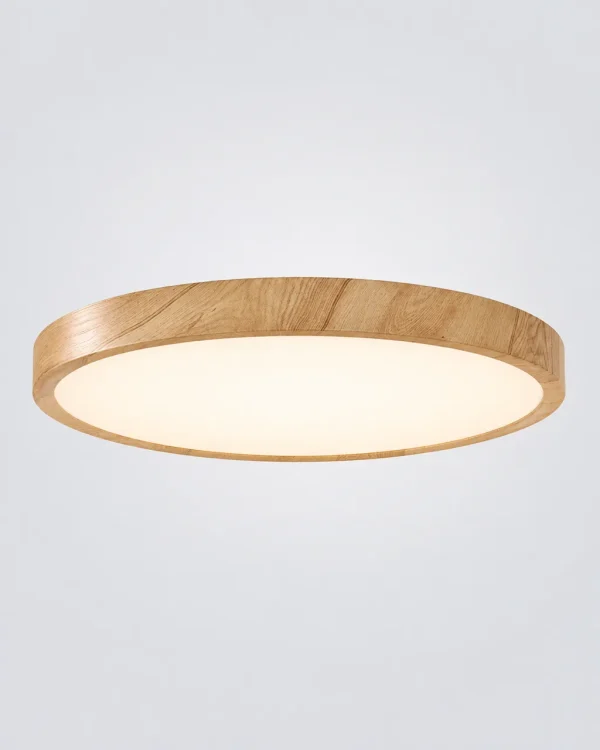
The flexible solution is lights with switchable colour temperature. The flat LED panel HILDE, only 2.4 cm deep, switches between 2800 K, 4000 K and 5000 K at the wall switch. IDUN, with a wood-coloured grooved rim, switches between three colour temperatures, from warm evening light to bright task light. The rechargeable table lamp LIRI offers 3000, 4100 and 6000 K and a touch dimmer.
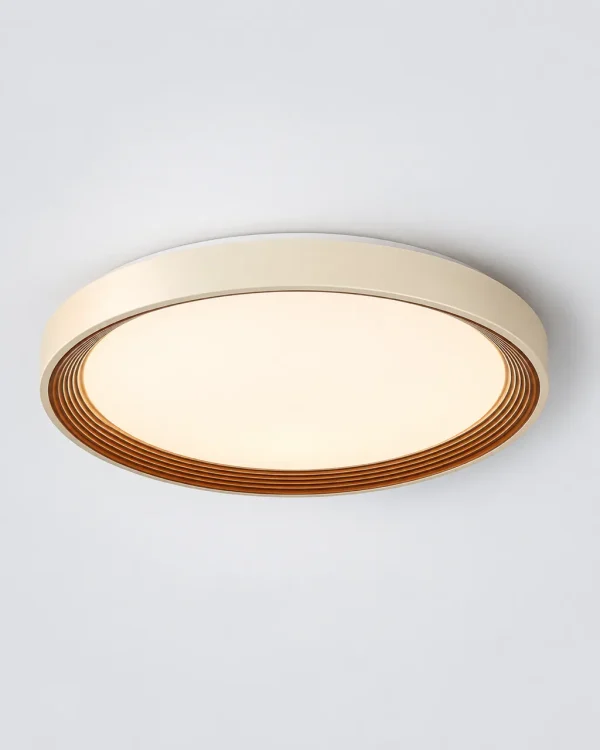
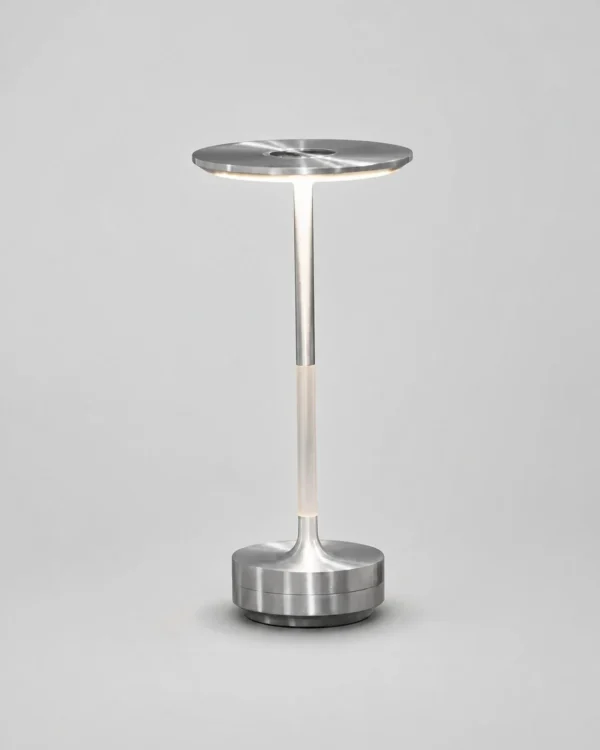
The Rechargeable table lamps collection shows more cordless models with selectable colour temperature.
What is the CRI value (colour rendering index)?
The colour rendering index, CRI, often also shown as Ra, indicates how natural colours look under a light source. The maximum value is 100, which corresponds to sunlight or an incandescent bulb. It is independent of colour temperature: even a warm white LED bulb can render colours poorly.
| CRI / Ra | Assessment | Suitable for |
|---|---|---|
| below 80 | colours look dull, skin pallid | cellar, storage room |
| 80–89 | common standard for interiors | hallway, living room, bedroom |
| 90 and above | very natural colours | kitchen, bathroom, wardrobe, pictures, desk |
You will find the value on the bulb packaging, usually as “Ra > 80” or “CRI 90”. With lights that have a lamp holder, you therefore choose it yourself. An example from our range: the rechargeable table lamp LIRI states a colour rendering of CRI > 95.
How many lumens per m² do you need?
Lumens (lm) measure the amount of light a lamp gives off. With LEDs, watts say very little about brightness. For comparison: an old 60 W incandescent bulb is roughly 700 to 800 lm, and a 100 W incandescent bulb roughly 1300 to 1500 lm.
This is how to work it out: floor area × guide value from the table above. A 20 m² living room therefore needs around 2000 to 3000 lm as general light. That doesn’t have to come from a single ceiling light. Spread across a ceiling light, a floor lamp and two wall lights, the room looks more even and cosier. How to plan light in layers is covered in our guide Indirect lighting in the living room.
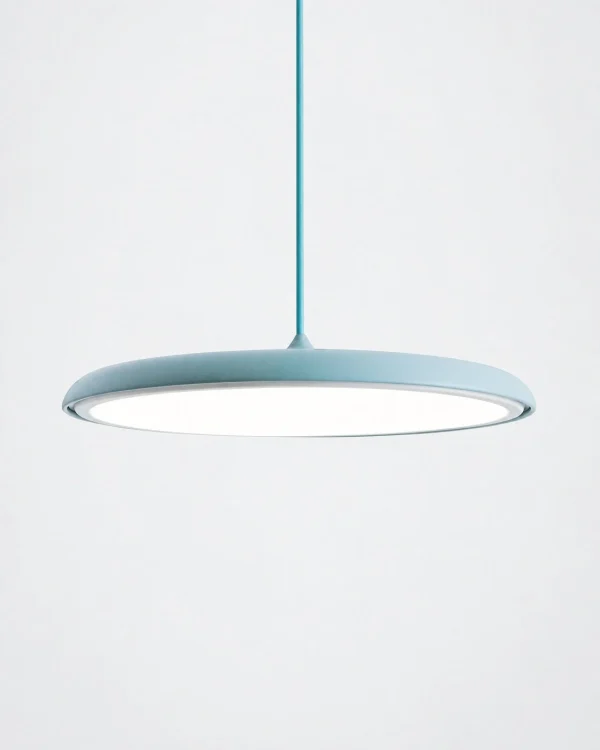
Some of our LED lights state the luminous flux directly. The travertine ceiling light NADIA gives 1980 to 5280 lm depending on size (Ø 30, 43 or 55 cm). JILO, with a wood-effect frame, gives 1800 to 3600 lm at 3000 K. The flat pendant MAKARON gives 1320 lm (Ø 25 cm) or 2640 lm (Ø 40 cm), warm white at 3000 K. Two or three of them are enough over a kitchen island.
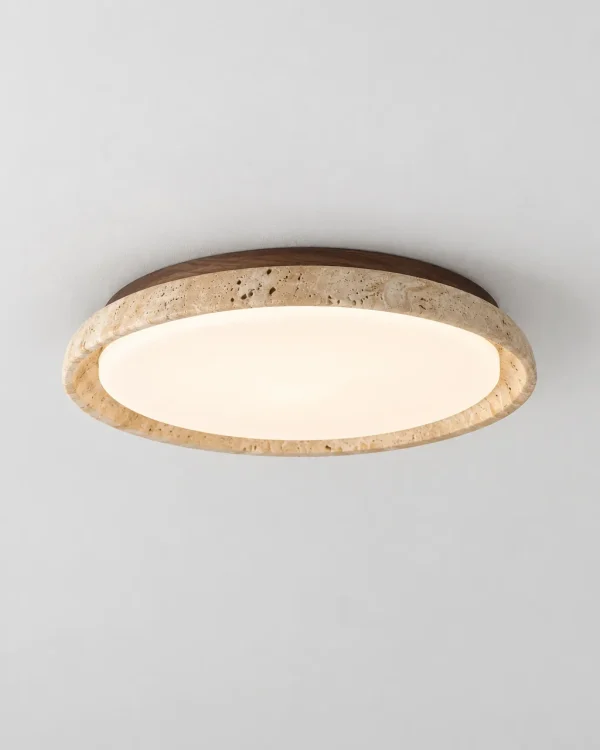
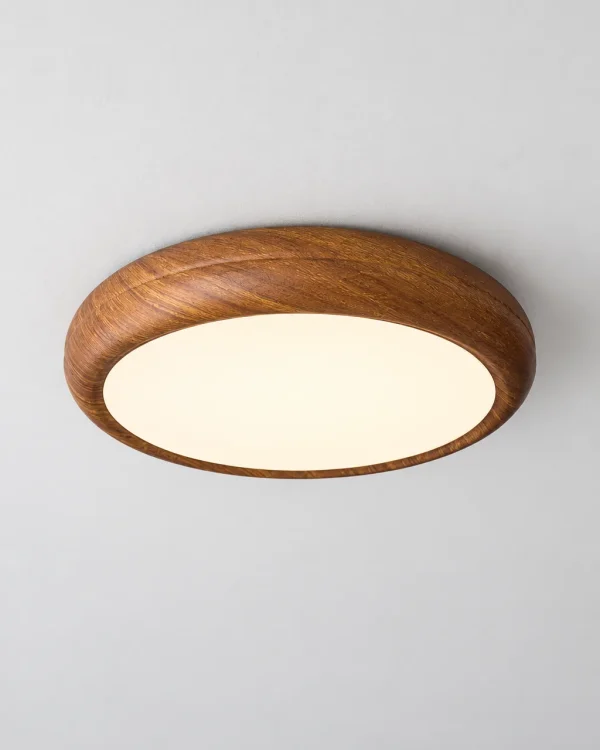
Whether and how to dim such lights is explained in our guide Dimmable LED ceiling lights.
How do you read colour temperature and lumens on the packaging?
Every LED bulb shows the key values in a fixed format. Five figures are enough to compare two bulbs reliably:
- Luminous flux in lumens (lm): the brightness. For a typical table or floor lamp, 400 to 800 lm is enough; for a living room ceiling light, often 2000 lm and more.
- Colour temperature in kelvin (K): the colour of the light, 2700 or 3000 K for living spaces.
- Colour rendering (Ra or CRI): at least 80, ideally 90.
- Dimmable yes or no: usually shown as a dimmer symbol, crossed out or not.
- Cap: E27, E14, G9 or GU10. It must match the light’s lamp holder.
With lights that have built-in LED, you will find these figures in the product description. If it only says “warm white” without a number, the value is generally between 2700 and 3300 K.
Which colour temperature for natural stone, glass and wood?
Materials react differently to colour temperature. Alabaster glows honey and ivory at 2700 to 3000 K, and becomes whiter and cooler at 4000 K. Travertine and wood look richer under warm white. Opal glass is neutral and passes on the bulb’s colour temperature almost unchanged. Amber and smoked glass tint the light warmer themselves or soften it. That is why some of our alabaster wall lights with built-in LED are fixed at 3000 K, such as AMPE, which also comes in a triac-dimmable version. You can read more about glass as a shade material in our guide Glass pendant lights.
 Collection · 25 designsLED Ceiling LightsView all 25 designs
What are the common mistakes when choosing colour temperature?
- Different kelvin values in the same room: 2700 K on the floor lamp and 4000 K on the ceiling look restless. Stick to one value within a room.
- Cool white in the living room: in the evening it makes the room feel cold and uninviting. Choose 2700 or 3000 K instead.
- Forgetting the lumens: the right colour temperature won’t help if the room is too dark. Work out the lumens first, then choose the colour.
- Ignoring the CRI: a cheap bulb with Ra below 80 makes wood and skin look pallid, however warm it is.
- Buying by watts alone: with LEDs, compare lumens, not watts.
Different rules apply at the desk; see Desk lamps and light for working. How warm light calms the bedroom is shown in our guide Bedroom lighting.
Frequently asked questions
How many kelvin is warm white?
Warm white covers colour temperatures below 3300 kelvin. Common LED values are 2700 K, which matches the light of an incandescent bulb, and 3000 K, which looks a little crisper. Both are a good choice for living spaces.
Is 3000 kelvin warm or cool?
3000 kelvin counts as warm white. It is a touch cooler and crisper than 2700 K, but much warmer than neutral white at 4000 K. For living rooms, dining rooms and kitchens, it is the most common value.
Which colour temperature is best for the living room?
Warm white at 2700 to 3000 K suits the living room. It feels cosy and makes wood, fabrics and skin look natural. Neutral white at 4000 K is only advisable for a work corner, if at all.
How many lumens per square metre do you need?
For general light, allow about 100 to 150 lumens per square metre in living rooms, bedrooms and hallways. In the kitchen, 250 to 300 lm/m² is usual, and at a workspace 300 to 500 lm/m². Dark walls and high ceilings need 20 to 30% more.
What is a good CRI value?
For living spaces, a CRI or Ra of at least 80 is the usual standard. In the kitchen, bathroom, at the wardrobe and at the desk, Ra 90 or more is worthwhile, because colours should look natural there. The maximum value is 100.
Is 4000 kelvin too cool for the bedroom?
For the evening hours in the bedroom, 4000 K is usually too cool and too stimulating. 2700 K or a dimmable warm white light is better. 4000 K is better suited to the kitchen, bathroom or workspace.