Desk Lamp: The Right Light for Your Desk and Home Office
How bright should a desk lamp be, which side does it go on and how do you avoid reflections on the screen? All the rules for working from home.
A desk lamp should light the work surface with around 500 lux, stand to the side and in front of you, and keep its bulb below your eye level. Right-handers put the lamp on the left, left-handers on the right, so that the writing hand doesn’t cast a shadow. For focused work during the day, neutral white at about 4000 kelvin suits; in the evening, warm white at 3000 kelvin. And the room around the desk should never be completely dark.
Whether in a home office, a study or a small desk corner in the living room: in this guide you will find the right values for brightness and colour temperature, where to put the lamp in relation to the screen, and our lights for the workspace with their real dimensions.
How bright should a desk lamp be?
For desk work, the common guideline is at least 500 lux on the area where you are working. That figure is also a good benchmark at home for writing, reading documents and working at a screen. How much light reaches the desk depends on the lamp’s lumens and its distance from the surface: a lamp for the desk with 500 to 800 lumens and a directional head reaches this level over a normal work area when it sits 40 to 50 cm above the desktop.
| Activity | Illuminance on the desk | Colour temperature | Recommendation |
|---|---|---|---|
| Screen work | 300–500 lx | 3000–4000 K | lamp to the side, light on keyboard and documents |
| Writing and reading on paper | 500 lx | 4000 K | directional head, 40–50 cm above the desk |
| Drawing, crafts, detailed work | 750–1,000 lx | 4000 K | adjustable arm, lamp closer to the surface |
| Homework in the evening | 500 lx | 3000–4000 K | desk lamp plus room light |
| Quick notes, video call in the evening | 200–300 lx | 2700–3000 K | cordless lamp, dimmed |
The surroundings matter just as much: if the room is dark and only the desk is bright, your eyes have to readjust every time you look up from the paper into the room. As a rule of thumb, the light around you should be at least a third as bright as the light on the desk. A ceiling light or a floor lamp in the room is enough for that.
Where should a desk lamp go?
The lamp belongs on the side opposite your writing hand and slightly forward. Right-handers put it on the left, left-handers on the right. That way the light falls on the paper before your hand gets there, and you never write in your own shadow.
- Height: the lamp head sits about 35 to 50 cm above the desktop and well below your eye level, so that you don’t look into the bulb.
- Distance: about 30 to 40 cm to the side of the centre of your work area, with the beam angled towards the middle.
- Shade: the shade must completely hide the bulb from your seated position. Open globes or clear glass are unsuitable at a desk.
- Cable: run the cable along the back of the desktop. Cordless lamps save you this step.
How do you avoid glare and reflections on the screen?
At a screen workstation, reflections are the most common reason light feels annoying. This is how to arrange the lamp, screen and window in relation to one another:
- Window to the side: position the desk so that you look parallel to the window. A window behind you reflects in the screen; a window in front of you dazzles.
- Lamp beside the screen: the desk lamp stands to the side of the screen and shines on the keyboard and documents, not on the monitor.
- No light behind you: a bright lamp behind your back shows up as a patch of light on the screen. Point it at the wall or downwards.
- Mirror test: switch the screen off. In the black surface you will see exactly which light sources are reflected.
For video calls: the light should fall on your face from the front and to the side, not from above and not from behind. A second, small table lamp beside the screen, turned towards you and dimmed, is usually enough.
Which desk lamp suits your workspace?
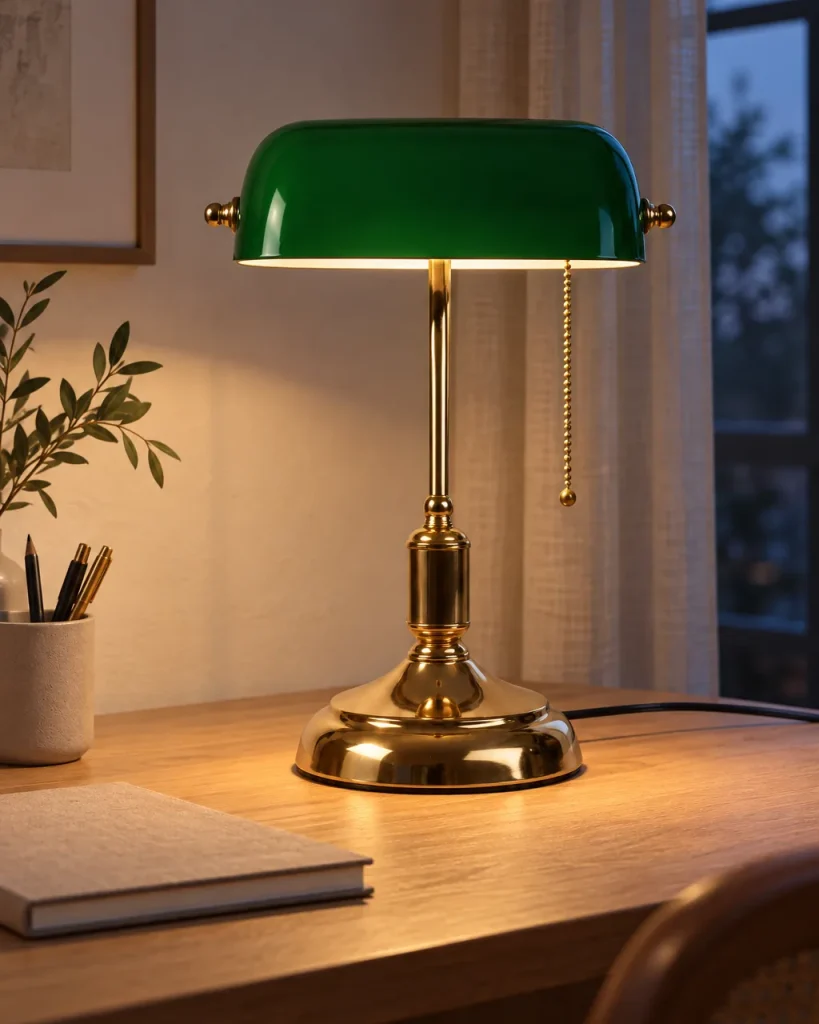
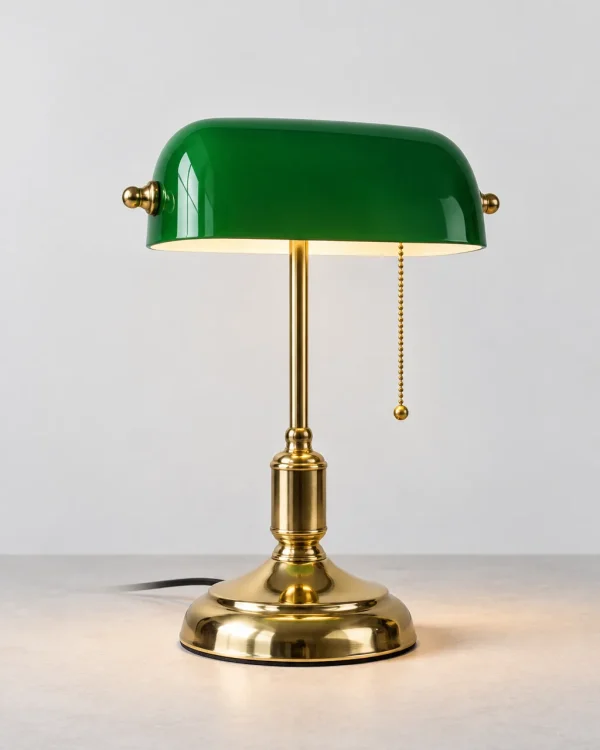
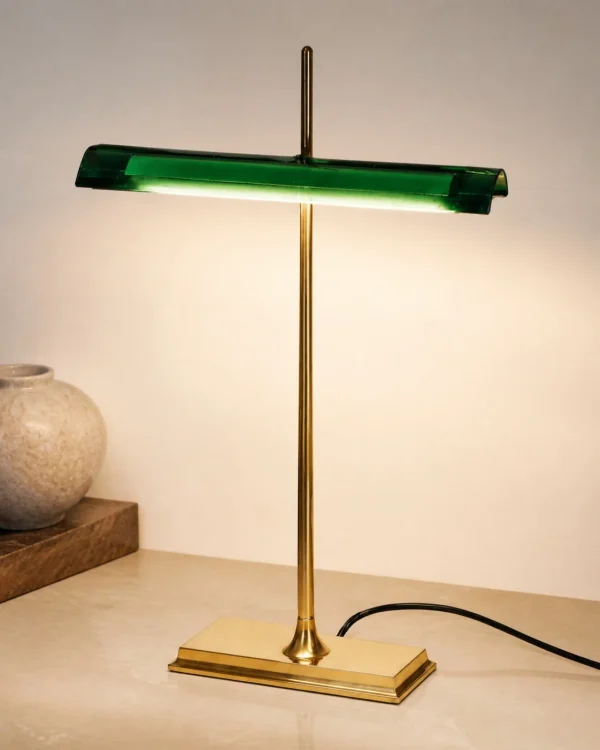
The banker’s lamp is the design classic among desk lamps: its wide, horizontal shade directs the light downwards in a focused beam and hides the bulb. ANTIK has a 26.5 cm long shade, in green and gold with emerald green glass, and an E27 lamp holder for a bulb of the brightness and colour temperature of your choice. MONA takes the same shape cordless: 40 cm tall, with a 25.5 cm wide shade, warm white light at 3000 K and a touch dimmer, in green or black.
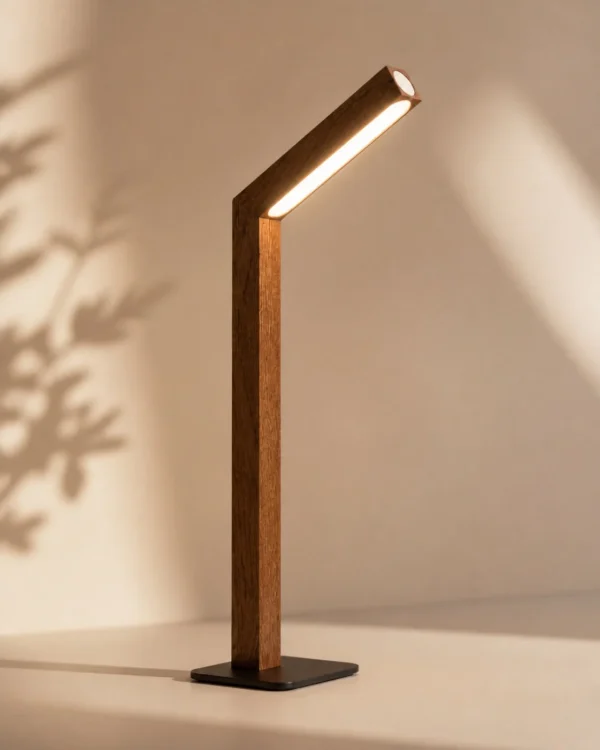
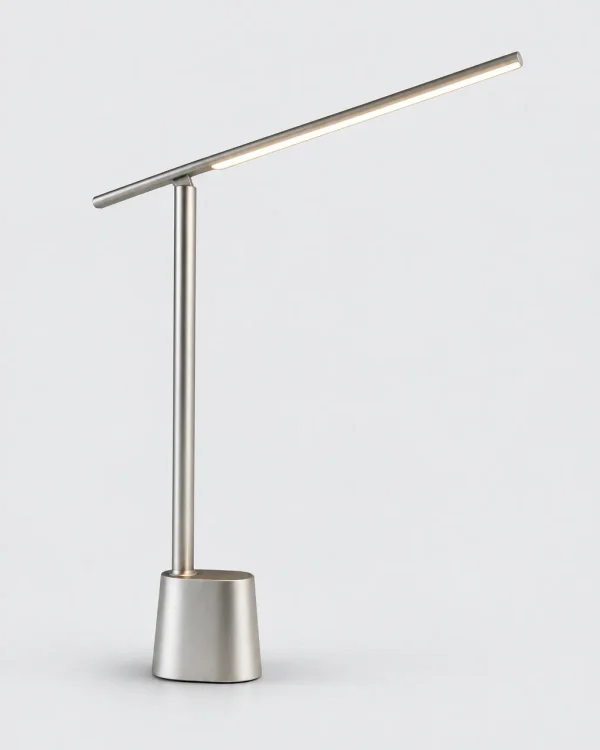
WOODI, in solid wood and metal, is 37.5 cm tall and stands on a base of only 6 × 6 cm, ideal for narrow desks. RUNO has a long, tilting light bar that aims the light precisely at the work surface, and it folds away.
A rechargeable LED desk lamp is practical if you move between the desk, the dining table and the sofa. For a full working day, a mains-powered lamp with an E27 lamp holder is the safe choice, because you set the brightness freely through the bulb. Our guide Cordless or corded table lamp explains the differences.
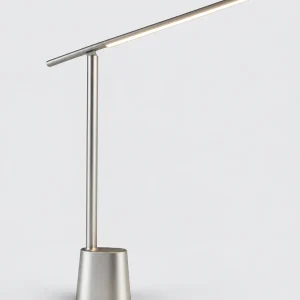 Collection · 10 designsDesk LampsView all 10 designs
Little space on the desk: wall light or floor lamp?
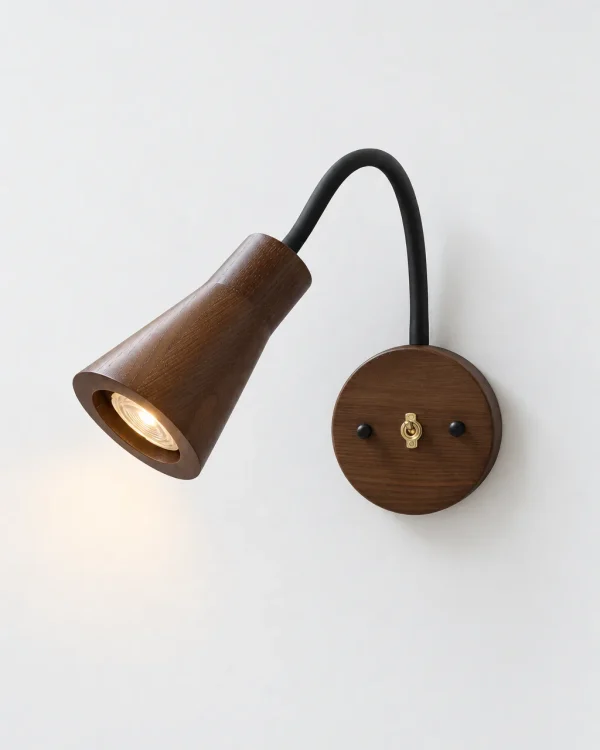
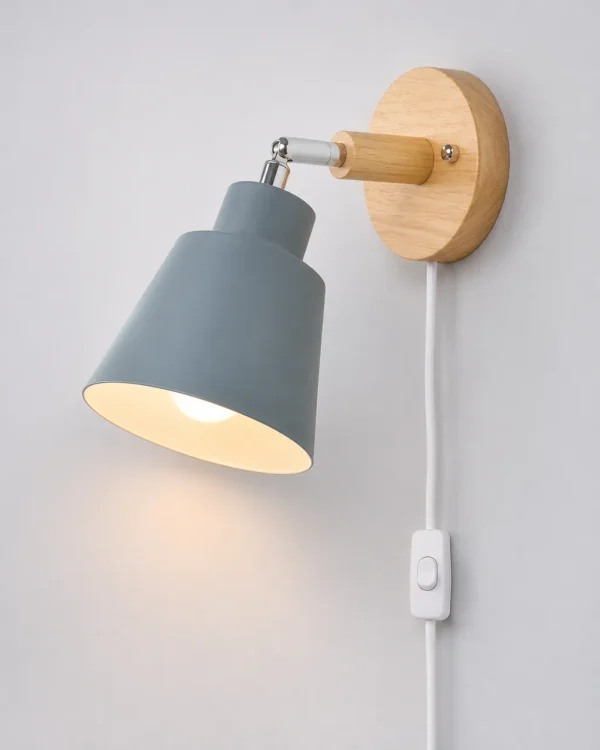
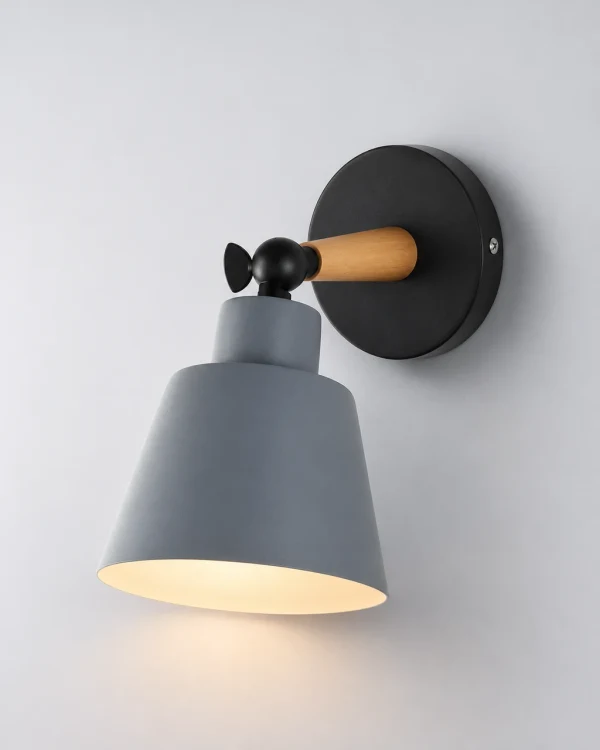
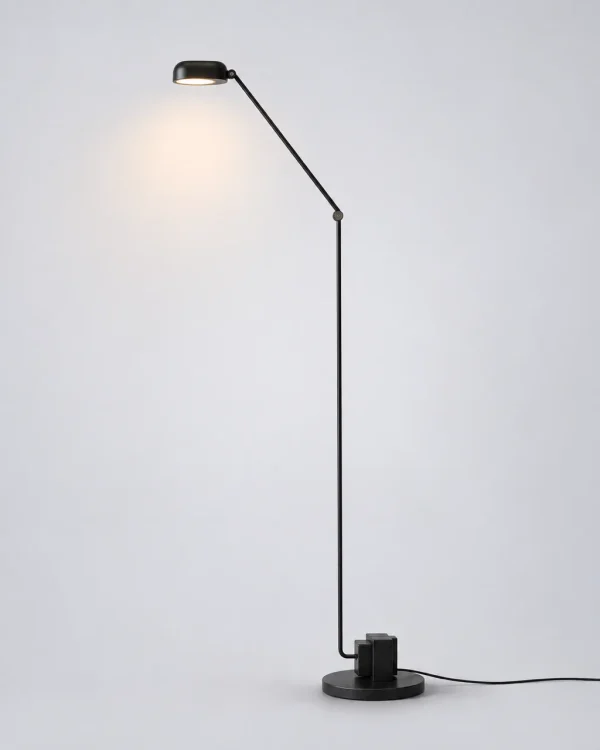
If the desk is small or full of screen and paperwork, take the lamp off the desk. Fit a wall light with a jointed arm or swivelling head about 40 to 60 cm above the desktop, on the side opposite your writing hand. A floor lamp with a jointed arm stands beside the desk and tilts its head over the work surface.
FINA has a gooseneck and a recessed lens that creates a focused beam of light; the rocker switch sits directly on the round wooden plate. TYRA has a conical metal shade, white inside, that directs the light precisely; thanks to the in-line switch and EU plug, you don’t need a wall wiring point. LAURI tilts its 12 cm cone shade towards the surface on a ball joint. BIRK is a 161 cm tall floor lamp with a jointed arm and tilting head, which shines precisely onto the desk in a study.
The same lights also work as reading lights by the armchair or bed. Our guide Reading lights for the armchair and bed explains how to position them there.
Daylight desk lamp: which colour temperature is best?
A daylight desk lamp usually means a light with 5000 to 6500 kelvin. This cool light is energising and can be pleasant on dark winter mornings. For most workspaces, though, neutral white at 4000 K is the better compromise: crisp enough for concentration, without feeling cold. From late afternoon, it is better to switch to 3000 K, so that your workspace matches the mood in the rest of the room.
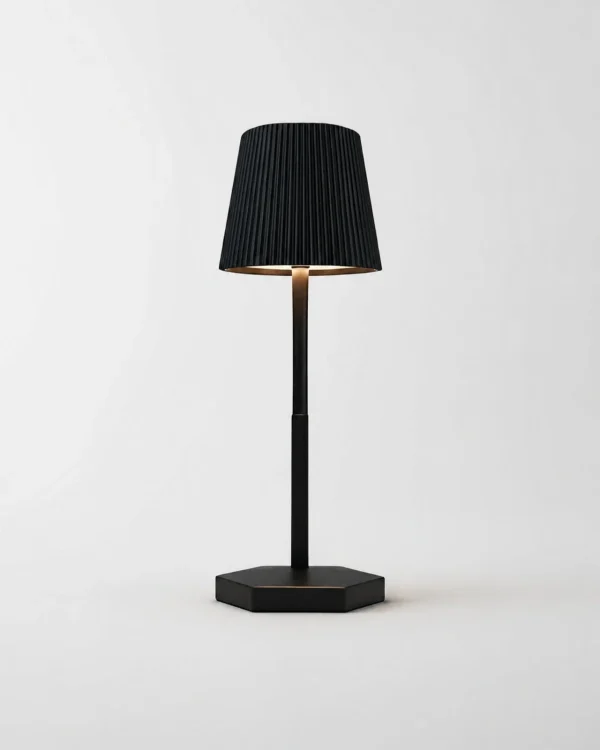
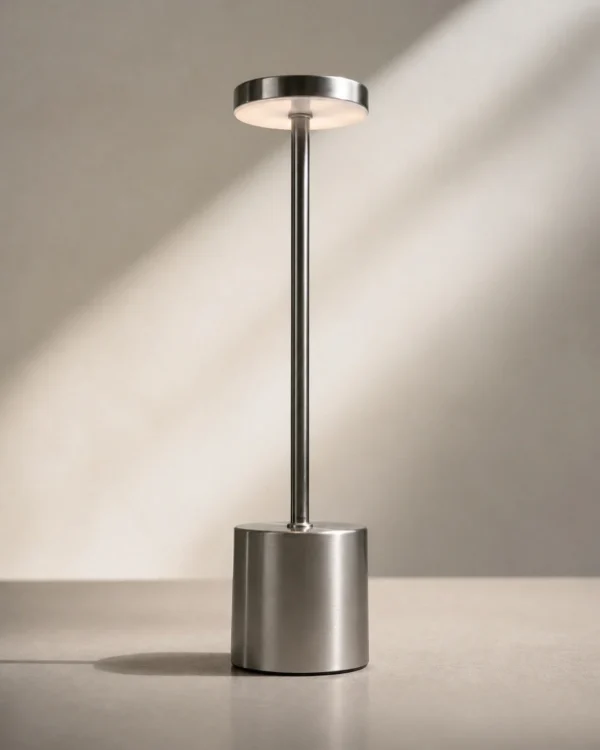
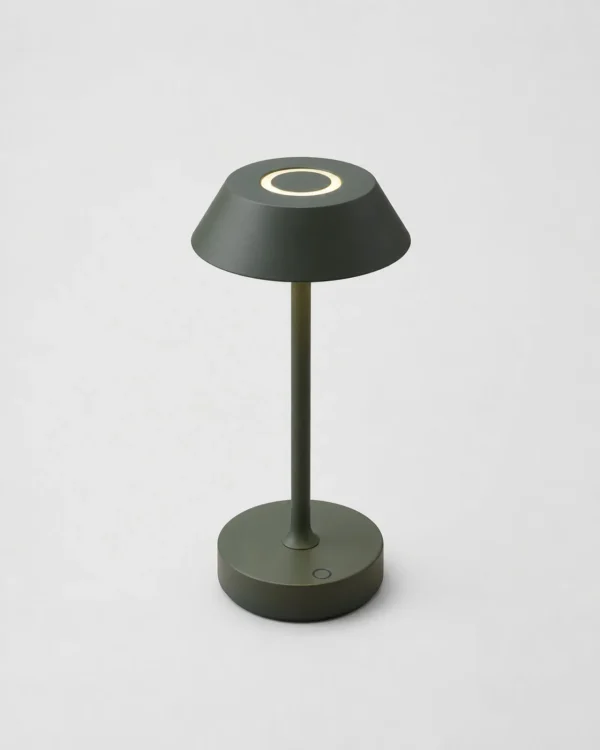
Lights with adjustable colour temperature cover every situation. TOVI ranges steplessly from 3000 to 6500 K and is dimmed by touch. NOVA offers three colour temperatures from warm white to cool white and is very slim at 34 cm tall with an 8 cm base; with 60 to 249 lumens, it is better suited as an extra light for short tasks. RUVA gives warm white light at 3000 K and has a USB-C port in the base, in green, black or yellow.
The colour rendering index also matters: a CRI or Ra of 90 or more makes paper, colours and skin look natural, especially when drawing or on video calls. You will find all the basics in our guide Colour temperature, kelvin and lumens.
How do you light the study as a whole?
The desk lamp is the task light, but not the only light. For the general light in a study, allow about 150 to 200 lumens per square metre from the ceiling. A 10 m² study therefore needs 1,500 to 2,000 lumens. If a light hangs directly above the desk, it should direct its light downwards and be shielded against glare.
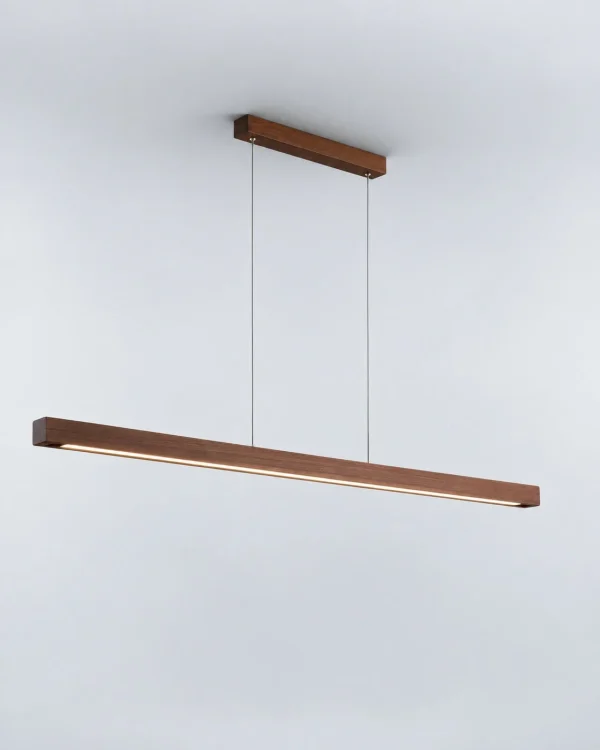
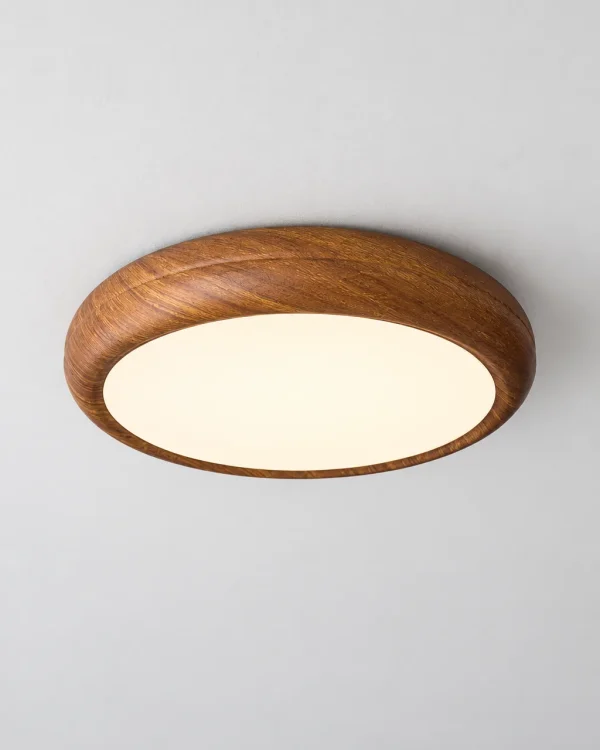
Above a long desk or a workspace for two, a linear light works well: ANOD in solid wood comes in lengths of 80 to 150 cm, and its 3000 K LED light falls straight down. As a flush ceiling light, JILO gives 1,800 to 3,600 lumens in warm white, depending on the diameter. How to work out the diameter and brightness of a ceiling light is covered in our guide Ceiling lights: size and brightness, and whether built-in LED or a lamp holder suits you better in our guide Dimmable LED ceiling lights.
Common workspace mistakes
- Lamp on the side of the writing hand: your hand casts a shadow with every word.
- Bulb at eye level: a head set too high dazzles you every time you look up from the screen.
- Only the desk lamp on: the dark room tires the eyes.
- Lamp behind the screen: it shines straight into your face and reduces contrast.
- Cool white late into the night: 6500 K feels unsettling after sunset. Switch to 3000 K in the evening.
You will find more ideas for table lamps in every room in our guide Table lamps for every room.
Frequently asked questions
How bright should a desk lamp be?
About 500 lux should reach the work surface, which is the common guideline for desk work. A desk lamp with 500 to 800 lumens and a directional head reaches this level when it sits 40 to 50 cm above the desk. For detailed work such as drawing, 750 to 1,000 lux makes sense.
Which side should a desk lamp go on?
The desk lamp goes on the side opposite your writing hand. Right-handers put it on the left, left-handers on the right. That way your hand doesn’t cast a shadow on the paper.
Which colour temperature is best for a desk?
For focused work during the day, neutral white at about 4000 kelvin is a good fit. In the evening, warm white at 3000 kelvin is more pleasant. Daylight white at 5000 to 6500 K can help on dark mornings, but feels unsettling in the evening.
How do you stop a desk lamp reflecting in the screen?
Put the lamp to the side of the screen and aim the light at the keyboard and documents, not at the monitor. Avoid bright light sources behind your back. To test it, switch the screen off: in the black surface you will see every distracting reflection.
Is a rechargeable desk lamp suitable for working from home?
A rechargeable desk lamp is ideal if you often change where you work or don’t want a cable across the desk. For a full working day, a mains-powered lamp with an E27 lamp holder gives you more scope for brightness. Many people combine both: a corded lamp at the fixed desk and a cordless one for flexible moments.
How high should a desk lamp be?
The lamp head ideally sits 35 to 50 cm above the desktop and below your seated eye level. That way the lamp lights the surface without dazzling. Fit a wall light above the desk about 40 to 60 cm above the desktop.