Living Room Ceiling Lights and Lamps: How to Light Your Lounge
Which lights belong in the living room, where they go and how many you need, with a plan for the sofa, reading corner and TV, plus solutions for low ceilings.
Even the best ceiling lights for the living room are only one part of the picture: good lounge lighting always combines three layers, a ceiling light for general light, focused lights for reading and working, and floor, table and wall lamps for atmosphere. Allow roughly one light source for every 4 to 6 m² of floor space and choose warm white light at 2700 K for all your living room lamps. With a low ceiling, swap the pendant for a flat ceiling light less than 10 cm deep and create the atmosphere with wall lights and floor lamps.
What lights does a living room need?
Lighting designers think in three layers. If one is missing, the room feels either flat and harsh or dark and impractical.
- General lighting: a living room ceiling light or a pendant. It makes the room bright enough for tidying, cleaning and guests.
- Accent and task lighting: a reading lamp by the armchair, an arc lamp over the sofa, a spotlight on a picture or a shelf. This light is directional and bright exactly where you need it.
- Mood lighting: table lamps, wall lights and floor lamps with fabric, glass or stone shades. They bring light down to eye level and make the living room cosy in the evening.
In the evening, ideally, the ceiling light is off and three or four smaller light sources glow at different heights. It is precisely this interplay of light and shadow that makes a living room feel lived-in.
How many lights do you need in a living room?
As a rule of thumb: one light source for every 4 to 6 m² and a total of about 100 to 150 lumens per square metre when all the lights are on. For LED lights, you will find the lumen figure on the product data sheet or on the bulb’s packaging.
| Living room | Light sources | Total lumens (approx.) | Example combination |
|---|---|---|---|
| 15 m² | 3–4 | 1,500–2,200 lm | 1 flat ceiling light, 1 floor lamp by the sofa, 1 table lamp on the sideboard, optionally 1 wall light |
| 25 m² | 5–6 | 2,500–3,700 lm | 1 ceiling light, 1 arc or floor lamp, 1 reading lamp, 2 table lamps, 1 wall light |
| 35 m² | 7–9 | 3,500–5,200 lm | 2 ceiling lights, or 1 ceiling light plus a pendant over the dining table, 2 floor lamps, 2–3 table lamps, 2 wall lights |
Spread the lights so that no corner is left completely dark. A dark corner makes a room look smaller than it is.
Lounge lighting: which living room lights go where?
Sofa: floor lamp or arc lamp
A floor lamp for the living room works best to the side of and slightly behind the sofa arm, so the light falls over your shoulder rather than into your face. The bottom of the shade then sits at roughly seated eye level, around 110 to 130 cm above the floor. A fabric or pleated shade diffuses the light softly into the room.
Reading corner: directional light
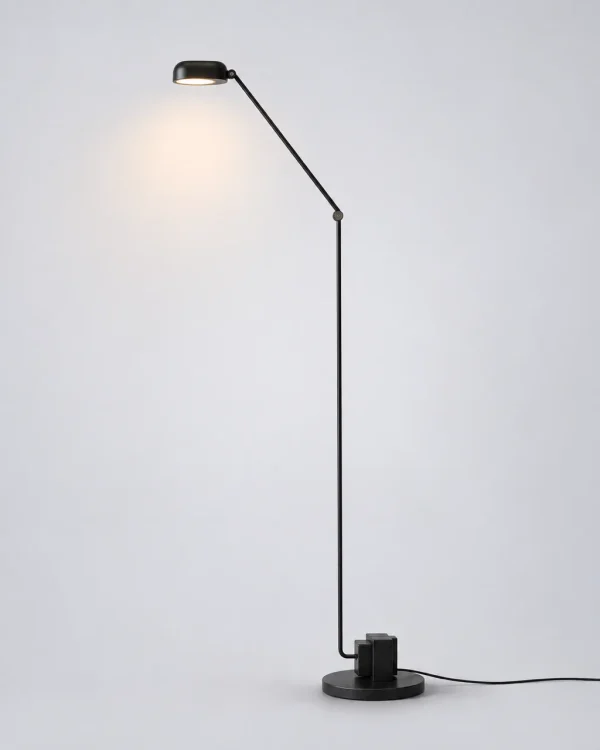
For reading, you need a head you can angle. BIRK is 161 cm tall, with an articulated arm and a lamp head only 8 cm high that you can point straight at your book. You will find more models among our reading lamps.
Coffee table: light from above or from the side
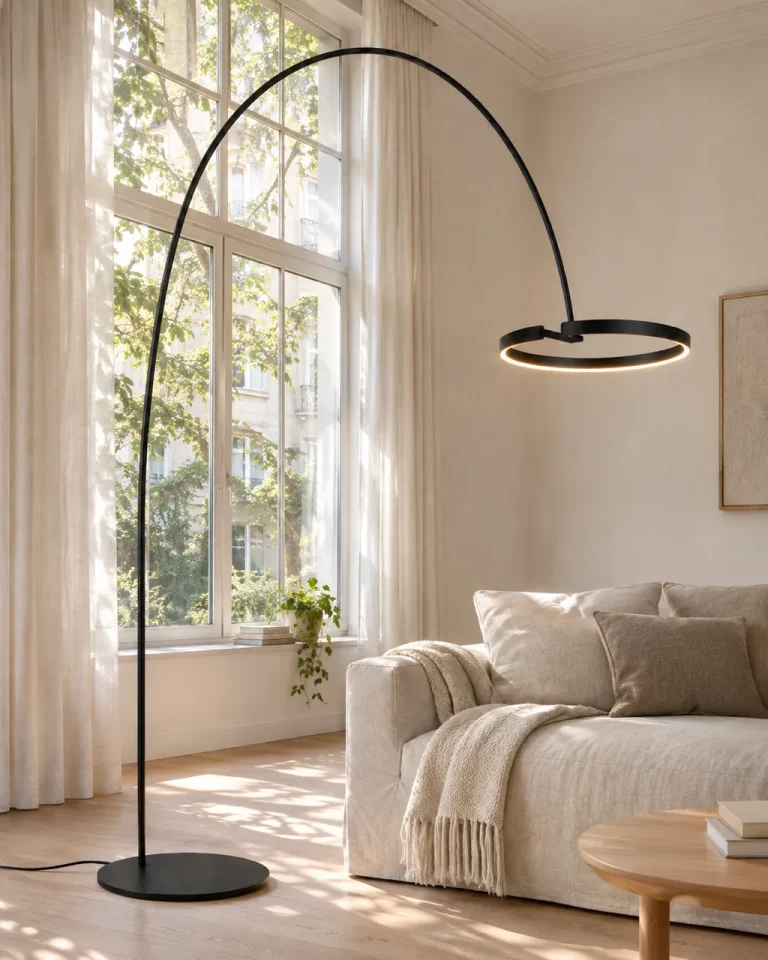
Over a coffee table, a pendant hangs lower than in a walkway: the bottom sits about 60 to 80 cm above the tabletop, so you can still see the person opposite. Without a ceiling connection in that spot, an arc lamp does the job.
TV wall: indirect light, no reflections
Never watch TV in complete darkness. A table lamp on the TV unit or a wall light beside the television reduces the contrast between the bright screen and the dark wall. Place the light to the side of or behind the screen, never opposite it, or it will reflect in the display.
Shelves and bookcases
A ceiling spotlight bar or a small table lamp on a shelf highlights books, ceramics and plants. This is pure accent lighting and can be a little softer.
Dining area in the living room
If the living space includes a dining table, it gets its own pendant light on a separate switch. How high it should hang and how large it should be is explained in our guide to dining table pendant lights: height and size.
Which floor lamp suits a living room?
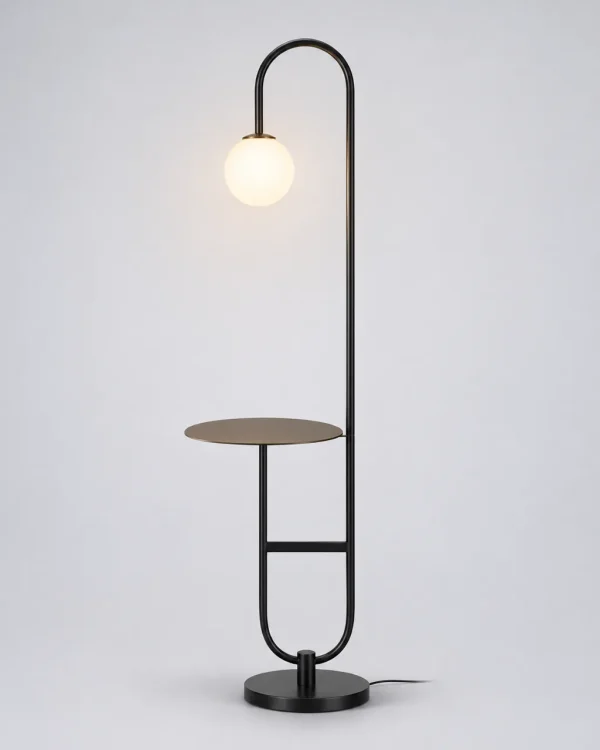
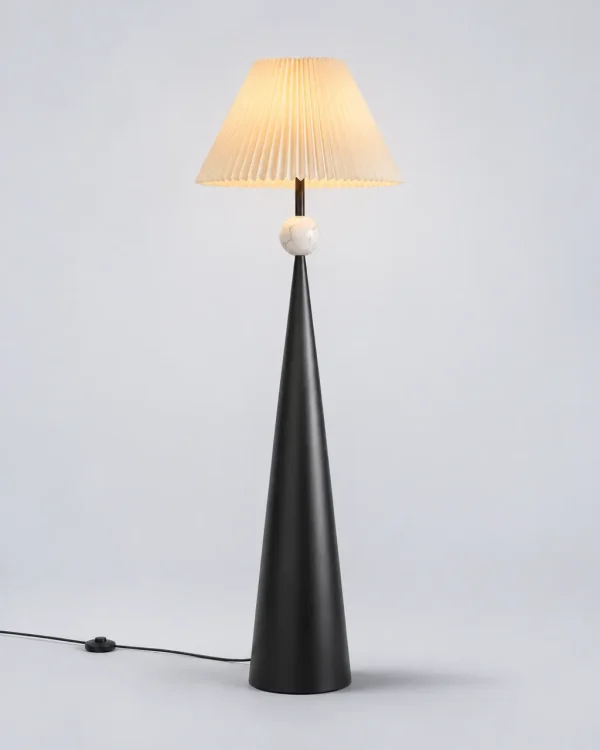
A floor lamp in the living room should be 150 to 165 cm tall if it stands beside the sofa, with a shade that hides the bulb. Three shapes work particularly well for the sofa and reading corner. KOLA (153 cm) has a round Ø 33 cm shelf at 60 cm high and so doubles as a side table. BIRK is the precise reading lamp. TOVA (150 cm, pleated shade Ø 44 cm) gives soft mood lighting behind the sofa.
 Collection · 52 designsLiving Room Floor LampsView all 52 designs
Ceiling lights for the living room or a pendant light?
A living room ceiling light sits flat against the ceiling, spreads light evenly and suits any ceiling height. A living room pendant light is a focal point but needs headroom. In a walkway, the bottom must be at least 200 cm above the floor so nobody bumps into it.
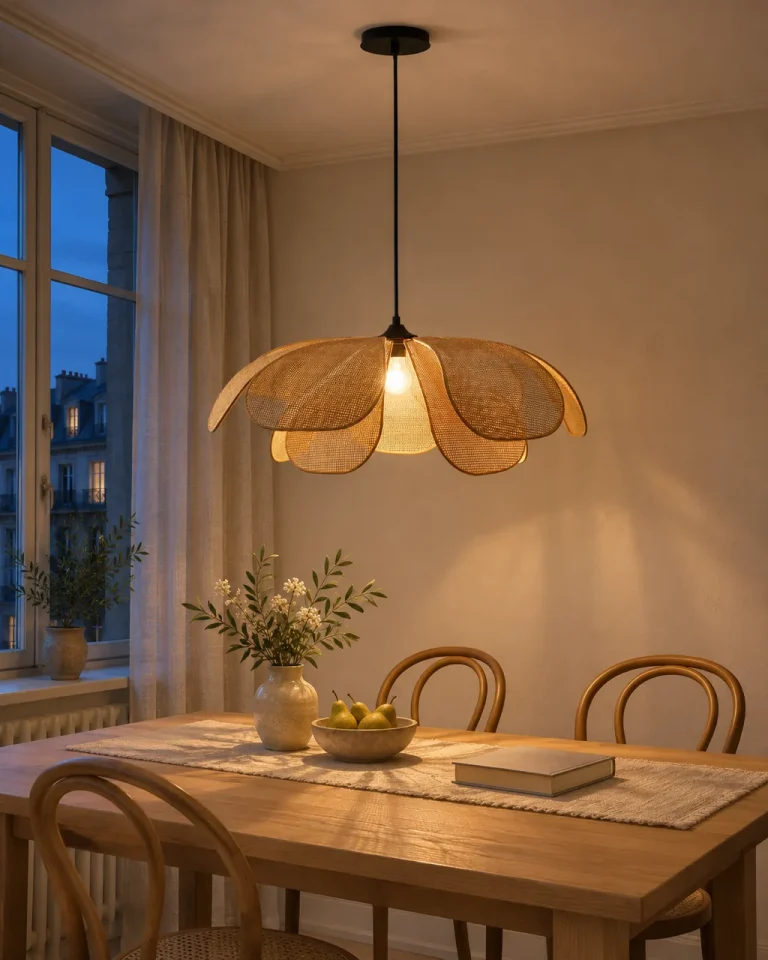
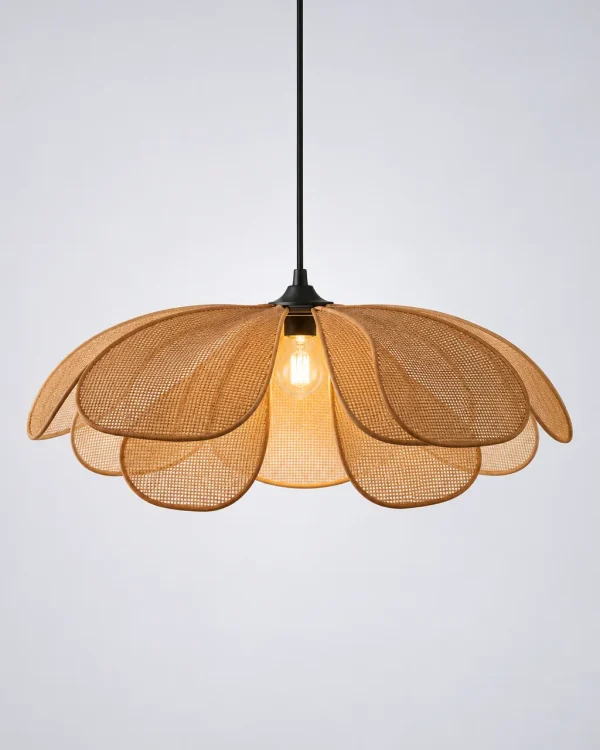
For the size, a simple rule of thumb helps: add the length and width of the room in metres and multiply by 8 to get a suitable diameter in centimetres. A 4 × 5 m living room can therefore take a light of about 70 cm in diameter. With a living room pendant light such as ASTA in rattan (Ø 50, 60, 80 or 100 cm, adjustable 120 cm cable), choose the 80 or 100 cm version for large rooms from 30 m².
Which ceiling lights suit a living room with a low ceiling?
A ceiling counts as low from around 2.40 m downwards; in loft conversions and some new builds it is only 2.30 m. Here every centimetre decides whether the room feels open or cramped. These rules work:
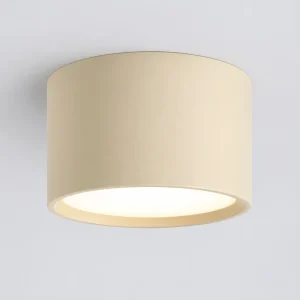
- Flat rather than hanging: Choose a ceiling light no more than 10 cm deep. With a 2.40 m ceiling, that leaves more than 2.30 m of clearance.
- Wide rather than deep: A large, flat diameter (40 to 60 cm) spreads light better than a small, deep light.
- Pendants only over furniture: A pendant is possible even with a low ceiling, but only where nobody walks underneath, such as over the coffee table or dining table. Shorten the cable so the bottom sits 60 to 75 cm above the tabletop.
- Bounce light off the ceiling: A floor lamp or wall light that shines upwards brightens the ceiling. A bright ceiling looks higher.
- Wall lights at 160 to 180 cm: This gives the room light at mid-height without anything hanging from the ceiling.
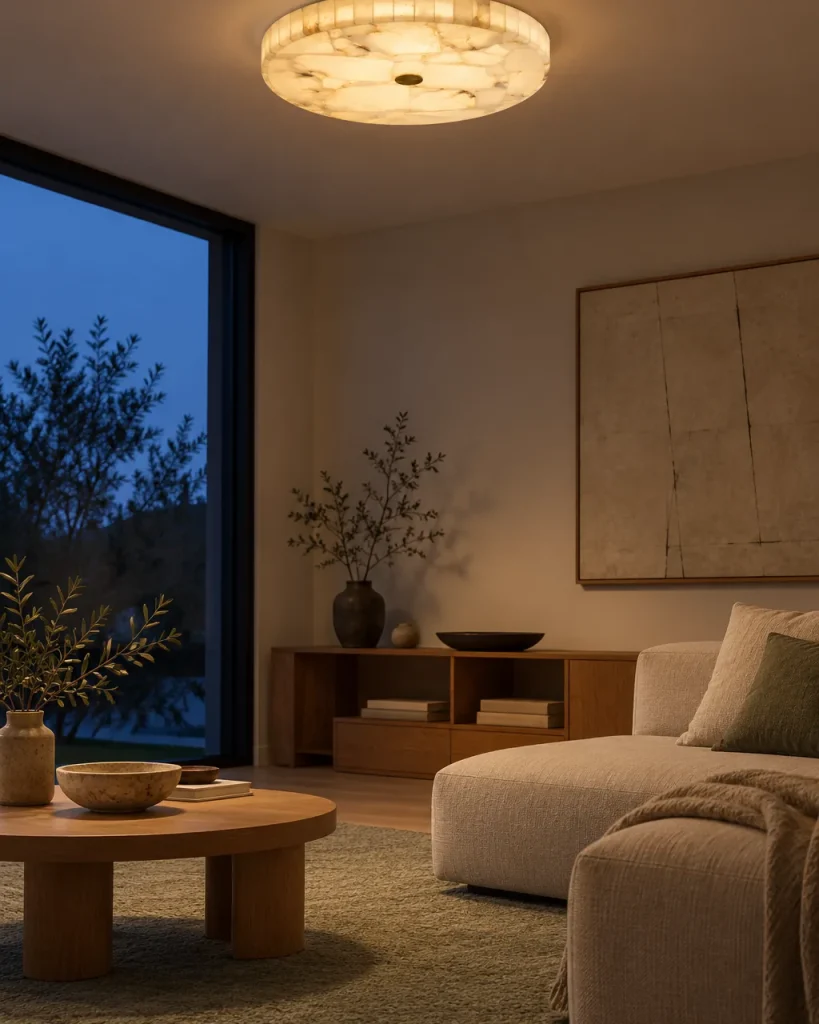
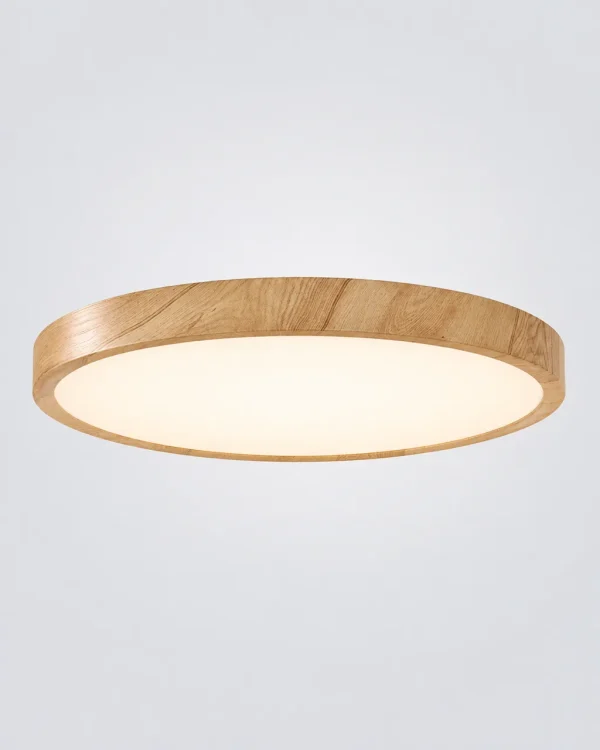
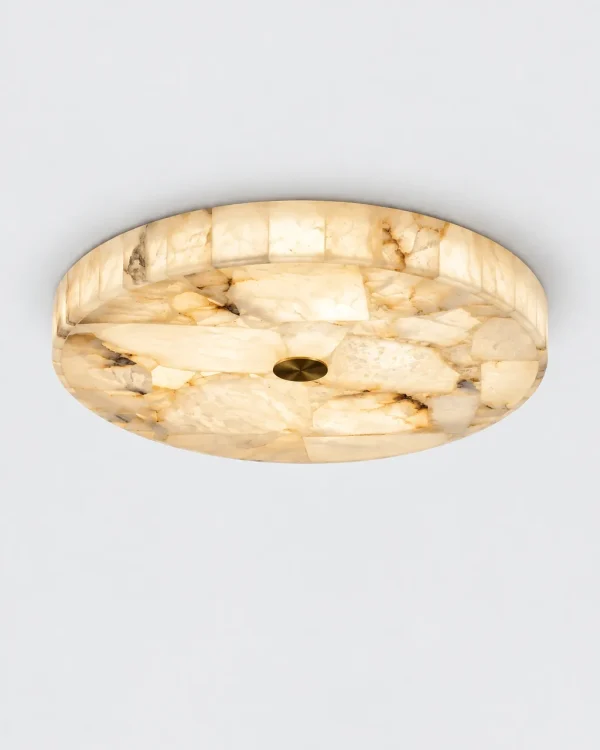
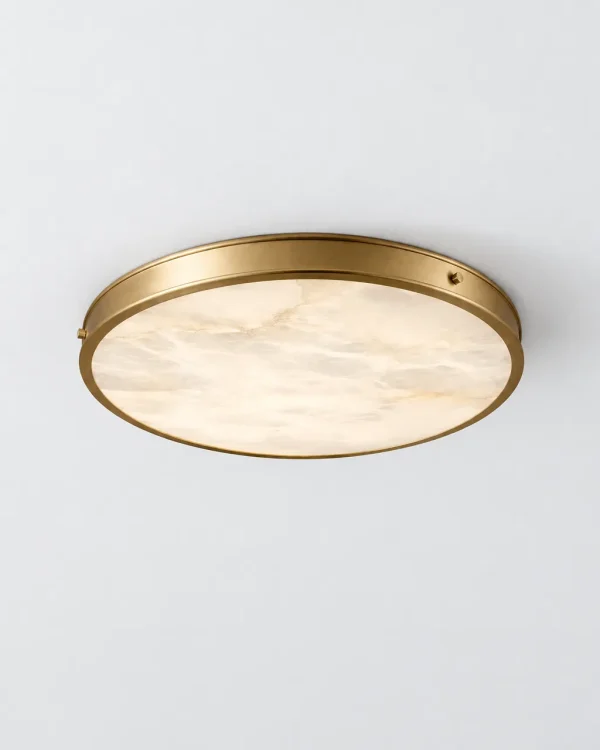
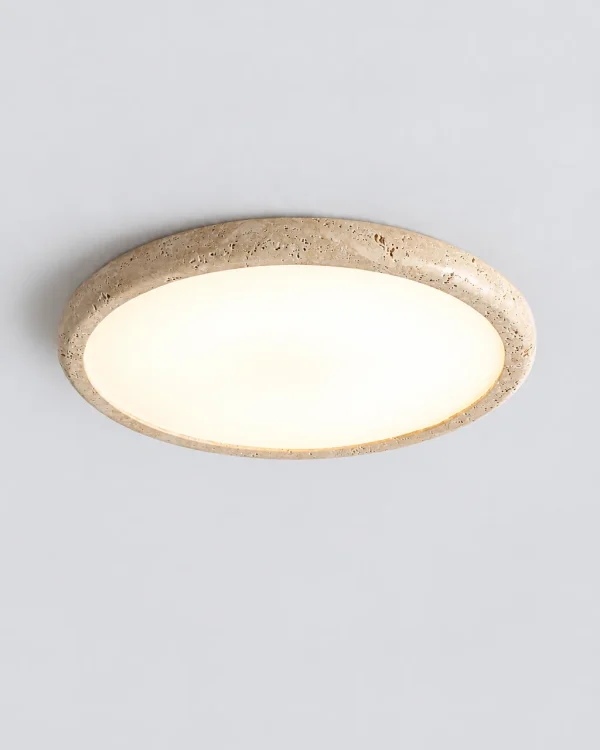
These flat living room ceiling lights have a verified depth according to their product data: HILDE is the slimmest at 2.4 cm, an LED panel in Ø 23, 30 or 40 cm with switchable colour temperature (2800 K, 4000 K, 5000 K). BATRAZ is an alabaster mosaic disc 5 cm deep in Ø 40, 50 or 60 cm, also available in a dimmable version. FENZE has an underside of genuine alabaster, is 5 cm deep (Ø 30, 40 or 50 cm) and optionally TRIAC-dimmable. ZELIA, with a travertine ring, is 5.5 cm deep (Ø 38, 48 or 58 cm) and shines at 3000 K.
You will find more flat models among our LED ceiling lights and alabaster ceiling lights.
No ceiling connection in the lounge: arc lamp or wall light?
Many living rooms have no ceiling connection in the centre, or it is in the wrong place. You can solve this without an electrician:
- Arc lamp in the living room: It stands beside the sofa and still brings light over the middle of the room. ALVA adjusts in height between 145 and 180 cm and has a 94 cm reach. FJOR is 180 cm tall, has a 70 cm reach and is dimmable with three colour temperatures. Everything about reach, stability and height is in our arc floor lamp guide.
- Plug-in wall light: It is screwed to the wall and plugged into a socket. CORI has a 150 cm cable with a switch, TINE a 1.8 m cable with an EU plug.
- Several floor lamps: Two floor lamps in opposite corners replace a ceiling light better than a single very bright one.
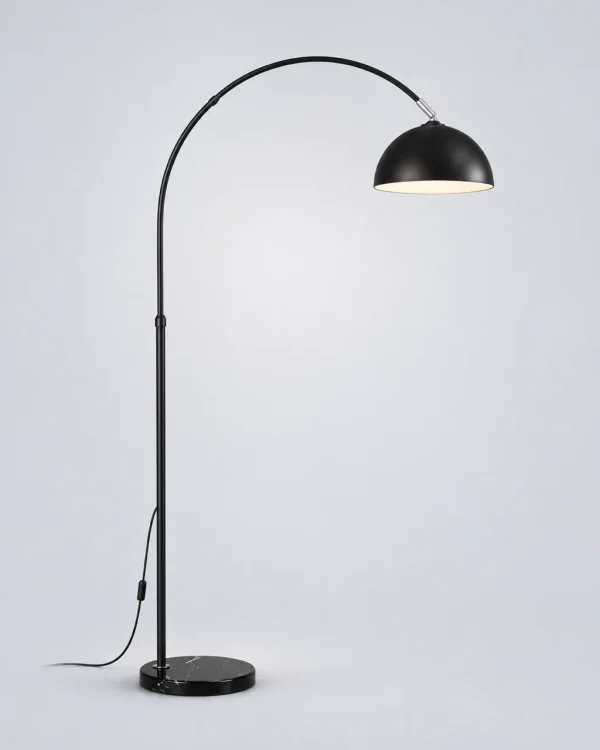
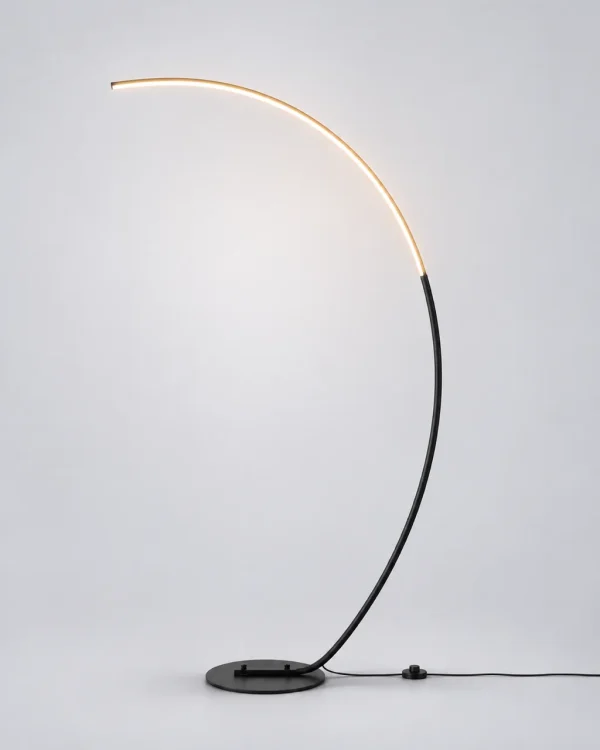
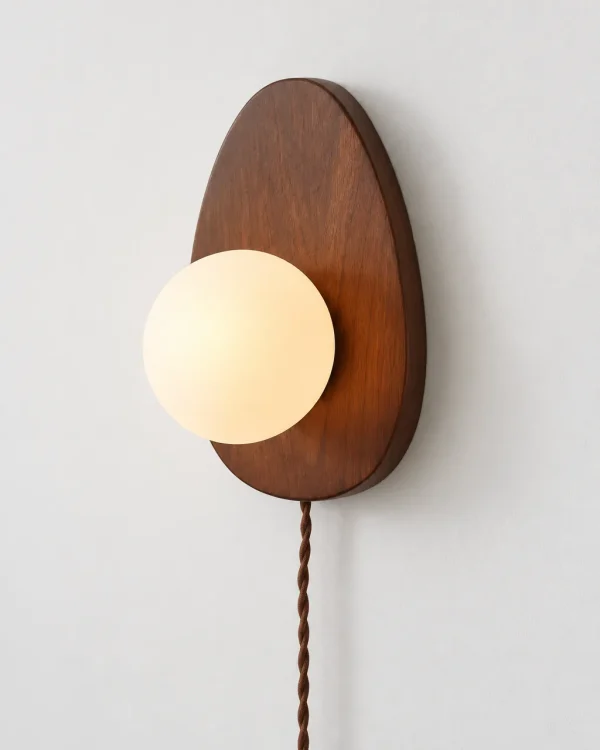
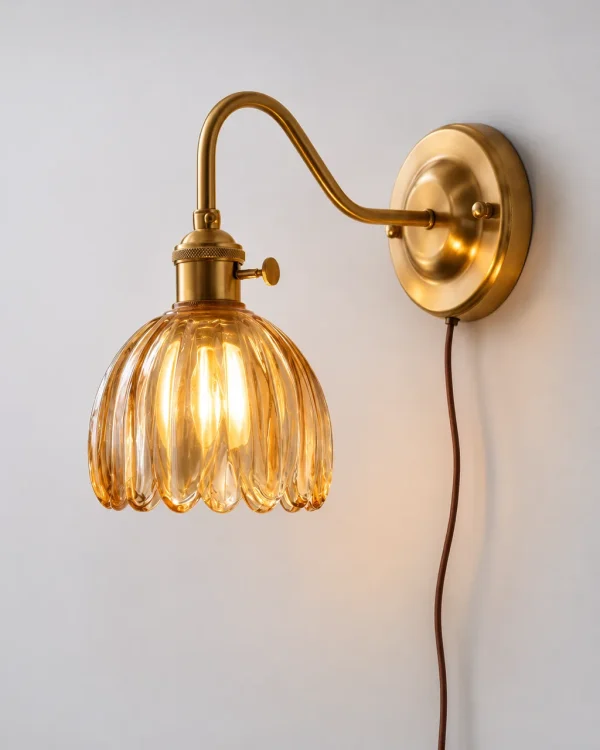
See the full range of arc floor lamps and plug-in wall lights.
Wall lights in the living room: where and how high?
A living room wall light is mounted with its centre about 160 to 180 cm above the floor, or a little lower beside the sofa, around 120 to 140 cm, so it works as a reading light. Pairs on either side of a sideboard, fireplace or TV look calm and symmetrical. If you want to adjust the brightness, take a look at our dimmable wall lights. You will find the complete range among all our wall lights.
Which table lamp suits a living room?
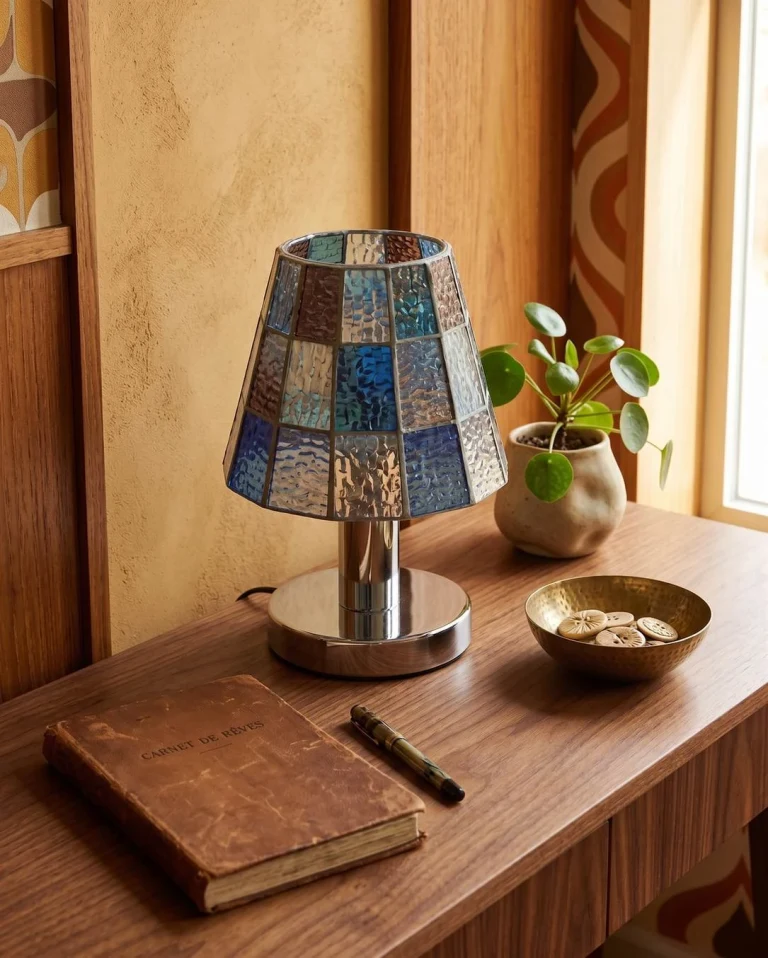
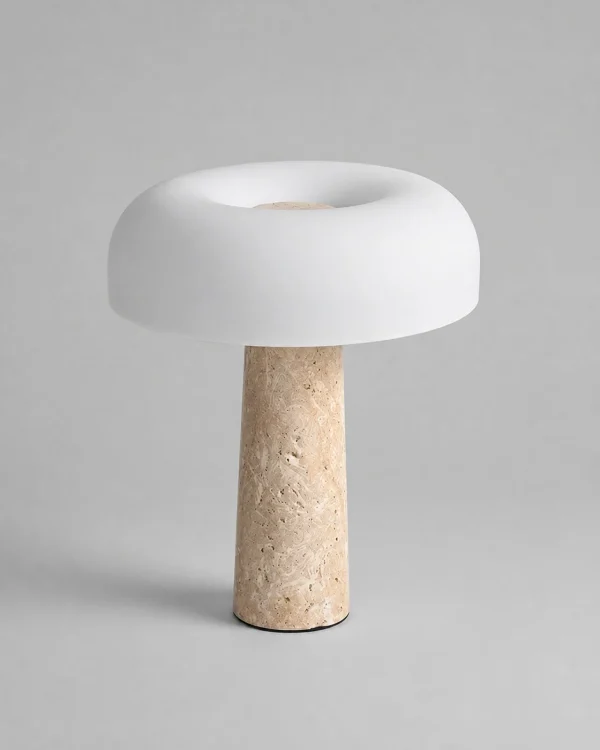
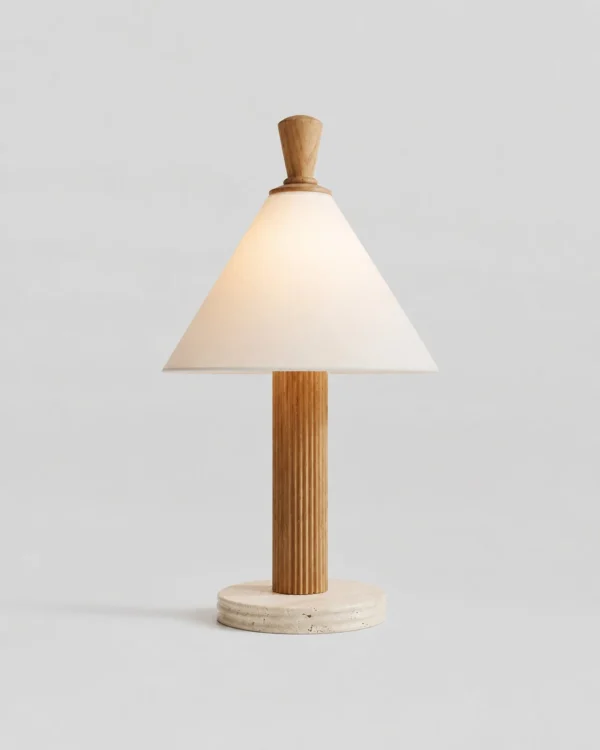
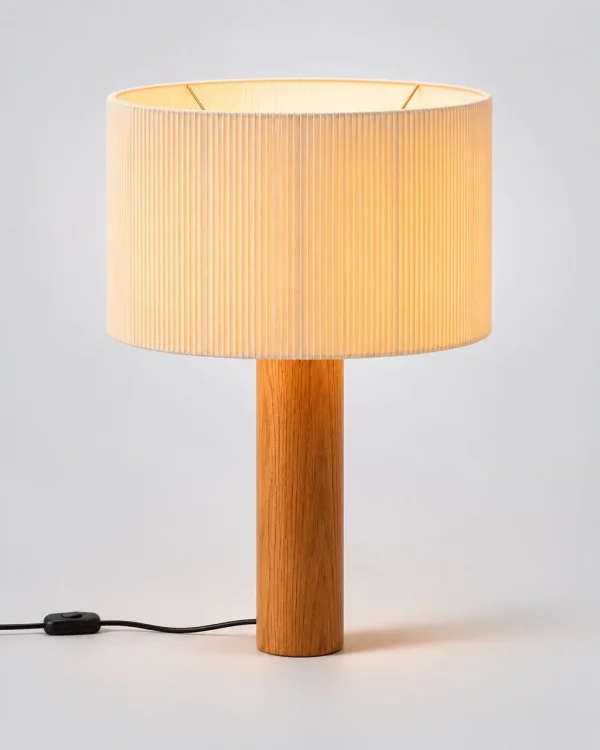
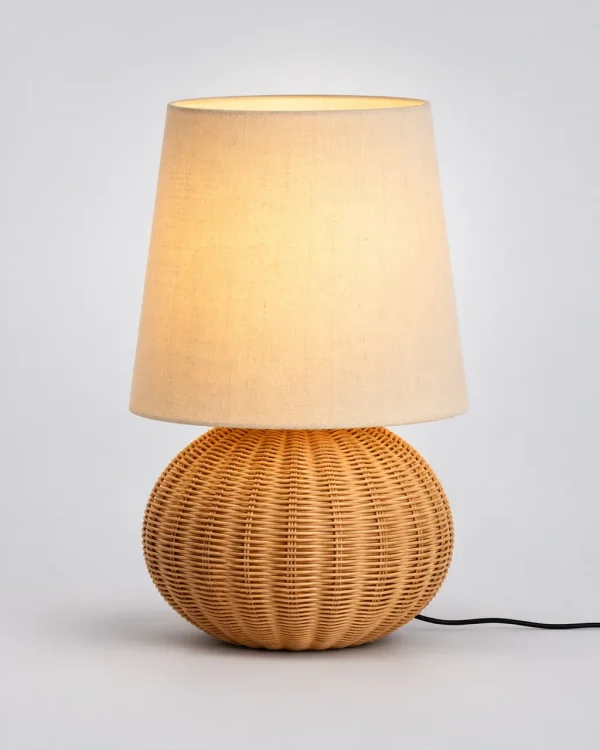
A table lamp in the living room stands on a sideboard, side table or windowsill and brings light to seated height. The bottom of the shade should sit at roughly seated eye level: on a 55 cm side table, a lamp of 45 to 60 cm fits. ZENO (Ø 34 × 40 cm, travertine with a matt white glass dome, 3000 K) makes a statement on a sideboard. TÉA (Ø 30 × 54 cm, fluted wooden base, fabric shade) is the classic size for a side table. RITA, with a pleated shade on an oak base (Ø 35 × 55 cm or Ø 40 × 60 cm), suits the wabi-sabi style. RONJA has a rattan base and, at 45 or 47 cm tall, is a little more compact.
Whether cordless or corded suits your spot better is covered in our comparison cordless or corded table lamp. More ideas for every room are in our guide the right table lamp for every room. You will find every model among our table lamps.
What colour temperature is right for a living room?
Warm white light at 2700 K is ideal in the living room, and 3000 K is the upper limit for mood lighting. Neutral white at 4000 K only suits a reading light or a workspace. Do not mix different colour temperatures in the same room, or one corner will look yellowish and another bluish.
- Dimmer: At the very least, the ceiling light should be dimmable. That turns cleaning light into evening light. Make sure the bulbs and the dimmer are compatible.
- Avoid glare: From the sofa, you should not see a bare bulb. Opal glass, alabaster, fabric or paper diffuse the light and take the edge off it.
- Separate circuits: Sockets controlled by the wall switch make floor and table lamps just as convenient as the ceiling light.
Which living room lights suit wabi-sabi, travertine and rattan?
Natural materials are shaping living rooms right now. They also change the light:
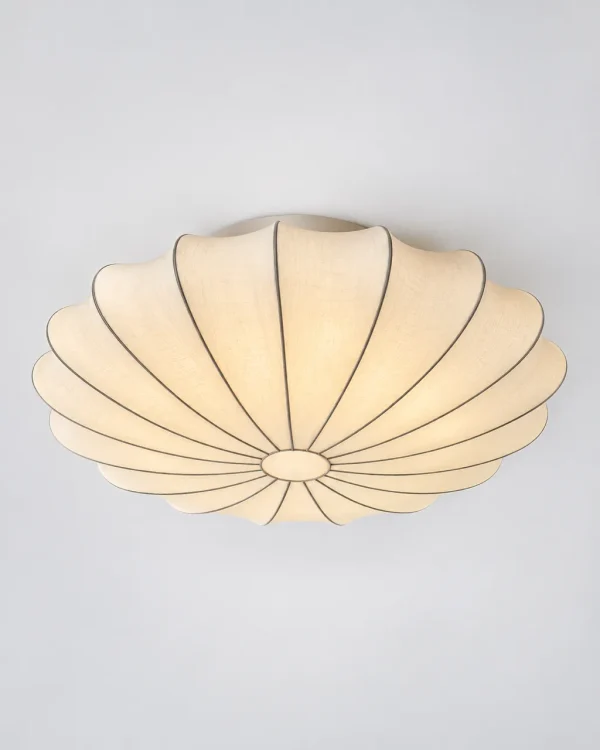
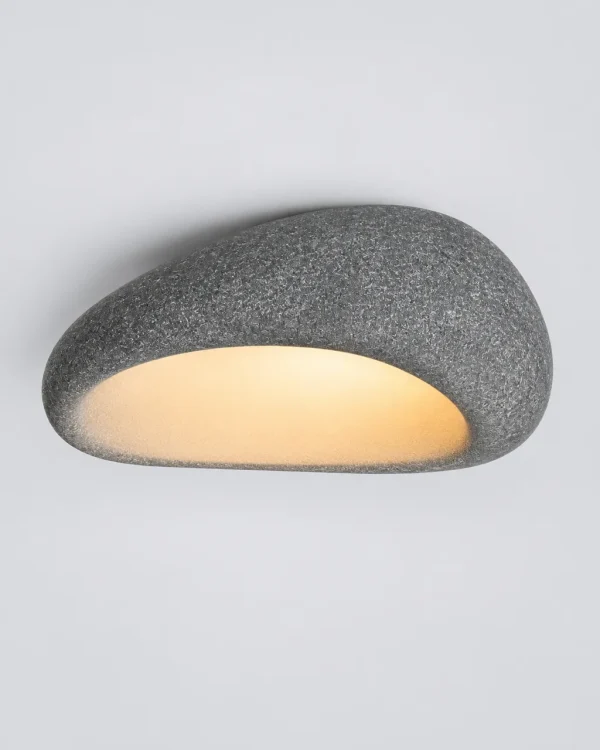
- Wabi-sabi: Silk, paper and textured surfaces give a muted, uneven light. KELDA, with a ribbed silk shade, sits close to the ceiling at 20 to 25 cm deep. LENA, shaped like a pebble, comes in widths from 30 to 80 cm. More among our wabi-sabi lamps.
- Travertine: This porous, beige natural stone feels warm and substantial. It suits linen, oak and lime plaster, for example as ZELIA on the ceiling or ZENO on the sideboard (travertine table lamps).
- Alabaster: Light shines through the stone and traces its veining. Every disc is unique, as with BATRAZ and FENZE.
- Rattan: The weave casts patterns of light on the walls and ceiling. ASTA, shaped like a flower, brings warmth to bright, Scandinavian rooms (rattan lamps).
 Collection · 47 designsLiving Room Ceiling LightsView all 47 designs
Which living room lighting mistakes should you avoid?
- Only a ceiling light: It makes the room as flat as a waiting room. Add at least two light sources at eye level.
- Light too small: A Ø 25 cm ceiling light gets lost in a 30 m² room. Use the length-plus-width rule of thumb.
- A pendant in the walkway under a low ceiling: With less than 200 cm of headroom, people will bump into it. Choose a flat ceiling light.
- Cool white light: 5000 to 6000 K feels unwelcoming in a living room in the evening.
- A lamp opposite the TV: It reflects in the screen.
- Tangled cables: Plan floor and table lamps near a socket, or run the cable under the rug along the wall.
Frequently asked questions
What is the best lighting for a living room?
The best solution is a combination of a ceiling light for general light, a floor or arc lamp by the sofa and one or two table or wall lights. Choose warm white light at 2700 K for all of them and make at least one light dimmable.
How many lights does a 25 m² living room need?
A 25 m² living room needs five to six light sources with a combined output of about 2,500 to 3,700 lumens. A typical combination is a ceiling light, a floor lamp, a reading lamp, two table lamps and a wall light.
Which ceiling lights are best for a living room with a low ceiling?
With a ceiling height of 2.40 m or less, choose a flat ceiling light no more than 10 cm deep. Very slim models such as HILDE (2.4 cm), BATRAZ and FENZE (5 cm) or ZELIA (5.5 cm) take up almost no space.
Can you hang a pendant light in a living room with a low ceiling?
Yes, but only over furniture nobody walks under, such as the coffee table or dining table. There, the bottom should hang 60 to 75 cm above the tabletop. In a walkway, a pendant needs at least 200 cm of headroom.
How do I light a living room without a ceiling connection?
Without a ceiling connection, an arc lamp, several floor lamps and plug-in wall lights take over. An arc lamp with a 70 to 94 cm reach brings light over the sofa without calling in an electrician.
How high should you hang a wall light in a living room?
A wall light in the living room is usually mounted with its centre 160 to 180 cm above the floor. Beside the sofa, as a reading light, it sits lower, at around 120 to 140 cm.
What colour temperature is best for a living room?
Warm white light at 2700 K is best for the living room, with 3000 K as the upper limit. Neutral white at 4000 K only suits a reading lamp or a workspace in the room.