Reading Light: The Right Lamp for Your Armchair, Bed and Floor
How high should a reading lamp stand by the armchair, where does it go by the bed and how bright should it be? Measurements, lux levels and the right lights.
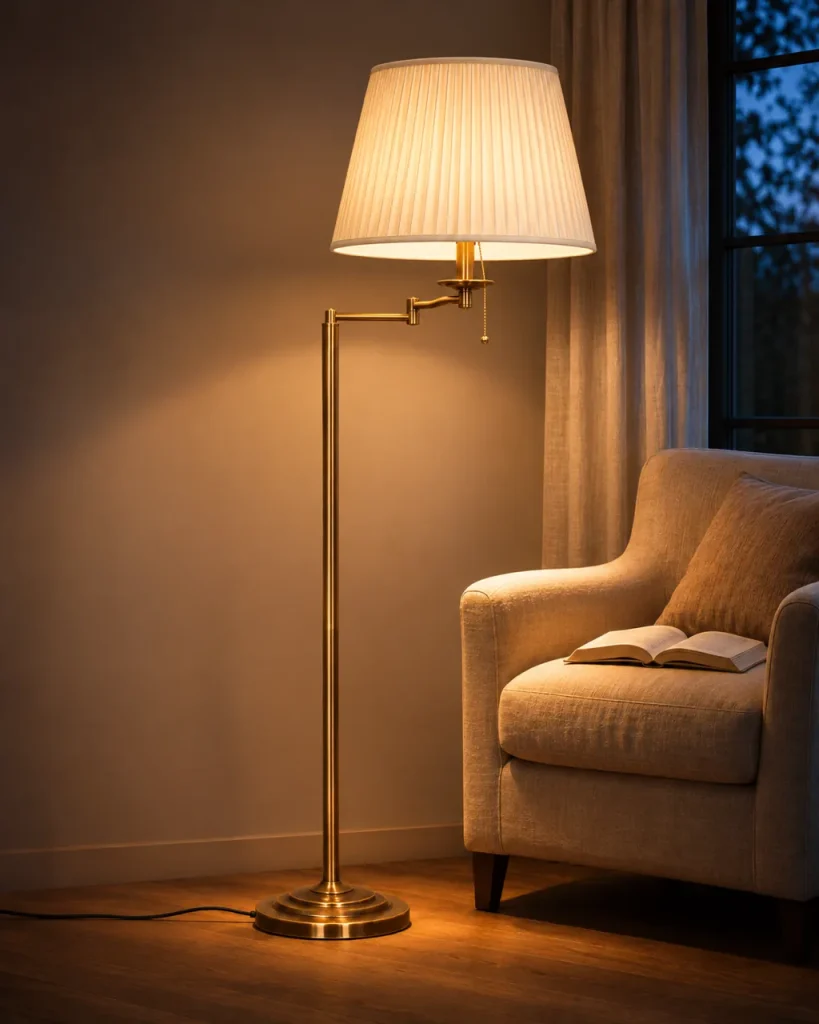
A good reading light stands or hangs to the side of you and slightly behind, so its light falls over your shoulder onto the page without you looking into the bulb. By an armchair, the lower edge of the shade sits at about shoulder to eye level, so around 100 to 120 cm (39 to 47 in) above the floor; by the bed, the light opening sits about 40 to 60 cm (16 to 24 in) above the mattress. Ideal are 300 to 500 lux on the page, a bulb of 400 to 800 lumens and warm white light at 2700 to 3000 kelvin.
Whether it’s a floor lamp beside the armchair, a wall sconce above the bed or a small table lamp on the nightstand: in this guide you’ll find the right heights and distances, the right beam of light and our reading lamps with their real dimensions.
What makes a good reading lamp?
For reading, you need directed light that lights the page evenly and a shade that hides the light source from your eyes. Four things decide:
- Direction: the light comes from the side and slightly from behind. From the front it glares; from directly above, your head casts a shadow on the book.
- Shielding: from your seat, you shouldn’t be able to see the bulb. A shade in metal or fabric that’s open at the bottom is ideal; a clear glass shade only with a warm, soft bulb.
- Adjustability: a swing arm, a pivoting head or an arc brings the light exactly where you read.
- Ambient light: never read with a single lamp in an otherwise dark room. The strong contrast between a bright page and dark surroundings tires the eyes. A second, softer light source in the room is enough.
How bright should a reading light be?
For relaxed reading, 300 to 500 lux on the page is a good range. As we get older, the eye needs considerably more light; if you’re over 50, aim for the upper end. How many lux reach the page depends on the distance: the closer the shade is to the book, the fewer lumens you need.
| Reading spot | Distance from light to book | Bulb | Color temperature |
|---|---|---|---|
| Wall sconce by the bed | 40–60 cm (16–24 in) | 250–450 lm | 2700 K |
| Bedside lamp | 50–70 cm (20–28 in) | 400–600 lm | 2700 K |
| Floor lamp by the armchair | 60–90 cm (24–35 in) | 470–806 lm | 2700–3000 K |
| Arc lamp over the sofa | 90–130 cm (35–51 in) | 806–1,000 lm | 2700–3000 K |
| Reading at a table, long sessions | 40–50 cm (16–20 in) | 500–800 lm | 3000–4000 K |
For reference: an LED bulb with 470 lumens roughly equals an old 40-watt incandescent bulb, and one with 806 lumens a 60-watt bulb. Also look for a color rendering index (CRI or Ra) of at least 90, so paper and print look crisp and natural. You’ll find more on these values in our guide Color Temperature, Kelvin and Lumens.
Reading lamp by the armchair: how high, and where does the floor lamp go?
The classic reading floor lamp stands to the side of the armchair, about 20 to 40 cm (8 to 16 in) behind the backrest. The lower edge of the shade sits at shoulder to eye level, which when seated is usually 100 to 120 cm (39 to 47 in) above the floor. That way the light falls over your shoulder onto the page, and you don’t look into the lamp.
Which side the lamp stands on depends on how you read: if you tend to hold the book on the right, put the lamp on the left, so your hand doesn’t cast a shadow on the page. For right-handed readers who take notes, the left side is almost always the right one.
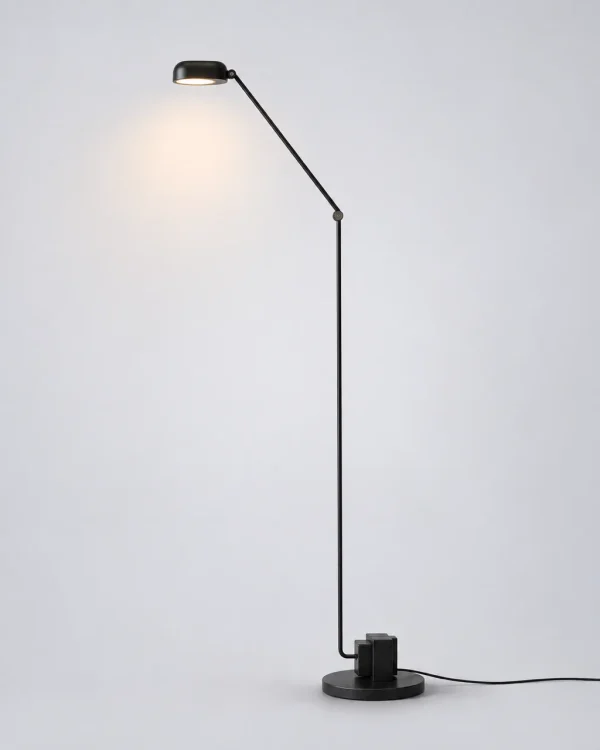
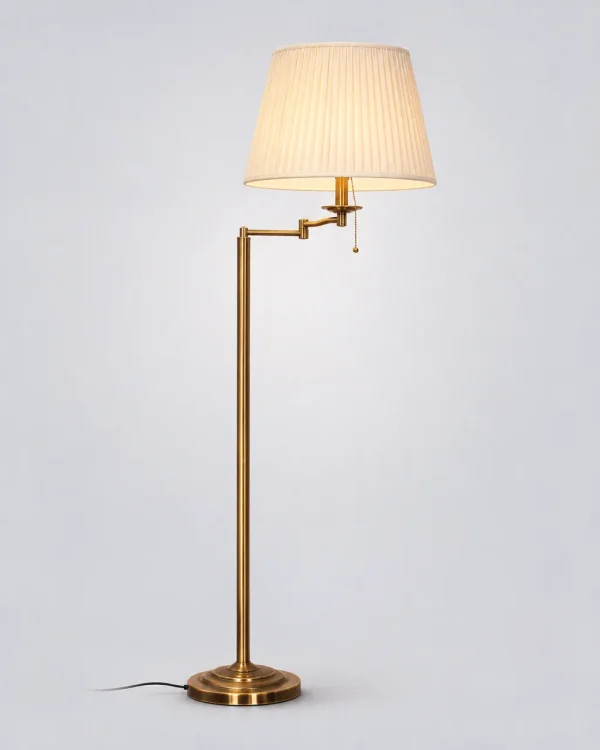
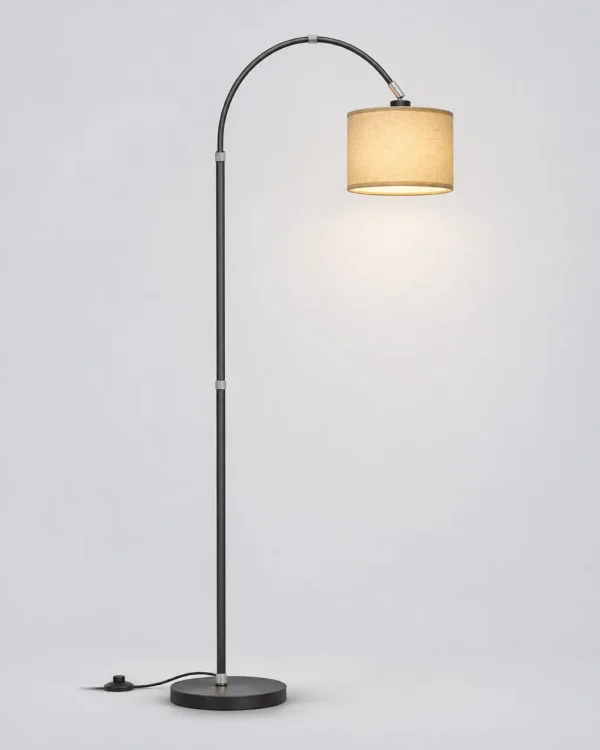
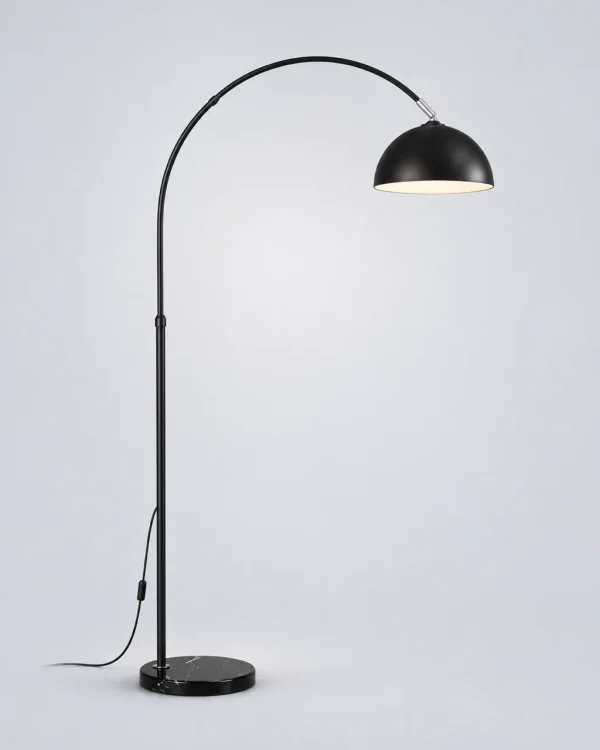
Lights with a swing arm are especially flexible. BIRK is 161 cm (63 in) tall, and both the arm and the head tilt, so you can aim the light precisely over your shoulder onto the book. DEVA has an arm that swings to the side and a pleated shade 45 cm (18 in) across at the bottom, which you turn over the arm of the chair. ISLA hangs its 25 cm (10 in) linen shade from an arc at a height of 170 cm (67 in) over the backrest, and you switch it on with a foot switch. ALVA adjusts in height between 145 and 180 cm (57 and 71 in) and reaches out 94 cm (37 in), ideal if the armchair isn’t right next to a free corner.
Floor lamp with a reading light, or two lamps?
A floor lamp with a reading light usually combines an uplighter that shines indirectly onto the ceiling with a small reading light on an arm. The idea behind it is right: room light and reading light together are easier on the eyes. But you can achieve the same thing with two separate lights, for example a directed reading lamp by the armchair and a wall sconce that shines upward, or a floor lamp with a fabric shade on the other side of the room. That often looks better, because each light does its own job. How to place floor lamps in the living room is covered in our guide Living Room Floor Lamps, and the arc over the sofa in our guide Arc Floor Lamps.
 Collection · 26 designsReading LampsView all 26 designs
Reading light for the bed: what height is right?
A reading light for the bed works best on the wall, to the left and right of the headboard. That keeps the nightstand clear, and the light falls on the book from the side and above. These measurements have proven themselves:
- Height: light opening about 40 to 60 cm (16 to 24 in) above the top of the mattress. With a mattress top at 50 to 60 cm (20 to 24 in), the light sits around 95 to 120 cm (37 to 47 in) above the floor.
- To the side: roughly above the outer edge of the mattress or 10 to 20 cm (4 to 8 in) beyond it, so the light comes from the side and doesn’t shine into the middle of the bed.
- Beam: narrow and pointed down. That way you can read while your partner stays in the dark.
- Switch: within reach when you’re lying down, so on the light, on the cord or next to the bed.
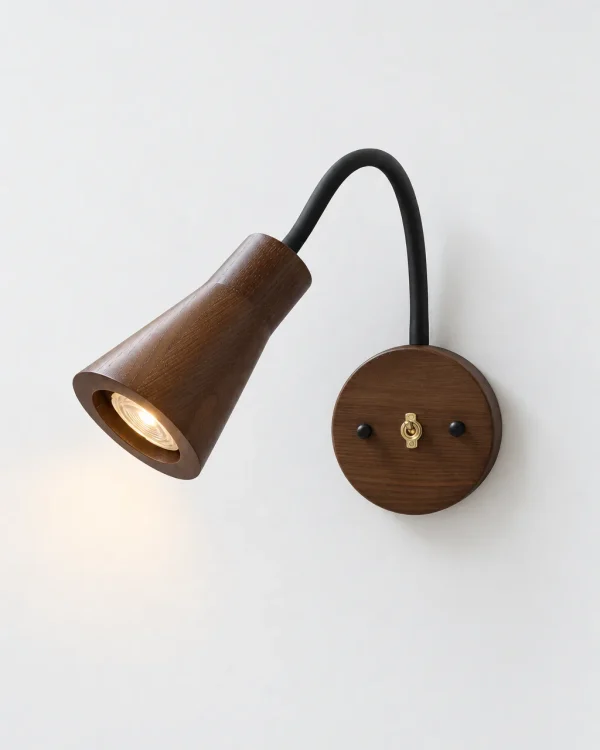
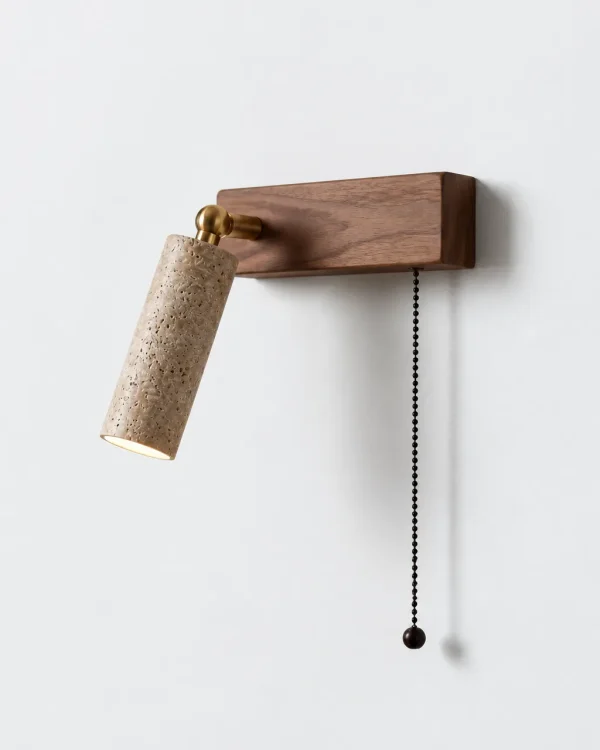
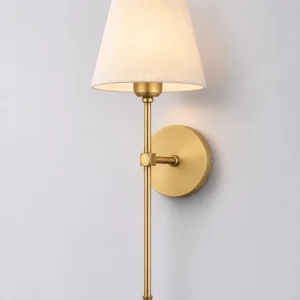
For the bed, we have several wall sconces with directed light. FINA has a gooseneck and a recessed lens that creates a focused beam; the toggle switch sits on the wooden backplate. TALOS carries a small travertine spotlight with a 3 W LED in warm white (3000 K) that turns in every direction on a joint, and you switch it with a pull chain. TYRA comes with an inline switch and a plug (EU plug), so you don’t need a wall junction box, ideal for rentals. SAKARI has a wooden swing arm that reaches out about 30 to 45 cm (12 to 18 in); you pull it toward you to read and fold it back against the wall afterward.
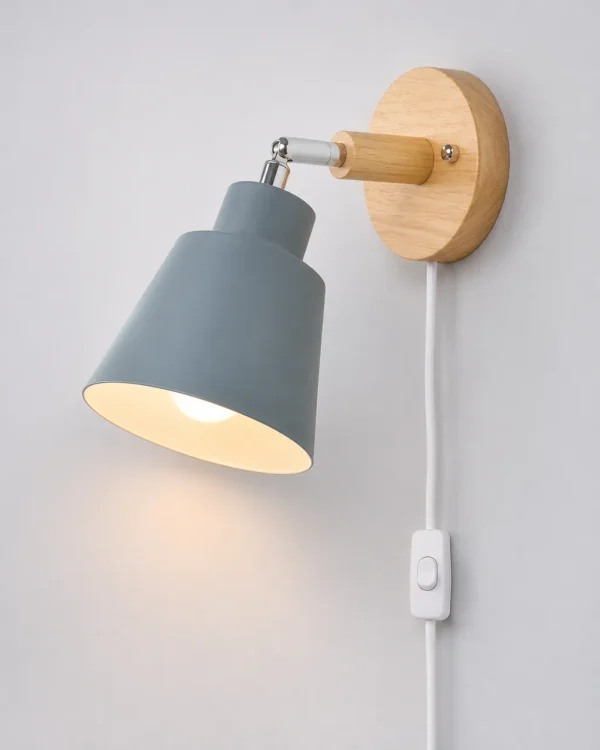
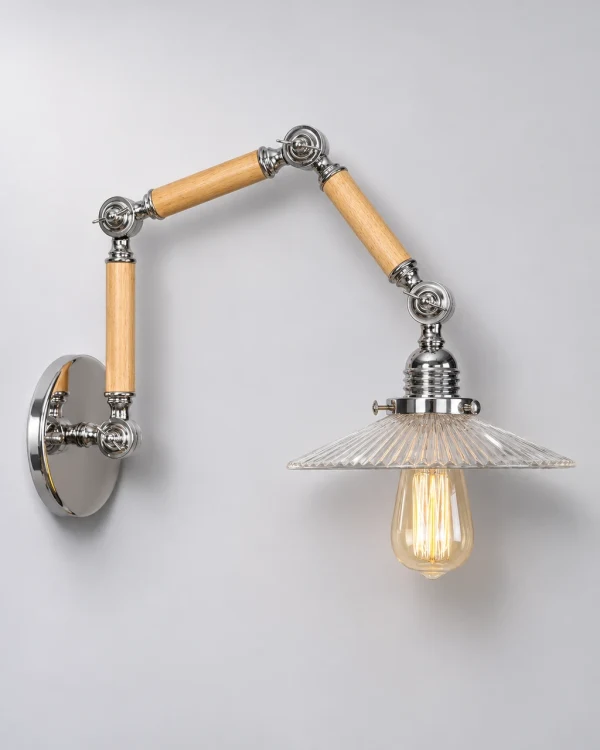
Another swiveling reading light is LAURI, with a wooden arm and a 12 cm (5 in) cone shade that you tilt toward the book on a ball joint. You’ll find all the models with joints and directed light in our collection.
 Collection · 50 designsBedside Wall Sconces for ReadingView all 50 designs
Reading lamp on the nightstand: what matters?
If the reading lamp stands on the nightstand, the lower edge of the shade should be at about eye level when you sit up in bed. If the lamp is too low, it only lights the nightstand; if it’s too high, it glares. The lamp belongs at the front edge of the nightstand, close to the headboard. Our guide How to Choose a Bedside Lamp explains this in detail.
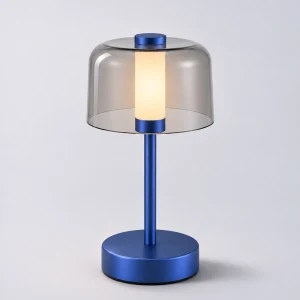
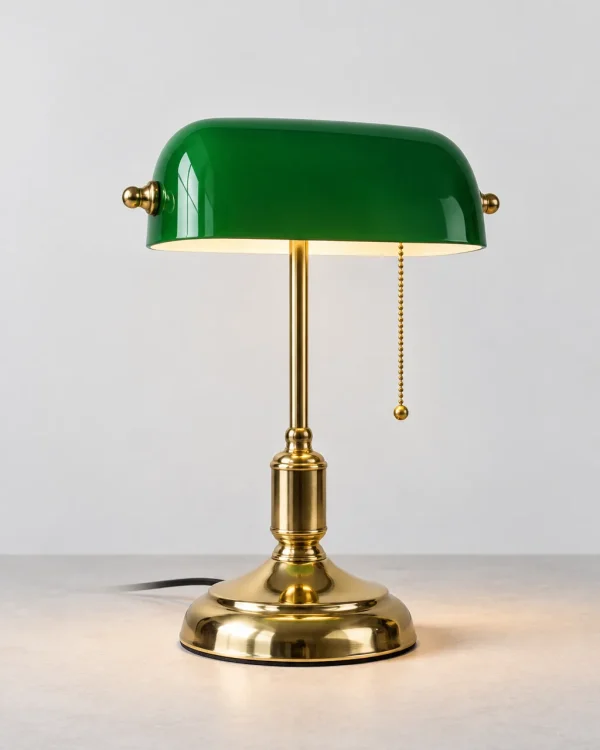
The classic bankers lamp ANTIK gives directed light, with a 26.5 cm (10.5 in) long shade and an E26 socket for a bulb of your choice. TOVI is cordless: you adjust the brightness steplessly by touch, and the color temperature ranges from 3000 to 6500 K. NOVA is 34 cm (13 in) tall, cordless and has three color temperatures; according to the specs, its battery lasts 12 to 15 hours depending on brightness. SIRI, on a marble base, is compact at 25 cm (10 in) tall, dimmable and has a USB port in the base.
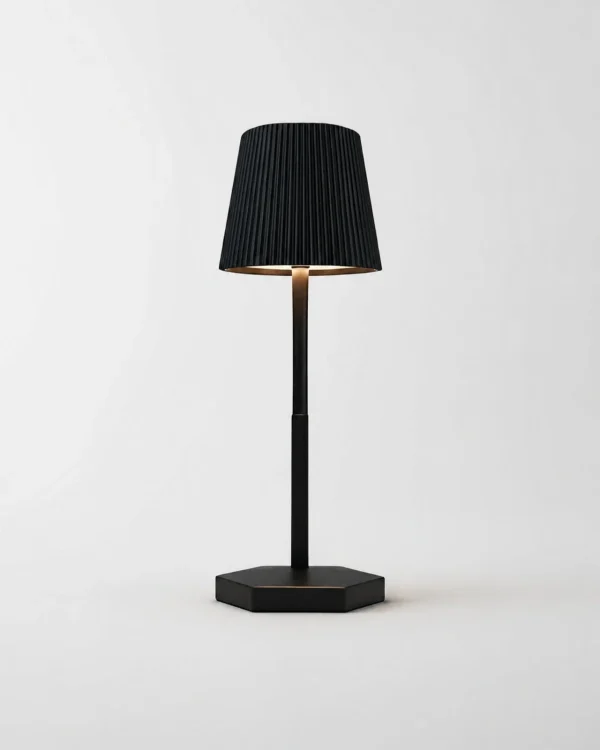
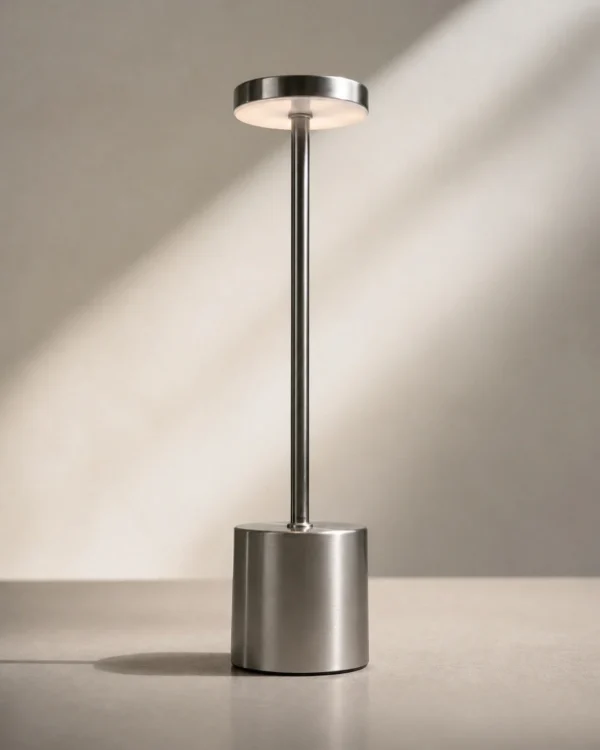
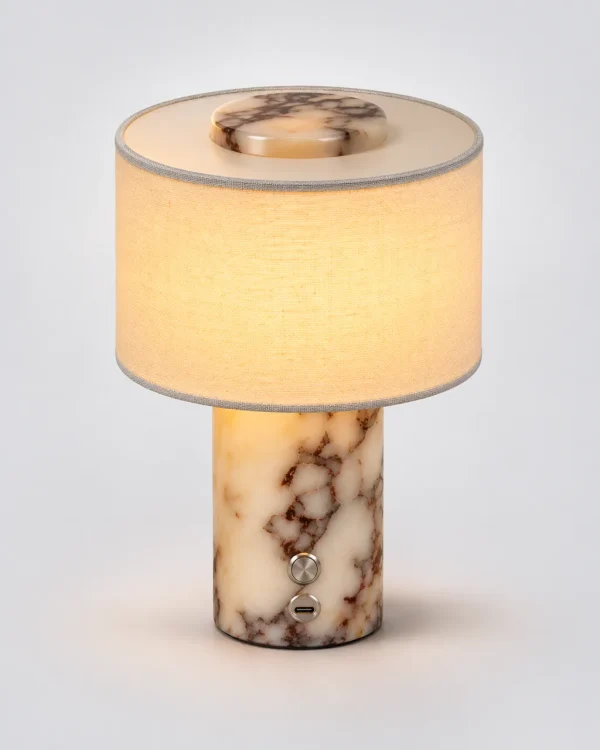
Whether a rechargeable reading lamp or a corded one suits you better depends on how often you move the lamp around. Our guide Cordless or Corded Table Lamps compares the pros and cons.
What color temperature is best for reading?
For reading in the evening, warm white at 2700 to 3000 kelvin is the best choice. It feels calm and suits the mood in the bedroom and living room. For long reading sessions during the day, for example with technical books or notes, neutral white at 3500 to 4000 K can be more comfortable, because the print looks sharper. Lights with adjustable color temperature like TOVI cover both. If you work at a desk, slightly different rules apply; you’ll find them in our guide Desk Lamps and Light for Your Workspace.
Common reading light mistakes
- Light from behind and above: a ceiling light behind the armchair casts the shadow of your head onto the page.
- Visible bulb: a shade that sits too high dazzles you every time you look up from the book.
- Beam too wide by the bed: it wakes your partner. By the bed you want a narrow, directed beam.
- Only one lamp in a dark room: the harsh contrast tires the eyes.
- Light too cool in the evening: 6000 K feels restless after sunset. Stick to 2700 K in the bedroom.
If you’re planning the whole bedroom from scratch, our guide Bedroom Lighting will help.
Frequently asked questions
How tall should a reading lamp next to an armchair be?
The lower edge of the shade ideally sits at the seated person’s shoulder to eye level, usually 100 to 120 cm (39 to 47 in) above the floor. The floor lamp itself is then 130 to 170 cm (51 to 67 in) tall, depending on the model. It stands to the side, about 20 to 40 cm (8 to 16 in) behind the backrest.
How high should a reading light hang above the bed?
The light opening of a wall-mounted reading light sits about 40 to 60 cm (16 to 24 in) above the top of the mattress. With a standard bed, that’s 95 to 120 cm (37 to 47 in) above the floor. To the side, the light sits roughly above the outer edge of the mattress.
How many lumens does a reading lamp need?
For a reading lamp, 400 to 800 lumens is usually enough, depending on the distance to the book. A wall sconce right by the bed gets by with 250 to 450 lumens; an arc lamp at a greater distance needs more like 800 to 1,000 lumens. The page should receive 300 to 500 lux.
What color temperature is best for a reading lamp?
In the evening, warm white at 2700 to 3000 kelvin is ideal, because it feels calm and doesn’t glare. For long reading sessions during the day, neutral white at 3500 to 4000 K can be more comfortable. A color rendering index of 90 or higher makes print and paper look crisp.
Which side should the reading lamp be on?
Put the lamp on the side where your hand won’t cast a shadow on the page. For right-handed people that’s usually the left, for left-handed people the right. It also matters that the light comes from the side and slightly from behind.
Is a rechargeable lamp good for reading?
Yes, a rechargeable reading lamp works well on the nightstand, by the sofa or in a reading nook, because there’s no cord in the way. Look for adjustable brightness and warm white light. For very long reading sessions, a corded light with an E26 socket offers more brightness in reserve.