Hallway Light Fixtures: Lights for Narrow, Long and Low Hallways
Which ceiling light suits the hallway, how many lights does a long corridor need and how high should a wall sconce go? Measurements, rules and ideas.
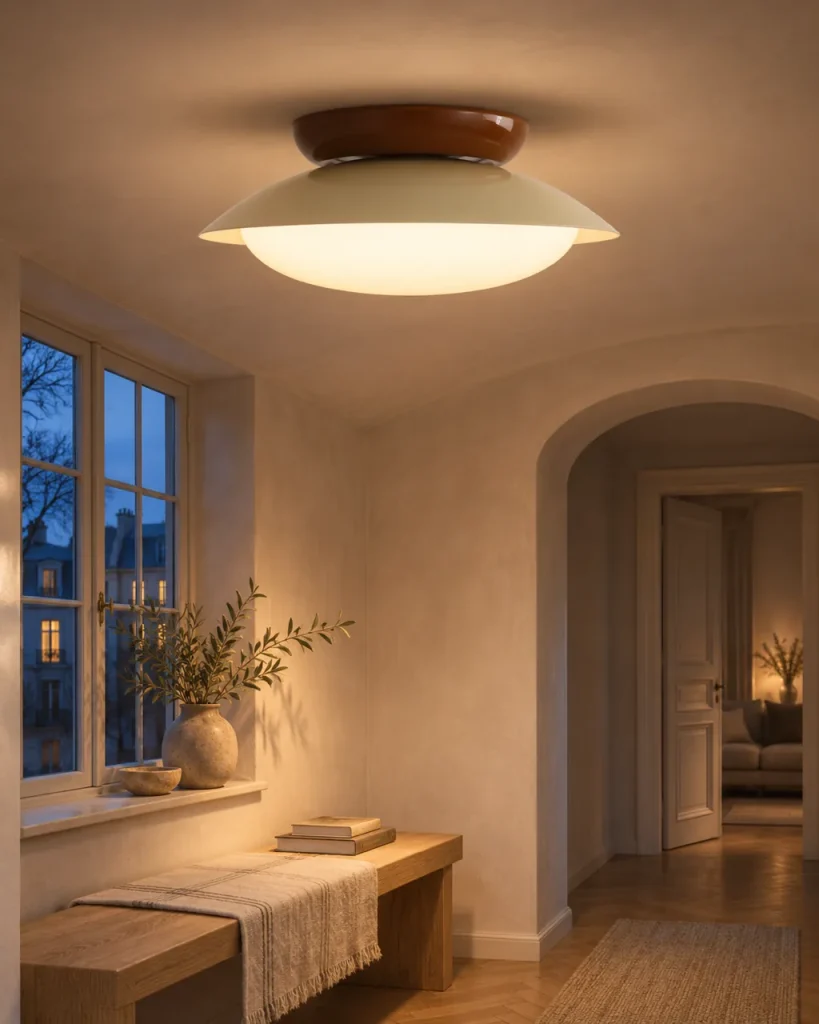
The right hallway light fixtures are flush, glare-free and warm white: with ceilings under 2.50 m (8 ft 2 in), a ceiling light should be no more than 10 cm (4 in) deep, and in a hallway 1 to 1.2 m (3 ft 3 in to 4 ft) wide its diameter should be 25 to 35 cm (10 to 14 in). In a long hallway, instead of one large light, place a smaller ceiling light every 1.5 to 2.5 m (5 to 8 ft); as a guideline, 100 to 150 lumens per square meter (about 9 to 14 lumens per square foot) is enough. Hallway wall sconces hang with the center of the light about 160 to 180 cm (63 to 71 in) above the floor and, in narrow hallways, stick out no more than 12 cm (5 in) from the wall.
The hallway is the first room you and your guests see, and often the darkest one too: no window, a low ceiling, not much width. In this guide you’ll find concrete measurements for narrow, long and low hallways, the right light for each situation and the mistakes that make a hallway feel like a tunnel.
Hallway light fixtures on the ceiling: how big and how bright?
A hallway needs less light than a kitchen or living room, but more even light. As a rule of thumb, plan on 100 to 150 lumens per square meter (9 to 14 lumens per square foot). A hallway of 1.2 × 5 m (4 × 16 ft), so 6 m² (65 sq ft), therefore needs 600 to 900 lumens in total. It’s better to spread that over two or three lights than one, so the ends don’t stay dark.
For size, go by the width of the hallway, not its length. A ceiling light that takes up more than a third of the hallway’s width quickly looks bulky.
| Hallway | Area | Diameter per light | Number of ceiling lights | Total lumens |
|---|---|---|---|---|
| Entryway 2 × 2 m (6.5 × 6.5 ft) | 4 m² (43 sq ft) | 30–40 cm (12–16 in) | 1 | 400–600 lm |
| Narrow hallway 1 × 3 m (3.3 × 10 ft) | 3 m² (32 sq ft) | 20–30 cm (8–12 in) | 1–2 | 300–450 lm |
| Hallway 1.2 × 5 m (4 × 16 ft) | 6 m² (65 sq ft) | 25–35 cm (10–14 in) | 2–3 | 600–900 lm |
| Long hallway 1.2 × 8 m (4 × 26 ft) | 9.6 m² (103 sq ft) | 20–35 cm (8–14 in) | 3–4 | 950–1,450 lm |
| Foyer 3 × 4 m (10 × 13 ft) | 12 m² (129 sq ft) | 40–60 cm (16–24 in) or a pendant | 1–2 | 1,200–1,800 lm |
The color temperature should match the adjoining rooms. At 2700 to 3000 kelvin, the hallway feels welcoming and doesn’t dazzle you at night when you step out of a dark bedroom. Cool white light at 5000 K and above makes the entrance feel more like an office stairwell. Why that is, is explained in our guide How to Choose Color Temperature and Kelvin.
Which light suits a hallway with a low ceiling?
With a ceiling height under 2.50 m (8 ft 2 in), every inch counts. Choose a flush ceiling light no more than 10 cm (4 in) deep, ideally 5 cm (2 in). Pendant lights are off the table here, because you need at least 2.00 to 2.10 m (6 ft 7 in to 6 ft 11 in) of headroom under the light.
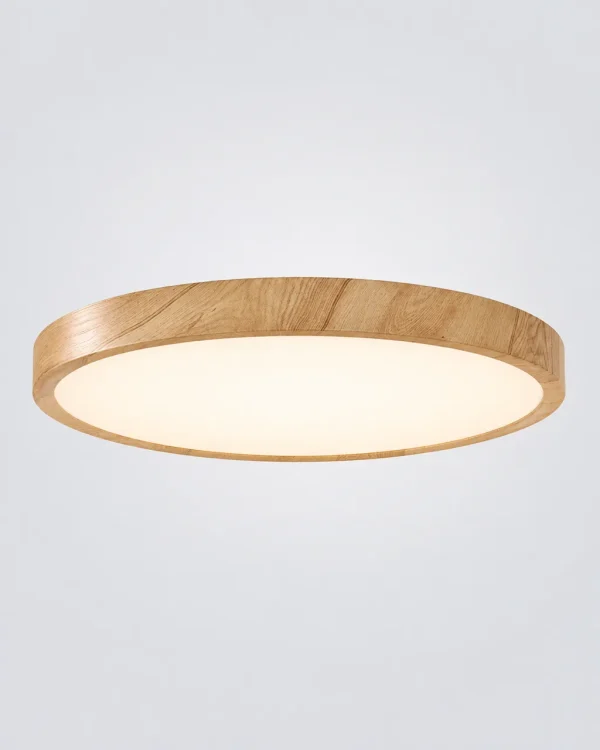
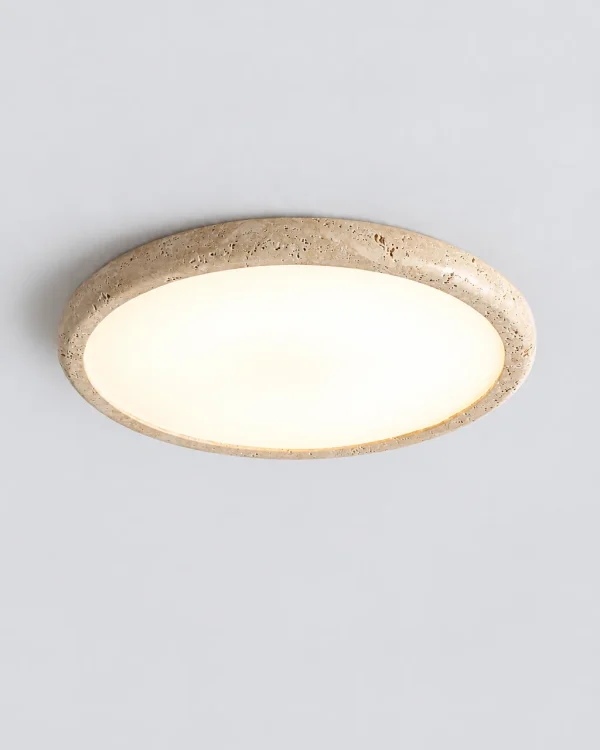
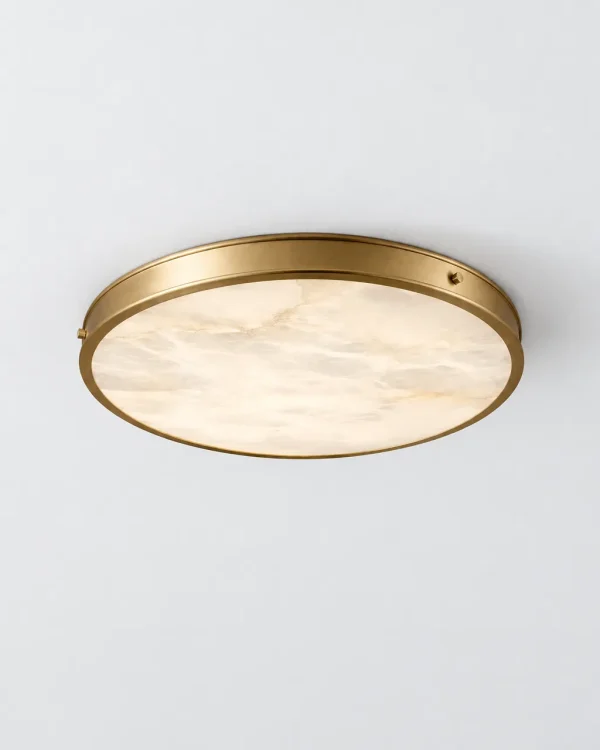
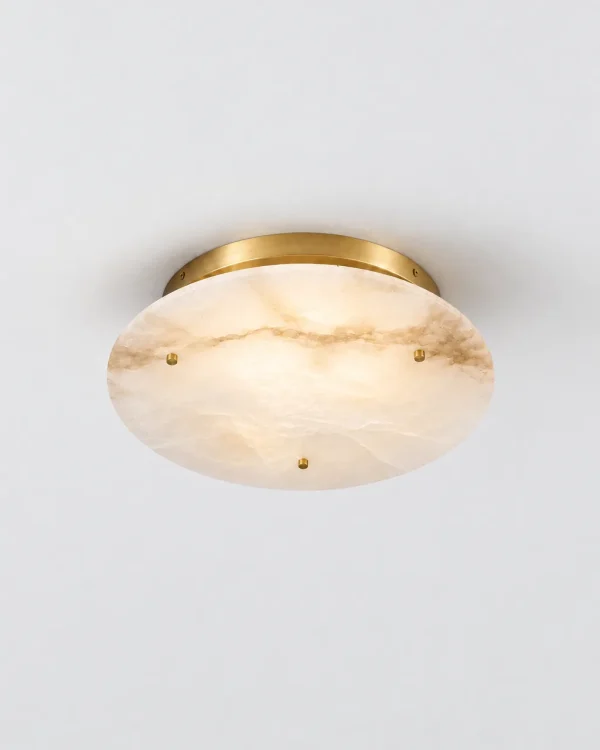
HILDE, just 2.4 cm (1 in) deep, is little more than a glowing disc, 23, 30 or 40 cm (9, 12 or 16 in) across; you switch the color temperature at the wall switch between 2800, 4000 and 5000 K. ZELIA, 5.5 cm (2 in) deep, frames a warm white LED panel with a ring of real travertine; the small 38 cm (15 in) size fits entryways and foyers. FENZE is an alabaster disc only 5 cm (2 in) deep, 30, 40 or 50 cm (12, 16 or 20 in) across; in a hallway the 30 cm (12 in) version is usually enough. BILPI starts at 20 cm (8 in) in diameter, is 6.6 cm (2.6 in) deep and gives warm white light (3000 K).
How do you light a long, narrow hallway?
With just one ceiling light in the middle, a narrow hallway becomes a tunnel: bright in the middle, dark at the ends. A row of small lights in an even rhythm works better. Here’s how to plan lighting for a narrow hallway:
- Spacing: place the ceiling lights 1.5 to 2.5 m (5 to 8 ft) apart; with a 2.50 m (8 ft 2 in) ceiling, about 2 m (6.5 ft) is ideal.
- Ends: the first and last lights sit about half that distance from the end wall, so 75 to 125 cm (30 to 49 in).
- Center: mount the lights centered on the width of the hallway, otherwise you get one bright and one dark strip of wall.
- End wall: light the wall at the end of the hallway, for example with a wall sconce or a lit picture. A bright end makes the hallway look shorter and friendlier.
An example: your hallway is 7 m (23 ft) long. Three lights 2.3 m (7.5 ft) apart, with the first and last about 1.2 m (4 ft) from the wall, spread the light evenly. Small, compact lights look lighter than three large discs.
MALIN is a cylinder 12 cm (5 in) in diameter, either low at 8 cm (3 in) or taller at 15 cm (6 in), in beige, olive green and two wood looks. Several MALIN in a row form a relaxed band of light. LYRA measures 17 cm (7 in) across and 15 cm (6 in) high; a narrow gap between the stone and the wooden ring lets extra light out to the side. MAIJA, at 25 cm (10 in) across and 10 cm (4 in) deep, adds a colorful retro accent in beige or olive green.
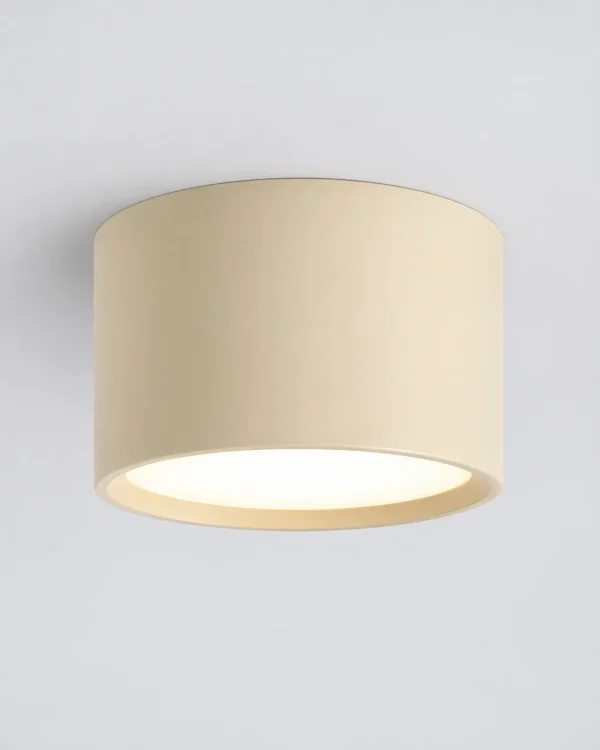
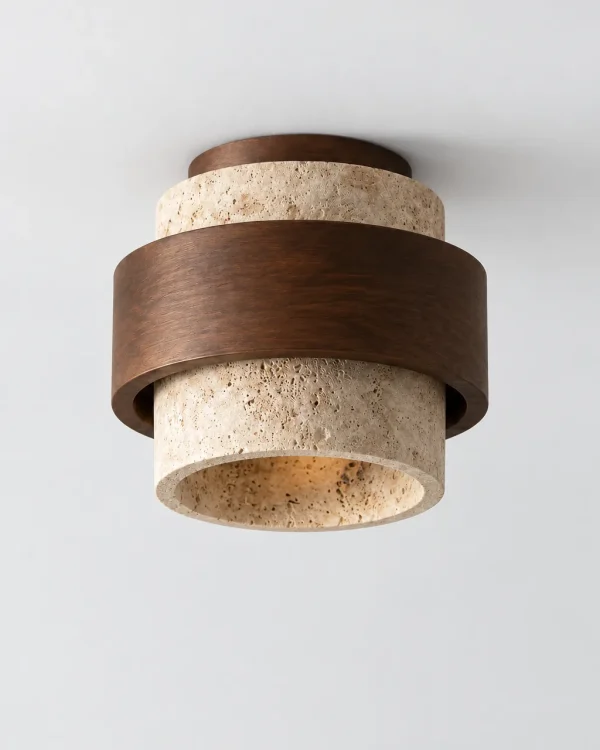
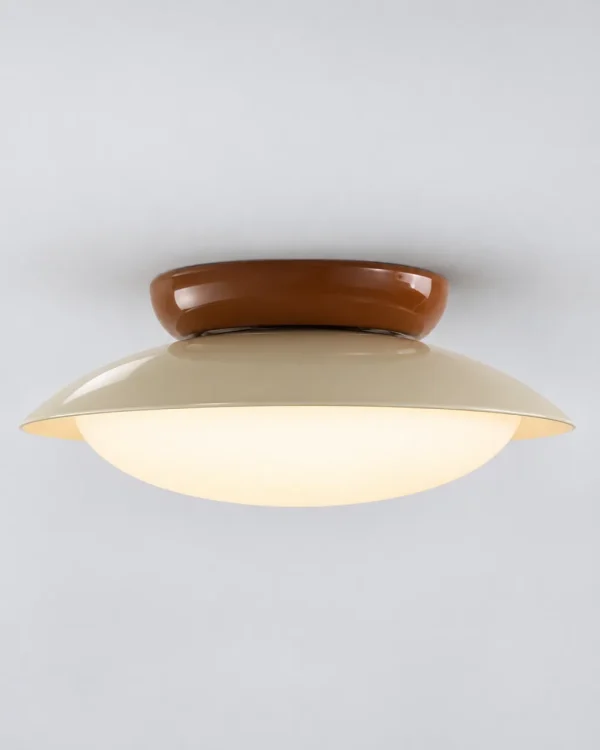
You’ll find all our models for entryways, corridors and foyers in our hallway collection.
 Collection · 55 designsHallway Ceiling LightsView all 55 designs
Hallway wall sconces: how high, and how far can they stick out?
A hallway wall sconce is often a better solution than a second ceiling light. It directs light onto the walls, makes the hallway look wider and can hang from an existing wall junction box. These measurements have proven themselves:
- Mounting height: center of the light 160 to 180 cm (63 to 71 in) above the floor; for up-and-down sconces, rather 170 to 190 cm (67 to 75 in), so the upper beam reaches the ceiling.
- Projection: in hallways under 1.10 m (43 in) wide, no more than 10 to 12 cm (4 to 5 in), so no one catches a shoulder or bag on it.
- Spacing: 1.5 to 2.5 m (5 to 8 ft) between two sconces, all at the same height.
- Layout: on one side in narrow hallways, staggered on both sides in wide ones.
Lights that throw light up and down are ideal for narrow hallways. NOSCA is only 4 cm (1.6 in) deep and 8 cm (3 in) high, available in six widths from 8 to 32 cm (3 to 13 in) and in warm white (3000 K). FRIDA is a slim 6.5 cm (2.6 in) travertine cylinder, 28 or 32 cm (11 or 13 in) tall, that draws two beams of light on the wall. BOKI, a travertine cylinder on a walnut bracket, also throws light up and down. BERGEN is a column of alabaster light only 6 × 6 cm (2.4 × 2.4 in) wide, 60, 80 or 100 cm (24, 31 or 39 in) tall, that looks like a glowing line above a console table.
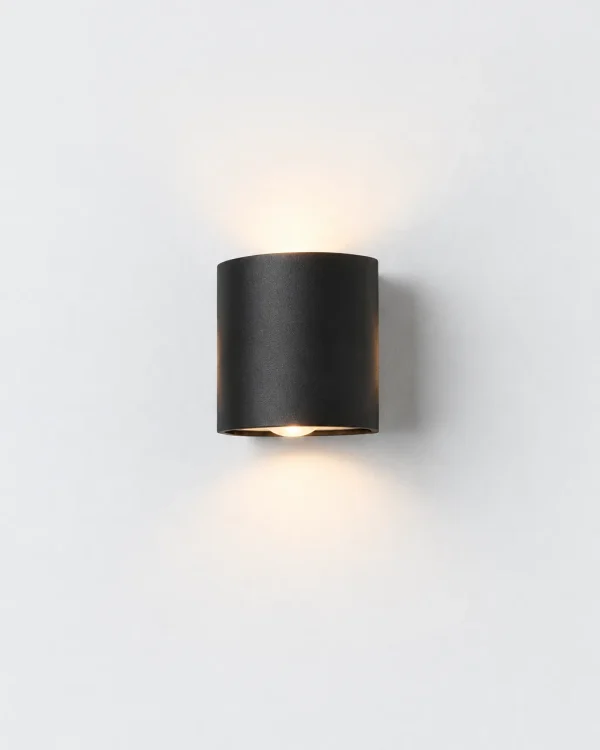
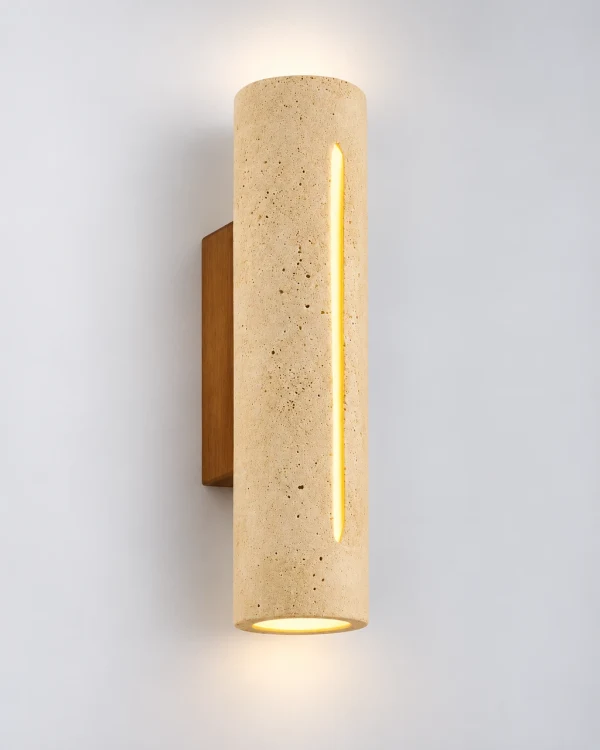
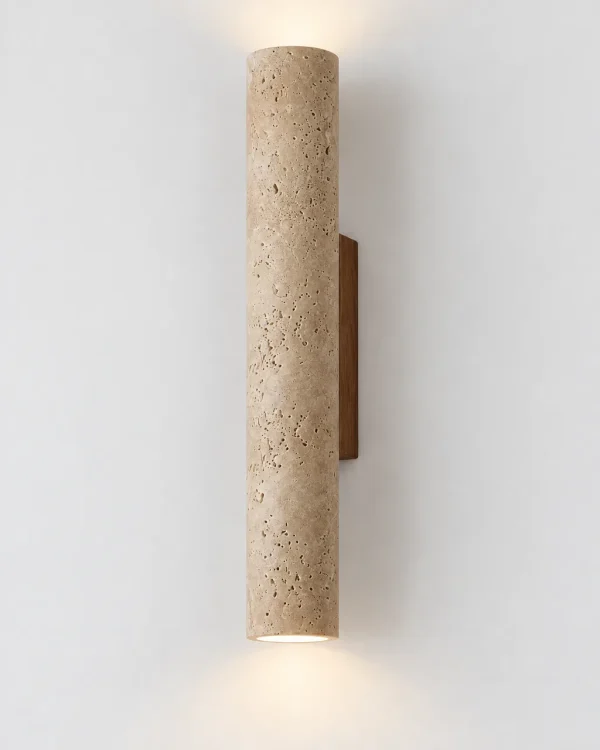
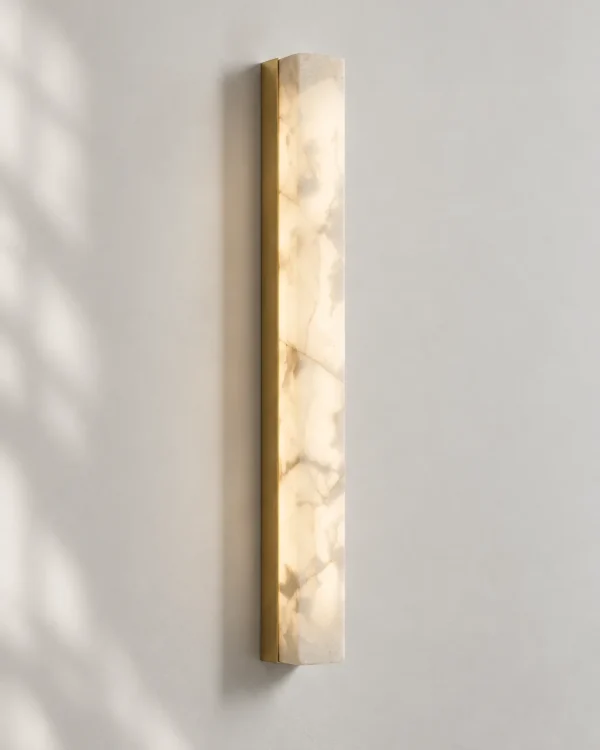
How material and mounting height of wall sconces work together in detail is explained in our guide Wall Sconces: Height and Material. For the effect of light on walls and ceiling, our guide Indirect Lighting in the Living Room is also worth reading; the same principles apply in the hallway.
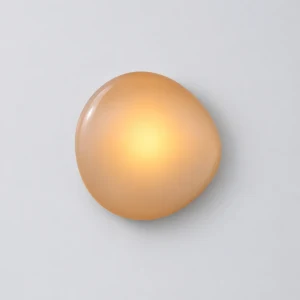 Collection · 256 designsHallway Wall SconcesView all 256 designs
When does a pendant light work in a hallway?
A pendant light in the hallway is a beautiful eye-catcher, but it needs height. Here’s the math: leave at least 2.00 to 2.10 m (6 ft 7 in to 6 ft 11 in) clear under the lower edge of the light. With a ceiling height of 2.70 m (8 ft 10 in), that leaves you about 60 cm (24 in) for cord and light; in older homes with ceilings of 3 m (9 ft 10 in) and more, you have much more room. In a foyer or over a staircase, the pendant can also hang lower, as long as no one has to walk underneath it.
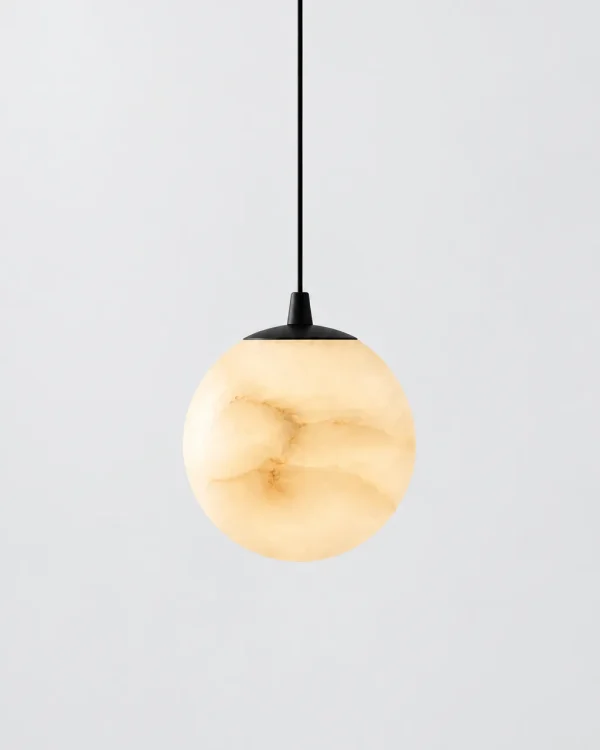
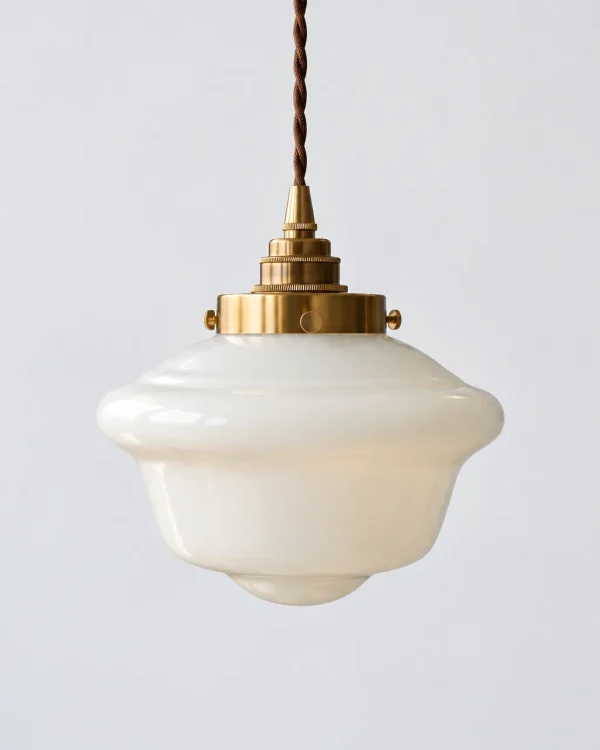
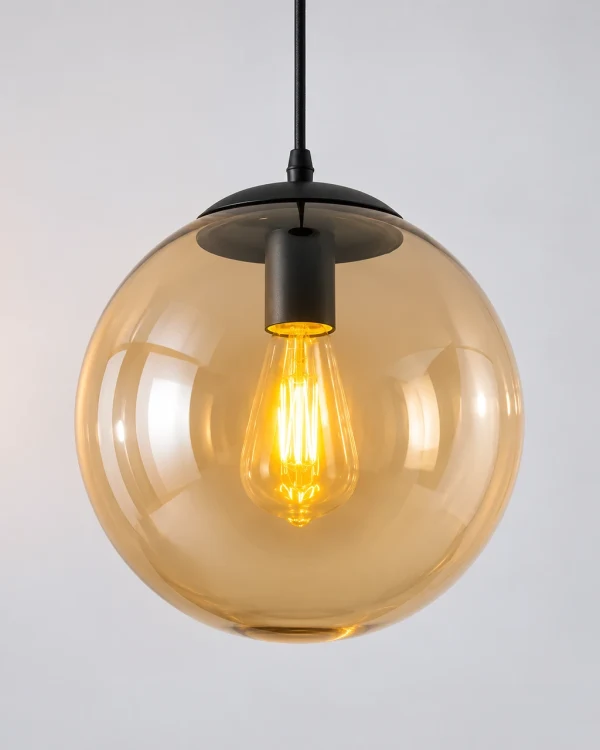
Small pendants work best in a hallway, ideally two or three in a row. BOURBON is an alabaster globe 10, 12 or 15 cm (4, 5 or 6 in) in diameter on a cord up to 200 cm (79 in) long, filtering the light warmly through the stone. XELIO, in opal glass with a brass gallery, fits a hallway with old-house charm at 30 cm (12 in) across and can also be mounted close to the ceiling. The small 15 cm (6 in) version of the ARNI glass globe suits narrow hallways and looks especially light in clear glass.
How do you light the coat closet, mirror and entryway?
At the entryway mirror, light from above alone isn’t enough: it casts shadows under the eyes and chin. Two wall sconces to the left and right of the mirror at about 160 to 170 cm (63 to 67 in), or a light directly above the mirror that shines forward, work better. At the coat closet, a ceiling light placed directly in front of the closet helps, not behind you, otherwise you stand in your own shadow.
For nighttime, a gentle orientation light is worth having. Small wall sconces such as the 10 cm (4 in) travertine disc HALO, mounted low, mark the way without glare. If the hallway leads into a stairwell, you’ll find the right measurements in our guide Stairway Lighting.
Common hallway lighting mistakes
- A single light for the whole hallway: the ends stay dark and the hallway looks longer.
- Wall sconces that stick out too far: projections of 20 cm (8 in) or more get in the way in a 1 m (3 ft 3 in) wide hallway.
- Cool white light: in a windowless hallway it feels harsh and dazzles at night.
- Exposed bulbs at eye level: a bare bulb on the wall glares with every step. Choose opal glass, stone or lights that shine up and down.
- Different models in a row: three different ceiling lights in one hallway look busy. Stick to one model or one series.
Next up, the living spaces: for a kitchen with an island, see our guide to kitchen light fixtures; for the living room, our guide Living Room Ceiling Lights.
Frequently asked questions
Which ceiling light is best for a hallway with a low ceiling?
With a ceiling height under 2.50 m (8 ft 2 in), a flush ceiling light no more than 10 cm (4 in) deep is ideal, even better around 5 cm (2 in). Pendant lights don’t work, because you need at least 2.00 to 2.10 m (6 ft 7 in to 6 ft 11 in) of headroom under the light. Wall sconces that also shine upward make the ceiling look higher.
How many lights does a long hallway need?
Plan a ceiling light or wall sconce about every 1.5 to 2.5 m (5 to 8 ft). A 5 m (16 ft) hallway needs two to three lights, an 8 m (26 ft) hallway three to four. The first and last lights sit about half as far from the end wall as the spacing between the lights.
How bright should hallway lighting be?
The guideline is 100 to 150 lumens per square meter (9 to 14 lumens per square foot). A 6 m² (65 sq ft) hallway therefore needs 600 to 900 lumens, spread over several lights. Warm white light at 2700 to 3000 kelvin feels most pleasant in a hallway.
How high should you hang a wall sconce in the hallway?
The center of a hallway wall sconce is usually 160 to 180 cm (63 to 71 in) above the floor. Sconces that shine up and down can sit a little higher, around 170 to 190 cm (67 to 75 in). What matters is that all the sconces in the hallway hang at the same height.
Can you hang a pendant light in a hallway?
Yes, if the ceiling is high enough. Leave at least 2.00 to 2.10 m (6 ft 7 in to 6 ft 11 in) clear under the lower edge, which works from a ceiling height of about 2.70 m (8 ft 10 in). Small pendants 10 to 30 cm (4 to 12 in) across, alone or in a row, look best in a hallway.
How do you make a dark hallway brighter and friendlier?
Spread the light over several fixtures instead of one, and light the walls and the end wall of the hallway too. Up-and-down wall sconces, light wall colors and warm white light make the hallway look bigger. A mirror opposite a light boosts the effect even more.