Dining Room Light Fixtures: How to Plan Light for the Whole Room
A pendant over the table, wall sconces and light on the sideboard: how to plan dining room lighting with lumens, heights and color temperatures for the whole room.
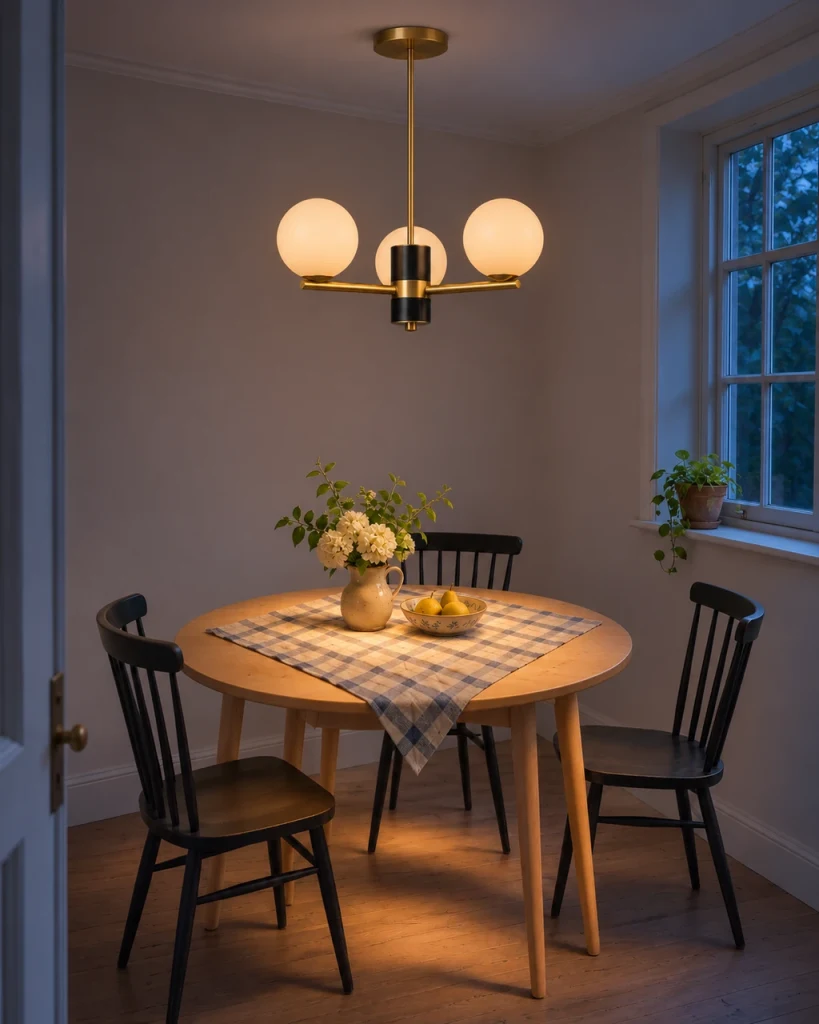
The most important of your dining room light fixtures is the pendant over the dining room table, but on its own it isn’t enough. A well-lit dining room has three layers of light: a pendant over the table, soft ambient light on the walls or ceiling and a small accent light on the sideboard or display cabinet. All three should be warm white (2700 to 3000 K) and on separate switches, so you can set any mood from a family breakfast to dinner with guests.
How high the light hangs over the table and how many lights a long table needs is covered in detail in our guide Pendant Lights Over the Dining Table. Here, it’s about the whole room.
Dining room light fixtures: which lights does the room need?
Plan the dining room like a stage: the table is bright, the room around it a little darker, but never black. If only the pendant is on, your guests sit in an island of light, and the room behind them disappears. That feels atmospheric at first and tiring for the eyes after an hour. So each dining room light gets its own job.
| Layer of light | Fixture | Position | Job |
|---|---|---|---|
| Table light | Pendant or linear pendant | centered over the dining table, 60–75 cm (24–30 in) above the top | make plates, faces and food easy to see |
| Ambient light | Wall sconces, flush ceiling light or floor lamp | walls, corners, edges of the room | soften the contrast between table and room |
| Accent light | Table lamp, cabinet or picture light | sideboard, shelf, artwork | create depth and coziness |
| Task light (open kitchen) | Pendants or ceiling spotlights | over the kitchen island and countertop | cooking without shadows |
In a small dining room, one pendant and a second light source, such as a table lamp on the sideboard, are enough. From about 15 m² (160 sq ft), or in an open-plan living and dining area, it’s worth planning all three layers.
Which pendant light suits the dining room table?
For the pendant over the dining room table, what matters besides size is above all the effect of the light. There are two basic types:
- Directed light: shades of metal, wood or dense stone send the light down onto the tabletop. The room stays calmer and darker, and the table becomes the stage.
- Diffused light: opal glass, alabaster, fabric or paper glow all around. Some of the light also brightens the ceiling and walls, so you need less extra ambient light.
If your dining room only gets one light, choose a diffused one. FETE is a drum of real alabaster with an ornate brass frame and four to six E26 sockets, depending on size. It measures 40 × 42 cm (16 × 17 in), 50 × 45 cm (20 × 18 in) or 60 × 50 cm (24 × 20 in) and gives plenty of soft light to the room. CESTO is a flat alabaster cone 25 cm (10 in) across and only 13 cm (5 in) high, as a single light or with two or three shades over 60 or 80 cm (24 or 31 in). TOIVO spreads light from opal glass globes on gold-colored arms, from 47 cm (19 in) wide with 3 globes to 100 cm (39 in) with 15 globes. If you want directed light, you’ll find it in ERIA: slim travertine cylinders 6.5 cm (2.6 in) across whose light only falls downward; according to the product page, it’s dimmable with a dimmable bulb and a compatible dimmer.
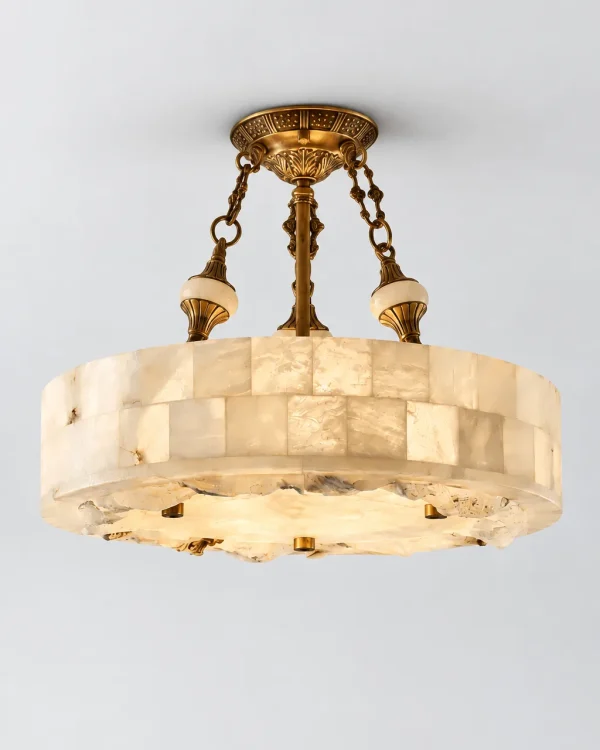
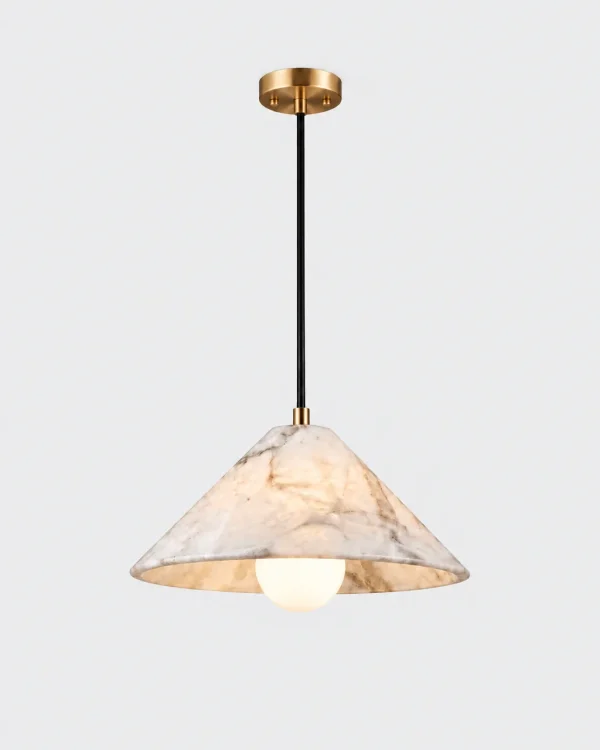
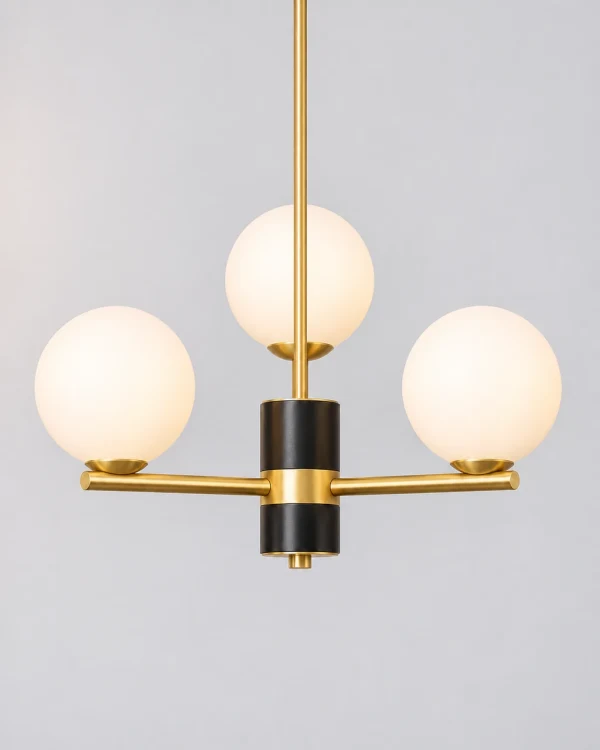
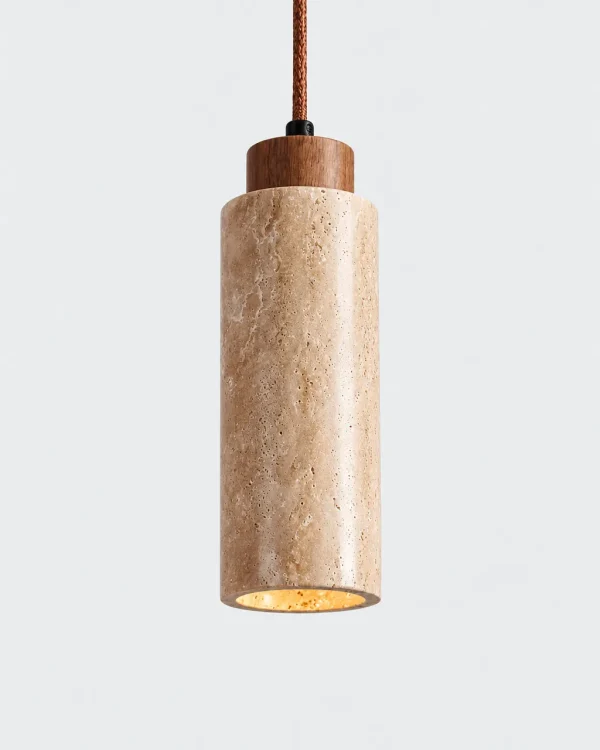
More models for every table shape are in the Dining Table Pendant Lights collection.
How bright should a dining room be?
As a guideline, about 200 to 300 lux on the tabletop and 100 to 150 lux for the rest of the room. Calculating in lumens is more practical: plan about 100 to 150 lumens per square meter (9 to 14 lumens per square foot) for the whole dining room, spread across all the lights. About half of that comes from the table light.
| Dining room | Total lumens | Of which over the table | Rest on walls, ceiling, sideboard |
|---|---|---|---|
| 10 m² / 108 sq ft (dining nook) | 1,000–1,500 lm | 600–800 lm | 400–700 lm |
| 15 m² / 160 sq ft | 1,500–2,250 lm | 800–1,200 lm | 700–1,050 lm |
| 20 m² / 215 sq ft | 2,000–3,000 lm | 1,000–1,500 lm | 1,000–1,500 lm |
| 30 m² / 320 sq ft (open plan, dining part) | 3,000–4,500 lm | 1,200–2,000 lm | 1,800–2,500 lm |
An LED bulb that replaces a 40-watt incandescent delivers about 470 lumens; one that replaces 75 watts about 1,055 lumens. A three-light pendant with 470 lumens per bulb therefore gives a good 1,400 lumens. What matters is that you can turn the brightness down in the evening. How lumens and kelvin relate is explained in our guide How to Choose Color Temperature, Kelvin and Lumens.
Dining room wall sconces: where and how high?
Wall sconces are the best ambient light in the dining room, because they brighten the room at eye level without competing with the pendant. These positions have proven themselves:
- To the left and right of the sideboard: two sconces spaced about the width of the sideboard minus 20 to 40 cm (8 to 16 in). The center of the light sits around 160 to 170 cm (63 to 67 in) above the floor.
- On the wall opposite the window: that’s where daylight is missing most in the evening.
- Behind the chairs: only if at least 80 cm (31 in) stays clear between the chair back and the wall and the sconce doesn’t stick out into the room. Otherwise guests bump into it when they get up.
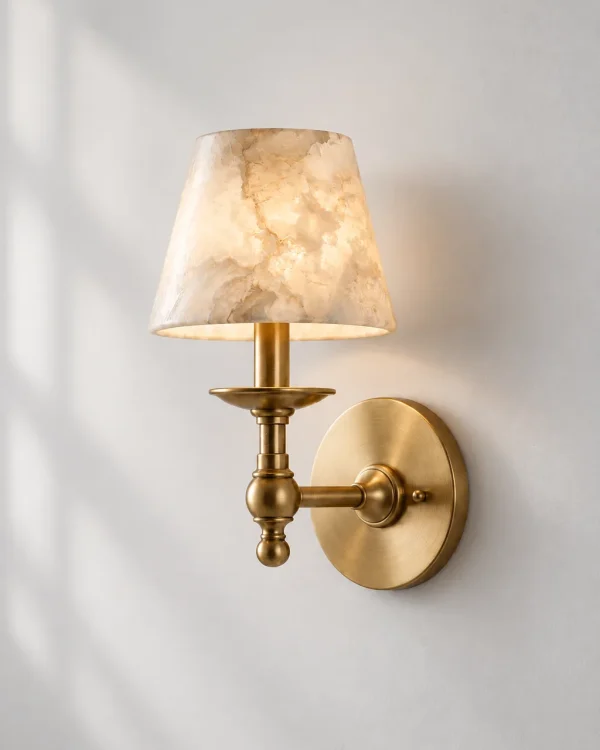
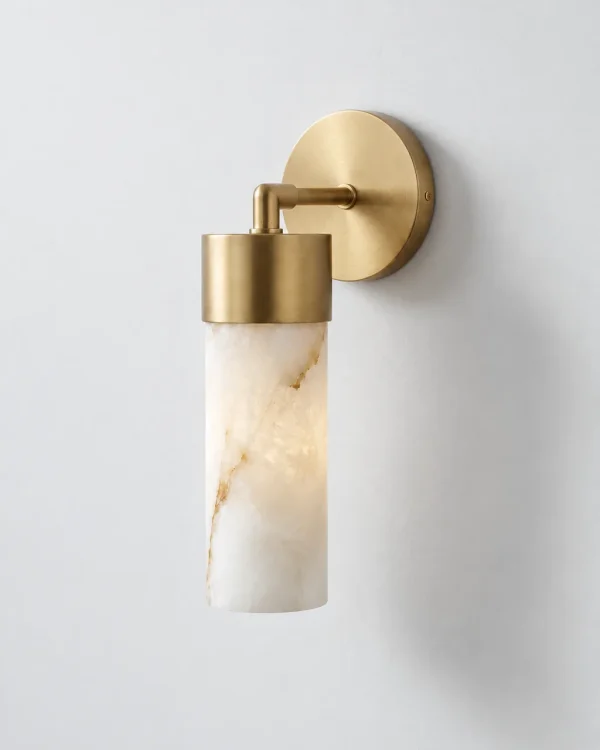
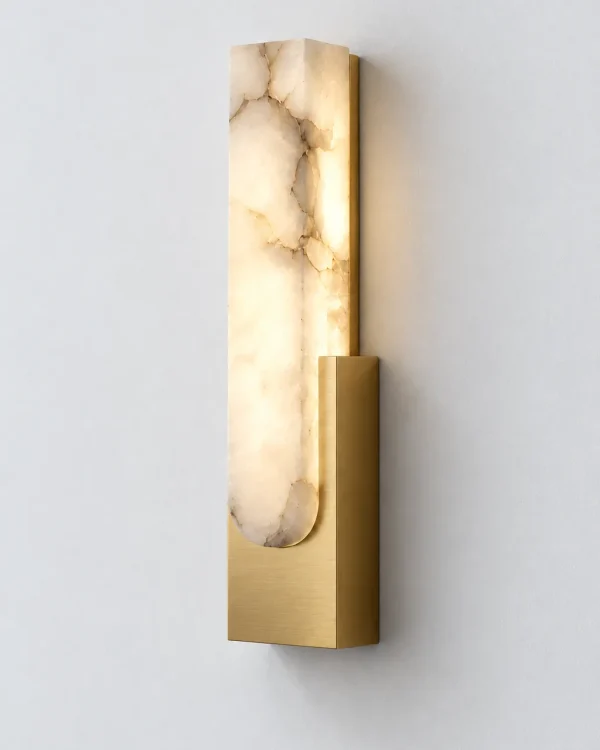
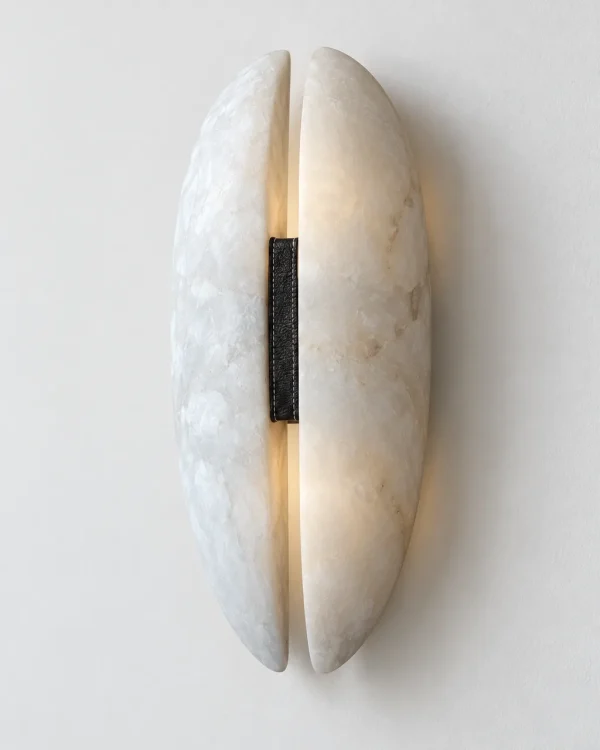
Alabaster gives especially soft light on the wall, because the stone diffuses it. ARNO has a conical shade of real alabaster on a turned arm, 15 cm (6 in) wide and 29 cm (11 in) tall, with an E26 socket and metal parts in brass, nickel or black. DENCI, at 10 cm (4 in) wide and 32 cm (13 in) tall, is slim enough for a strip of wall next to a door. AMPE is a 10 × 50 cm (4 × 20 in) block of alabaster with a built-in 3000 K LED, optionally in a version dimmable with a triac dimmer. BUZA, made of two alabaster shells with a leather strap, comes in 36 or 52 cm (14 or 20 in), also with a triac-dimmable option.
You’ll find more natural stone models among our Alabaster Wall Sconces, and the basic rules for height and spacing in our guide Wall Sconces: Height, Spacing and Material.
Which lamp belongs on the dining room sideboard?
A table lamp on the sideboard is the simplest accent light, because all it needs is an outlet. For size: on a sideboard 120 to 160 cm (47 to 63 in) wide, a lamp 35 to 50 cm (14 to 20 in) tall looks balanced; on a piece 180 to 220 cm (71 to 87 in) wide, two smaller lamps work, or one large lamp plus a vase or a stack of books.
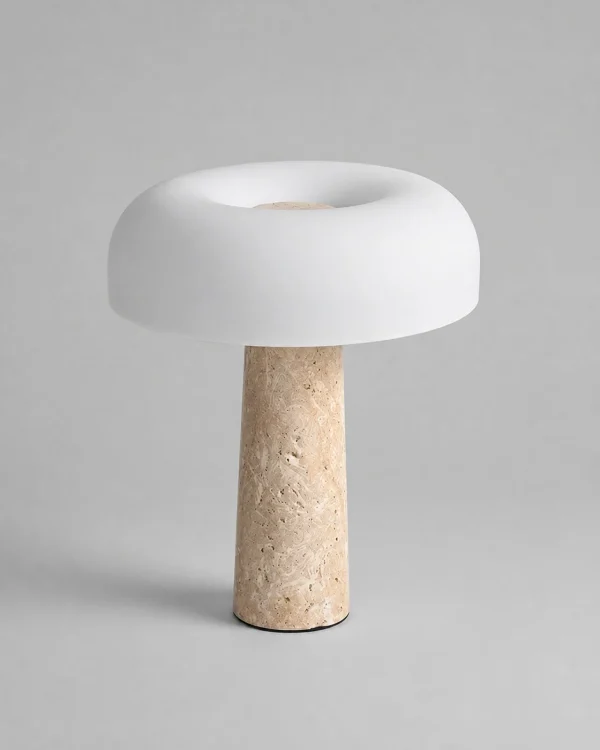
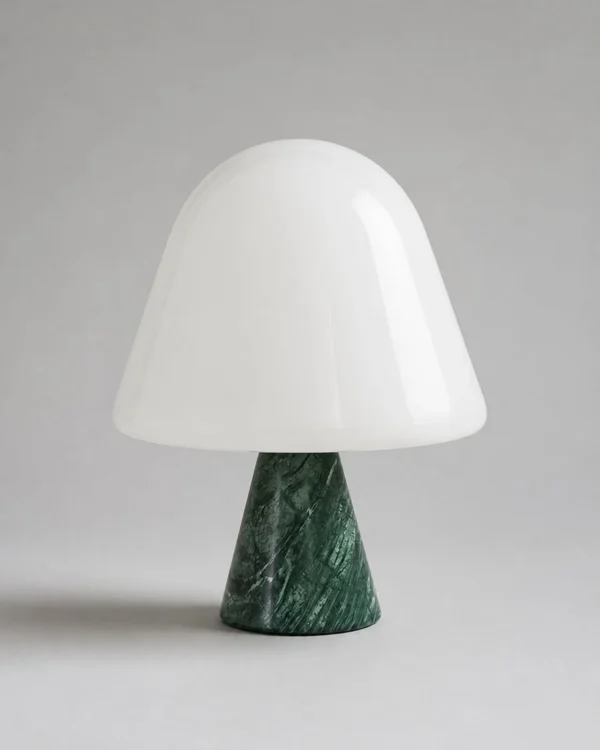
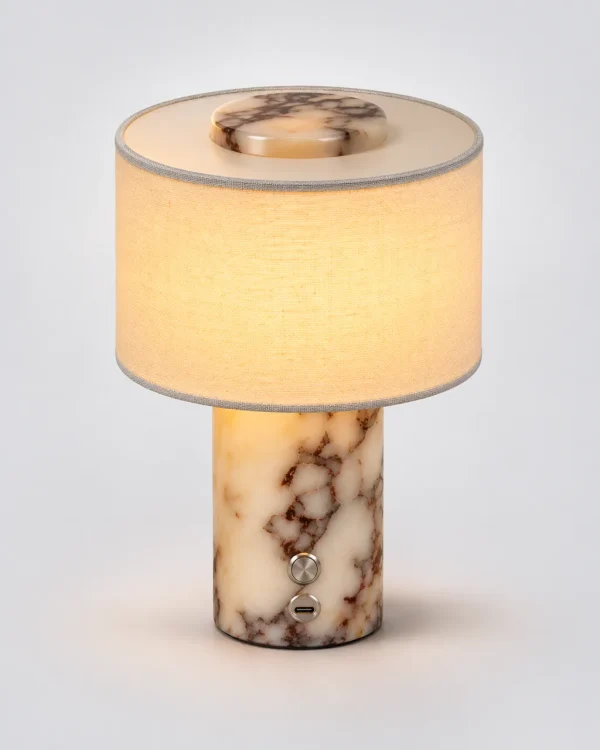
ZENO, 34 cm (13 in) across and 40 cm (16 in) tall, is a lamp with presence: travertine and a matte white glass dome, built-in 3000 K LED, a 150 cm (59 in) cord with a switch. NOKO is more compact at 23 × 28 cm (9 × 11 in), with a marble base in green, black or white and an opal glass dome. SIRI measures 17.5 cm (7 in) across and 25 cm (10 in) tall, has a marble base with a fabric shade and, according to the product page, dims with the button on the base.
You’ll find more ideas for sideboards, console tables and dressers in our guide Table Lamps for Every Room.
Does the dining room need a ceiling light?
An additional ceiling light in the dining room only makes sense in two cases: if the room is larger than about 20 m² (215 sq ft) and has no wall junction boxes, or if the dining room doubles as a workspace or playroom during the day. In all other cases, the pendant, wall and table lights are enough. A second light in the middle of the ceiling otherwise competes with the dining table light and makes the room look flat.
If the ceiling junction box isn’t above the table, there are three solutions: an electrician moves the box, you swag the cord over a ceiling hook, or you place an arc floor lamp by the table. The measurements for that are in our guide How to Choose an Arc Floor Lamp.
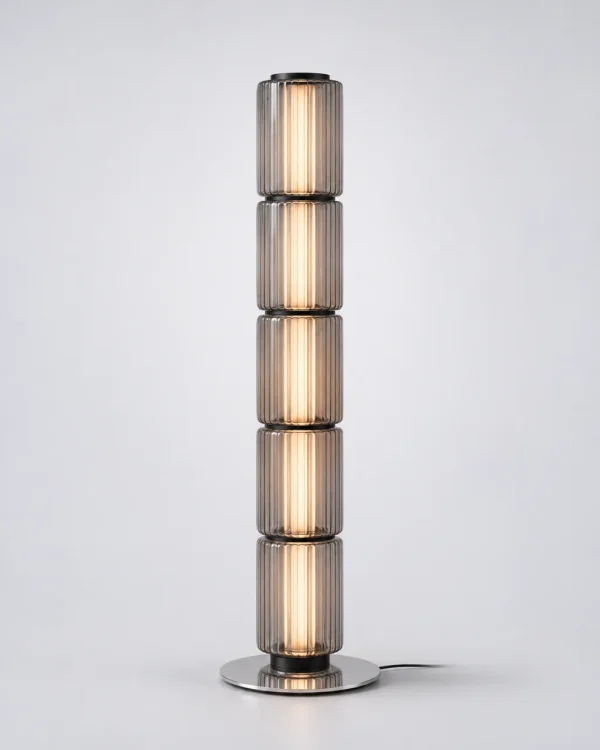
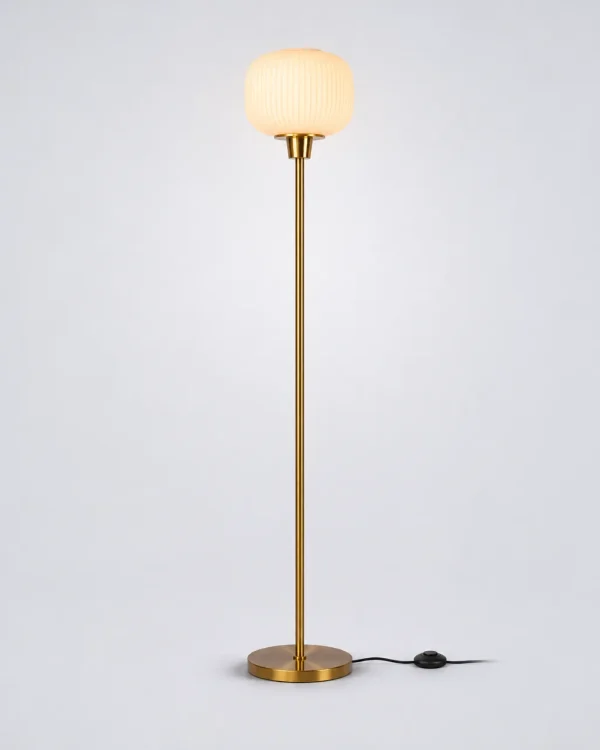
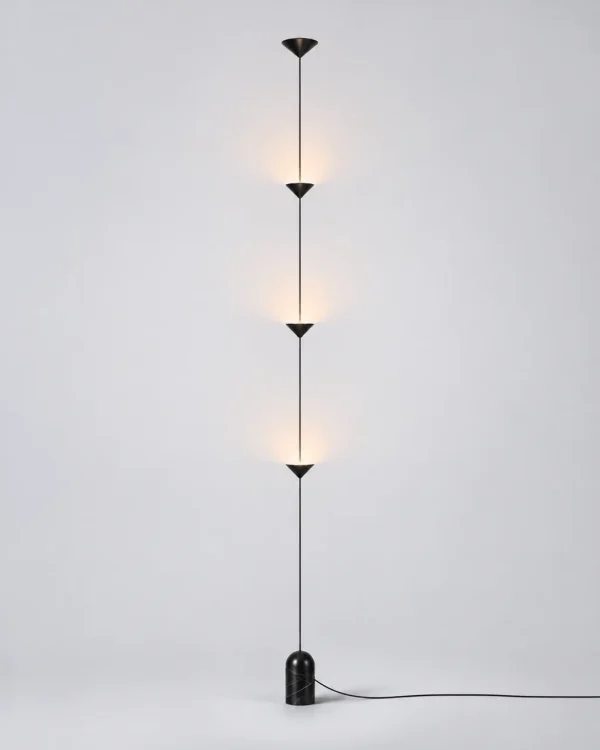
For a dark corner of the room, a floor lamp works better than a ceiling light. KAJA is a column of ribbed glass, 125 or 155 cm (49 or 61 in) tall, with a built-in 3000 K LED. TEVA has a ribbed opal glass head on a gold-colored stem, 164 cm (65 in) tall, with a foot switch. RENA is tensioned between floor and ceiling and directs its LED light from small cups up onto the wall; according to the product page, it also works next to a sideboard in the dining area.
Open-plan living and dining: how do you zone with light?
In an open space, light does the job of a wall. Each zone gets its own light, centered over its furniture: the pendant over the dining table, the island lights over the island, the floor lamp or pendant by the sofa. Don’t line the lights up with each other; line each one up with its furniture.
- Same family of materials, different shapes: for example travertine over the table and a travertine table lamp by the sofa, but not the same light three times.
- Same color temperature: all the lights in an open space should be no more than 300 K apart.
- Separate circuits: when you move to the sofa after dinner, you switch off the table light and switch on the living room light.
How to plan the kitchen is covered in our guide Kitchen Light Fixtures and Island Lighting, and the pendant for the sofa area in our guide Pendant Lights in the Living Room.
 Collection · 162 designsDining Room LightingView all 162 designs
Which color temperature and dimmer suit the dining room?
Warm white at 2700 K makes wood, food and skin look their best. 3000 K feels a little crisper and works if the dining room is also used during the day. Neutral white from 4000 K belongs in a working kitchen, not at the dining table. Also look for a color rendering index (CRI) of at least 90 if the bulb lists one: then tomatoes look red and lettuce green instead of gray.
Whether a light is dimmable depends on the model and is stated on the product page. For lights with an E26 socket, you usually need a dimmable bulb and a compatible wall dimmer. With integrated LED, dimming is either built in or not available. You’ll find a selection under dimmable pendant lights and dimmable wall sconces.
What are the most common dining room lighting mistakes?
- Only one light in the room. The table is bright, the walls are dark, the eyes get tired. Plan at least a second light source.
- A centered ceiling light and a dining table light at the same time. Two main lights make the light flat. Replace the ceiling light with wall sconces.
- Everything on one switch. Then it’s only bright or dark. Separate circuits are the cheapest way to improve the mood.
- Cool white light. From 4000 K, dinner feels like a cafeteria.
- Wall sconces at the head height of seated guests. Mounted lower than 150 cm (59 in), they get in the way behind the chairs.
- Unintended clashes of style. A brass table lamp, chrome wall sconces and a rattan pendant look random together. Choose one family of materials and vary the shapes.
Frequently asked questions
Which light fixtures suit a dining room?
A dining room needs first of all a pendant over the dining table, complemented by wall sconces or a floor lamp for ambient light. A table lamp on the sideboard adds an extra accent. All the lights should be warm white and on separate switches.
How many lumens does a dining room need?
Plan on about 100 to 150 lumens per square meter (9 to 14 lumens per square foot) for all the lights together. A 15 m² (160 sq ft) dining room therefore needs around 1,500 to 2,250 lumens. About half of that should come from the light over the table.
How high should you hang a wall sconce in the dining room?
The center of the wall sconce ideally sits 160 to 170 cm (63 to 67 in) above the floor. That way it doesn’t glare whether you stand or sit. Above a sideboard it can sit a little lower, as long as the lower edge is at least 40 cm (16 in) above the top.
Do I need both a ceiling light and a pendant in the dining room?
Usually not. The pendant over the table is the main light; a second light in the middle of the ceiling makes the light flat. Wall sconces, a floor lamp or a table lamp work better as ambient light.
What color temperature is best for a dining room?
Warm white at 2700 to 3000 K. It makes food, wood and faces look natural. Cool white light from 4000 K suits work surfaces, but not the dining table.
How do I light a dining room without a ceiling box over the table?
An electrician can move the box, or you can swag the pendant’s cord over a ceiling hook to the right spot. Without drilling or new wiring, an arc floor lamp whose shade reaches over the table helps. Check the reach and cord length on the product page.
Do all the lights in the dining room have to match?
They don’t have to be identical, but they should belong to the same family of materials. An alabaster pendant goes with alabaster wall sconces and a travertine table lamp. The same color temperature matters more than the same shape.