Kitchen Light Fixtures: How to Plan Island, Ceiling and Task Lighting
How high should pendants hang over the island, how many do you need and how bright should the ceiling light be? Every measurement at a glance.
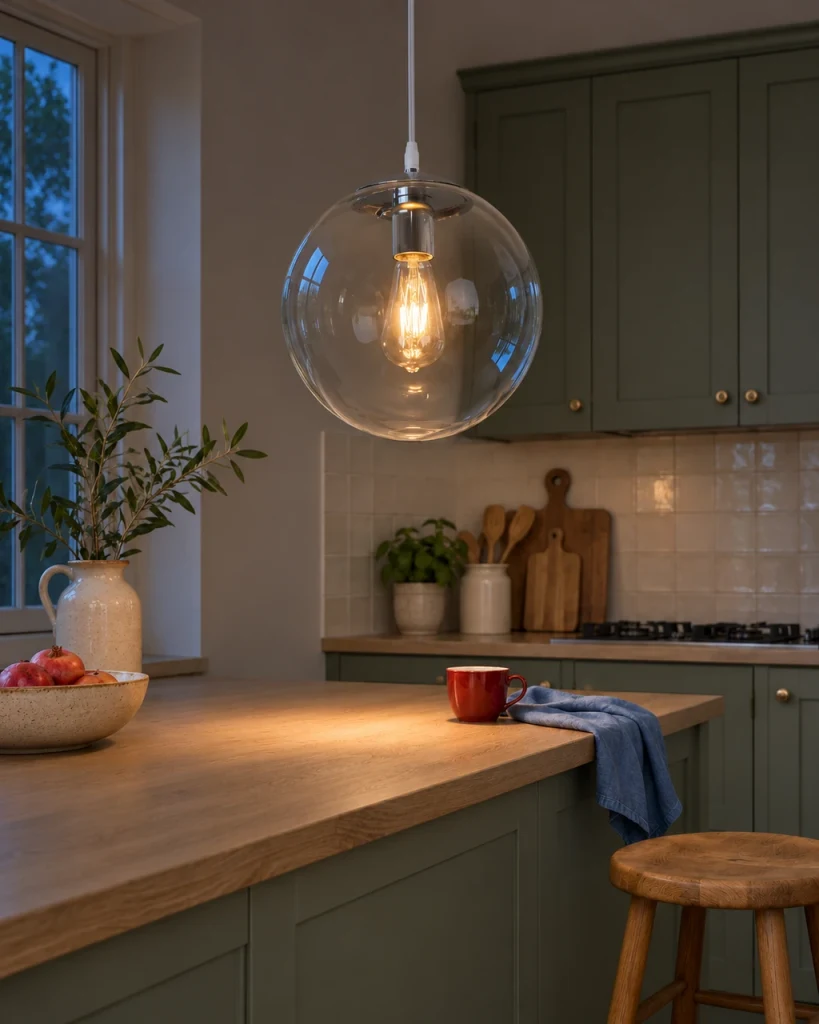
Good kitchen light fixtures are rarely a single light: they work as three layers, with a ceiling light for general lighting, focused task lighting over the counters and pendant lights over the island, breakfast bar or eating area. Pendants over a kitchen island hang with their lower edge 65 to 80 cm (26 to 31 in) above the countertop, which on a 90 cm (35 in) high island means about 155 to 170 cm (61 to 67 in) above the floor. For an island 180 to 240 cm (71 to 94 in) long, three pendants 20 to 30 cm (8 to 12 in) in diameter, spaced 60 to 80 cm (24 to 31 in) center to center, usually work best.
In this guide you’ll find the measurements for height, spacing and number, the right brightness for the kitchen ceiling light and the typical mistakes that cast shadows on the cutting board. Every light mentioned here was chosen from our collection with its real dimensions.
Which kitchen light fixtures do you need? The three layers of light
The kitchen is the room where light has to work hardest: you chop, read recipes, cook through steam and may still be sitting at the island with guests late in the evening. A single light in the middle of the room can’t do all that, because when you work you almost always stand with your back to it and cast your own shadow on the counter.
- General lighting: one flush ceiling light or several ceiling lights that brighten the whole room evenly.
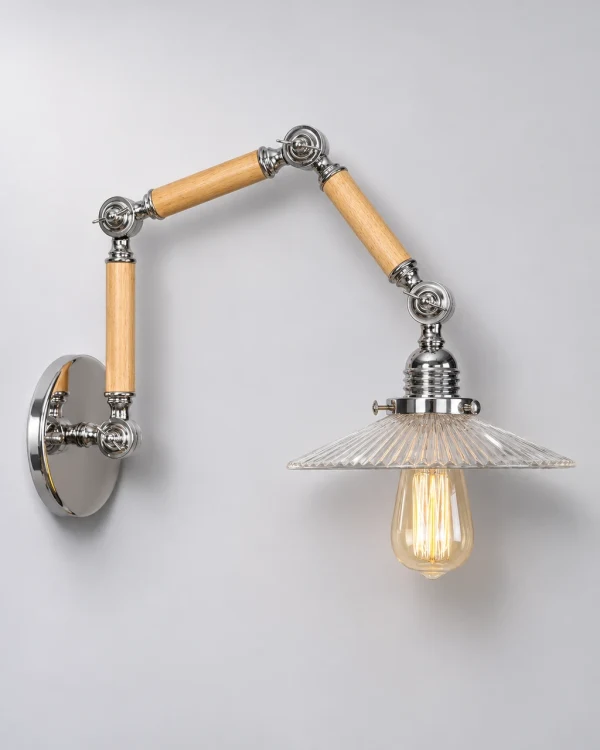
- Task lighting: light that falls from the front or from above straight onto the counter, sink and stove, for example adjustable spotlights or a wall sconce.
- Accent and mood lighting: pendant lights over the kitchen island, breakfast bar or dining table. They provide task light when they hang low enough and make the kitchen feel cozy in the evening.
Put each layer on its own switch. That way you cook with full light and leave only the pendants over the island on in the evening.
How high should a pendant light hang over a kitchen island?
The lower edge of a pendant light over a kitchen island ideally sits 65 to 80 cm (26 to 31 in) above the countertop. That’s a little higher than over a dining table, because at the island you mostly stand and don’t want to bump your head on the light. Someone standing at the island should be able to look under the shades at the person opposite without staring into the lamp.
What matters is the reference point: you measure from the countertop, not from the floor. Counter height in modern kitchens is usually between 85 and 95 cm (33 and 37 in). Ceiling height and counter height together tell you how long the cord needs to be.
| Ceiling height | Island counter height | Pendant lower edge above floor | Ceiling to lower edge |
|---|---|---|---|
| 2.40 m (7 ft 10 in) | 90 cm (35 in) | 155–165 cm (61–65 in) | 75–85 cm (30–33 in) |
| 2.50 m (8 ft 2 in) | 90 cm (35 in) | 155–170 cm (61–67 in) | 80–95 cm (31–37 in) |
| 2.70 m (8 ft 10 in) | 90 cm (35 in) | 160–170 cm (63–67 in) | 100–110 cm (39–43 in) |
| 3.00 m (9 ft 10 in, older home) | 90 cm (35 in) | 160–170 cm (63–67 in) | 130–140 cm (51–55 in) |
| 3.30 m (10 ft 10 in, older home) | 95 cm (37 in) | 165–175 cm (65–69 in) | 155–165 cm (61–65 in) |
With the high ceilings of older homes, check the cord length: many pendants come with a 150 cm (59 in) cord, which works up to a ceiling height of about 3.10 m (10 ft 2 in). Above that, you need a light with a 200 cm (79 in) cord. For a detailed look at planning the height over a dining table, read our guide Pendant Lights Over the Dining Table: Height and Size.
How many kitchen island pendant lights, and how far apart?
For kitchen island pendant lights there’s a simple rule: leave about 30 to 40 cm (12 to 16 in) free at each end and spread the pendants evenly along the remaining length. Keep at least 20 cm (8 in) of space between two shades, otherwise they read as one single, busy light. The diameters added together can be roughly half the length of the island.
| Island length | Number of pendants | Diameter per shade | Center to center |
|---|---|---|---|
| up to 120 cm (47 in) | 1–2 | 20–30 cm (8–12 in) | 55–60 cm (22–24 in) |
| 120–180 cm (47–71 in) | 2 | 25–35 cm (10–14 in) | 60–90 cm (24–35 in) |
| 180–240 cm (71–94 in) | 3 | 20–30 cm (8–12 in) | 60–80 cm (24–31 in) |
| 240–300 cm (94–118 in) | 3–4 or a linear light | 20–30 cm (8–12 in) | 60–75 cm (24–30 in) |
| over 300 cm (118 in) | 4–5 or two linear lights | 15–25 cm (6–10 in) | 60–70 cm (24–28 in) |
A worked example: your island is 210 cm (83 in) long. You leave 35 cm (14 in) free at both ends, which leaves 140 cm (55 in). Three pendants divide this into two gaps of 70 cm (28 in) each, center to center. With 25 cm (10 in) shades, there are 45 cm (18 in) between the glass shades: it looks calm and lights the whole surface.
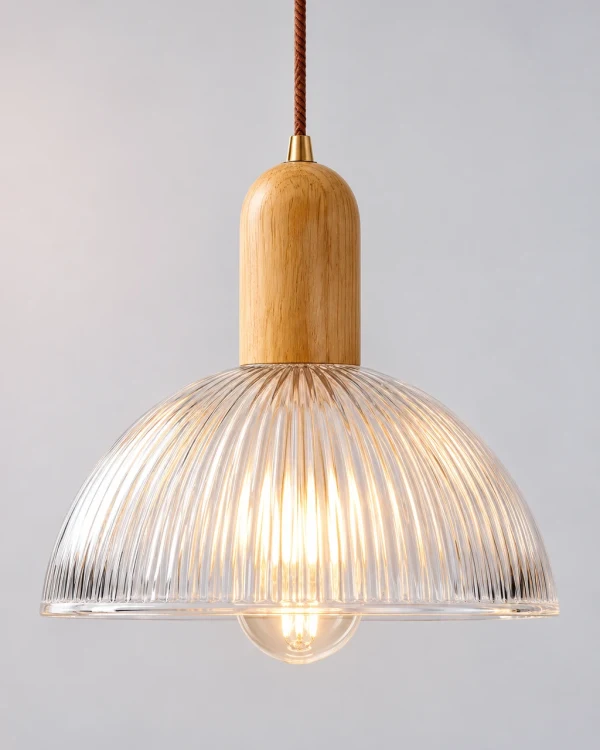
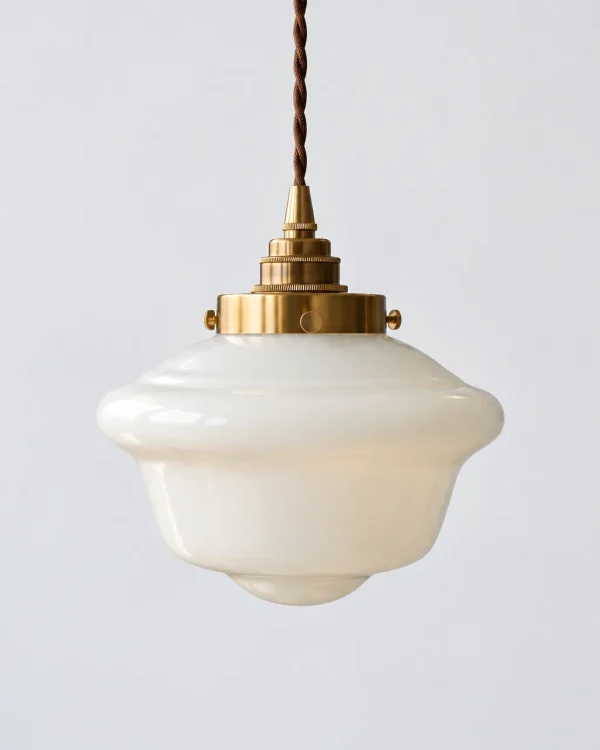
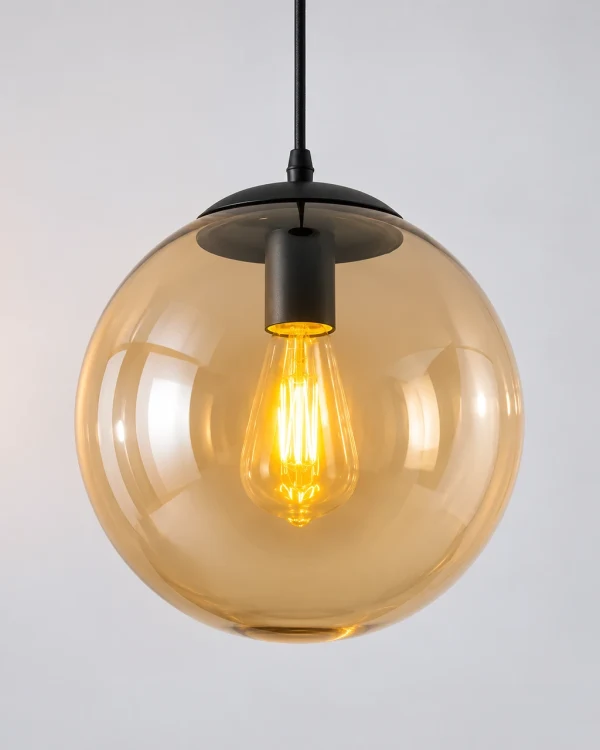
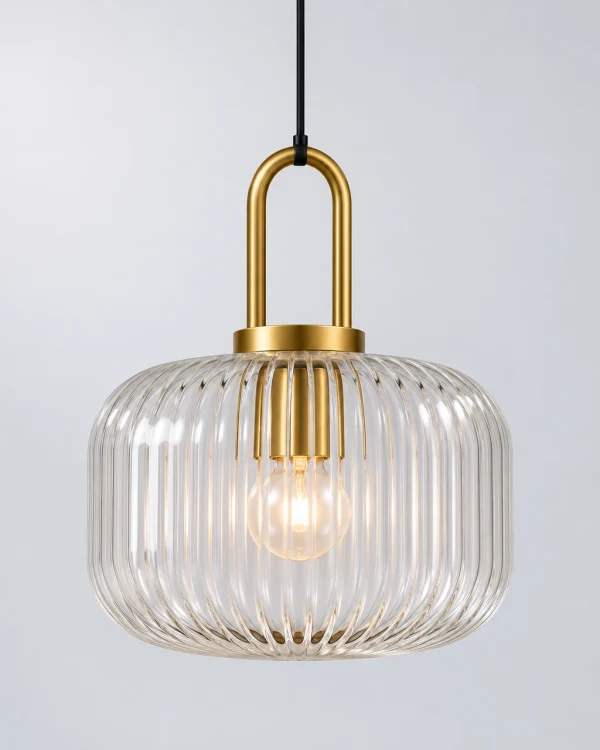
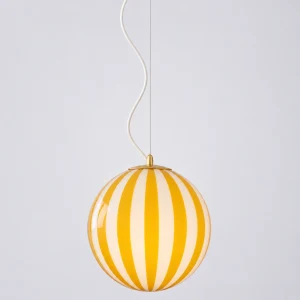
Compact glass pendants are good candidates for a row. KIIA combines ribbed clear glass with a wooden cap; the dome comes in 21.5, 25 or 30 cm (8.5, 10 or 12 in) diameters, and the cord adjusts up to 200 cm (79 in), long enough for older homes with high ceilings. XELIO is a schoolhouse pendant in opal glass, 20 or 30 cm (8 or 12 in) in diameter, with soft, low-glare light. The ARNI glass globe comes in 15, 20, 25 and 30 cm (6, 8, 10 and 12 in), clear or amber. OLAVI comes as a set of two, ideal for a shorter island or breakfast bar.
If the ceiling junction box isn’t centered over the island, you don’t need to rewire: lights on a ceiling rail or a canopy with several cords spread the light along the whole length. You’ll find more models for islands and breakfast bars in our collection.
 Collection · 128 designsKitchen Island Pendant LightsView all 128 designs
Linear light or several pendants: what works over a long kitchen island?
From an island length of about 240 cm (94 in), a row of single pendants starts to look busy, and you often need several junction boxes. A linear light solves both: one junction box, one calm line and even light along the whole length. As a rule of thumb, the linear light should measure about two-thirds to three-quarters of the island length and stop short of the countertop at both ends.
ANOD is a solid wood bar with a built-in 3000 K LED module, available in 80, 100, 120 and 150 cm (31, 39, 47 and 59 in); its light falls straight down. BALVO is a tube of real alabaster, 100 to 160 cm (39 to 63 in) long, whose light glows softly through the stone. CADA pairs an 80 cm (31 in) travertine bar with three walnut shades that focus the light downward. YORI comes with two or three lights on a 60 or 80 cm (24 or 31 in) canopy: three travertine cones on a single ceiling connection.
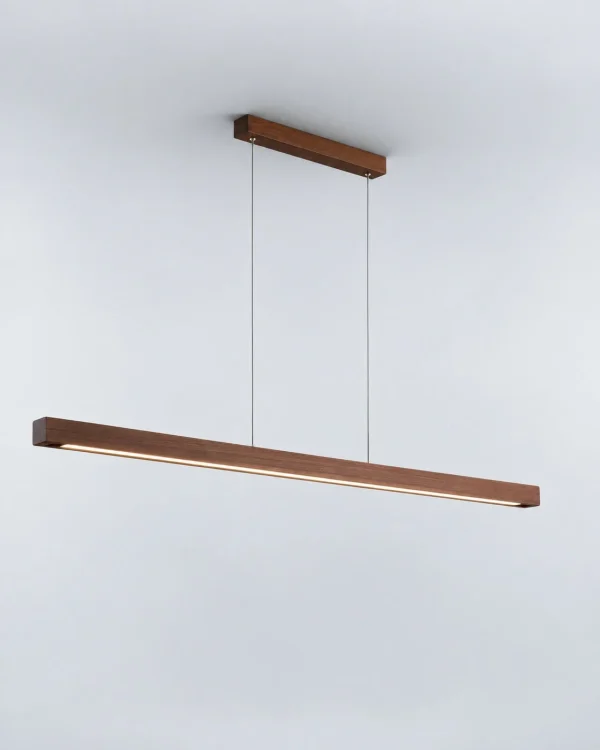
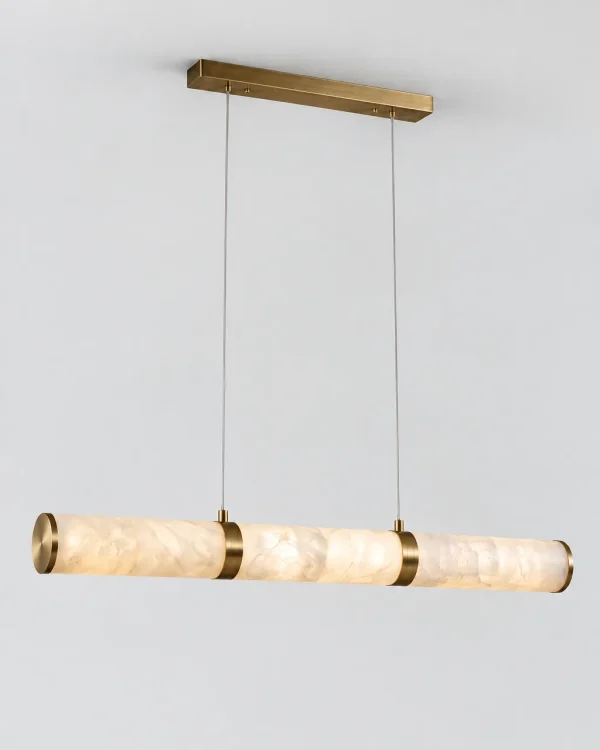
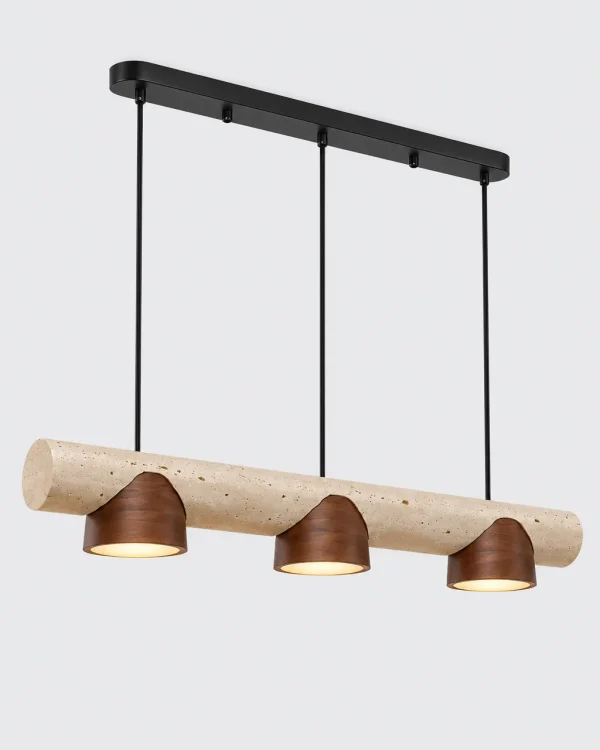
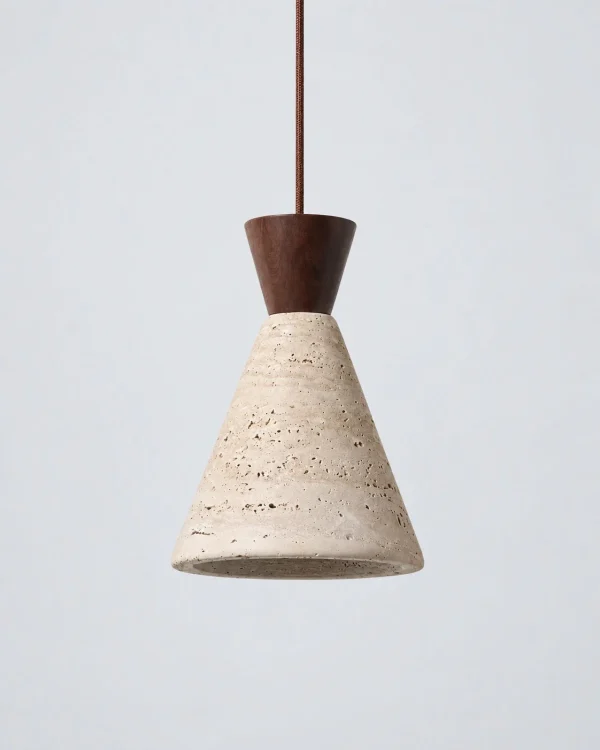
For a 240 cm (94 in) island, that means in practice: a linear light of 150 to 160 cm (59 to 63 in), or a three-light pendant on an 80 cm (31 in) rail with its cords angled slightly outward. Another wooden linear light, 80 to 120 cm (31 to 47 in) long, is GRETA.
Kitchen ceiling light: how bright and how big?
The kitchen ceiling light provides the general lighting. As a guideline, plan on 150 to 200 lumens per square meter (about 14 to 19 lumens per square foot) from the ceiling alone, plus task lighting on top. A 10 m² (108 sq ft) kitchen therefore needs 1,500 to 2,000 lumens from the ceiling; an open-plan kitchen and living area of 20 m² (215 sq ft) needs correspondingly more, or two lights. With LEDs, watts tell you little about brightness, so look for the lumen rating.
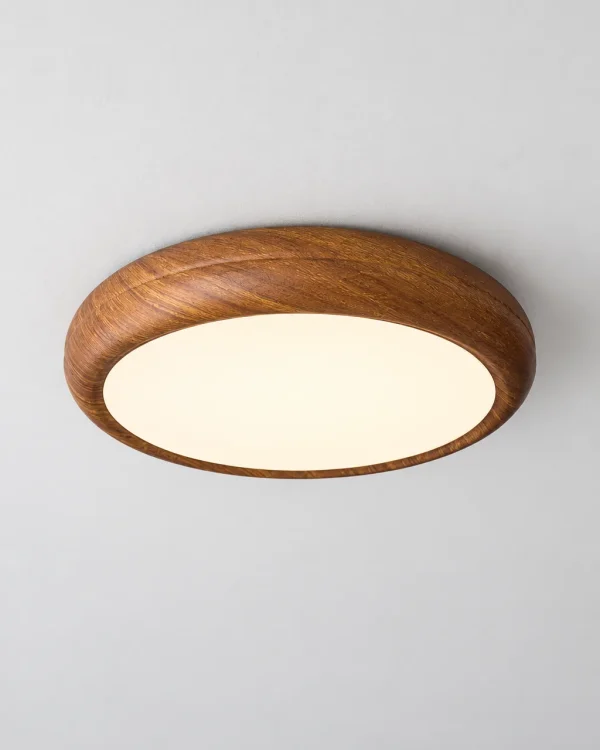
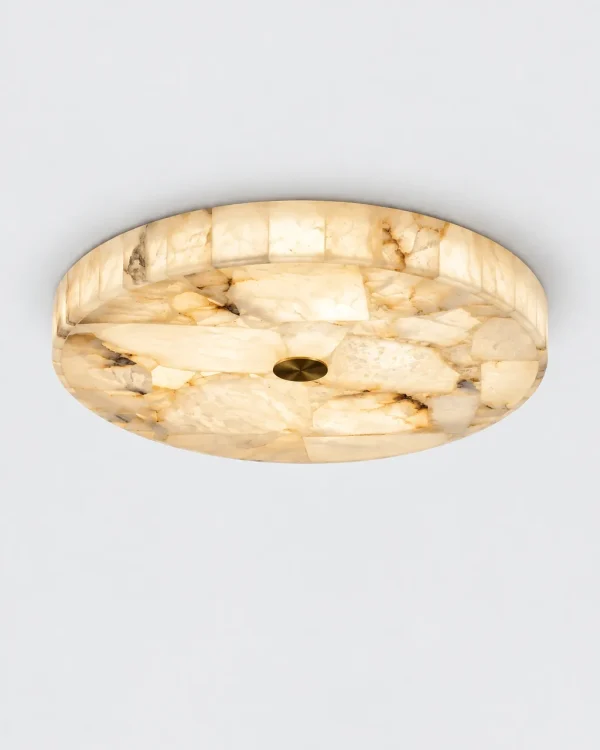
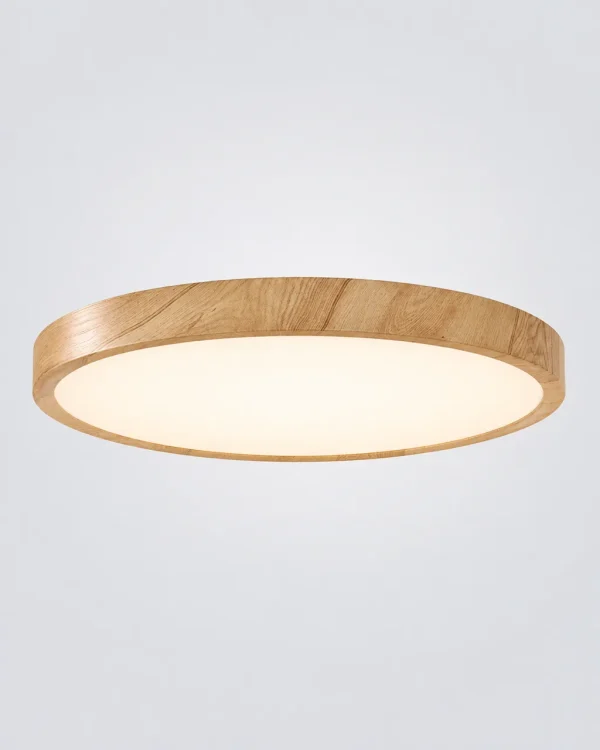
Because kitchens often have low ceilings and wall cabinets, flush lights have the edge. JILO has a wood-look frame and delivers 1,800 to 3,600 lumens in warm white at 3000 K, depending on diameter. BATRAZ is a disc of alabaster mosaic only 5 cm (2 in) deep, 40, 50 or 60 cm (16, 20 or 24 in) in diameter. HILDE is just 2.4 cm (1 in) deep, and its color temperature can be switched at the wall switch between 2800, 4000 and 5000 K. MAIJA, at 45 cm (18 in) across and 10 cm (4 in) deep, brings a retro accent in beige or olive green.
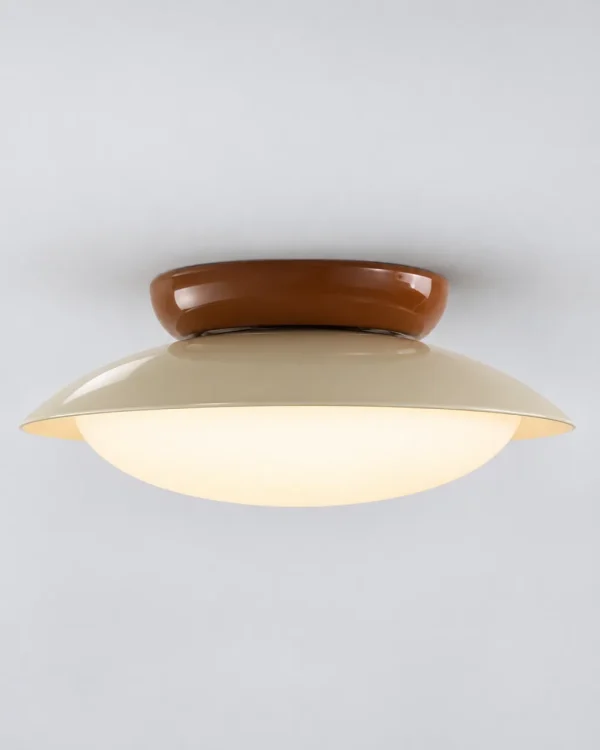
For size, the rule from our guide to the living room ceiling light helps: room length plus room width in meters, times 8, gives the diameter in centimeters for a voluminous light (in feet: length plus width, and the result is the diameter in inches). For flush lights, about two-thirds of that is enough. A kitchen of 3 × 3.5 m (10 × 11.5 ft) therefore calls for a flush ceiling light of 35 to 40 cm (14 to 16 in). Whether integrated LED or a socket with a bulb suits you better is explained in our guide Dimmable LED Ceiling Lights.
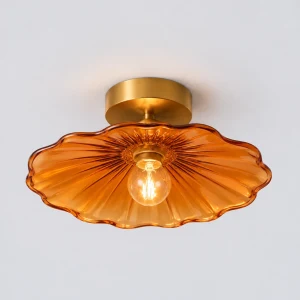 Collection · 25 designsKitchen Ceiling LightsView all 25 designs
How do you avoid shadows on the countertop?
The most common kitchen mistake: the only ceiling light hangs in the middle of the room, you stand at the wall counter and look at your own shadow. Task light has to fall onto the counter from the front or at an angle from above. Three solutions have proven themselves:
- Adjustable ceiling spotlights, mounted about 50 to 70 cm (20 to 28 in) out from the wall so that their light hits the front half of the countertop.
- A wall sconce above a clear stretch of countertop or above an open shelf.
- Low-hanging pendants over the island, if that’s where you chop and plate.
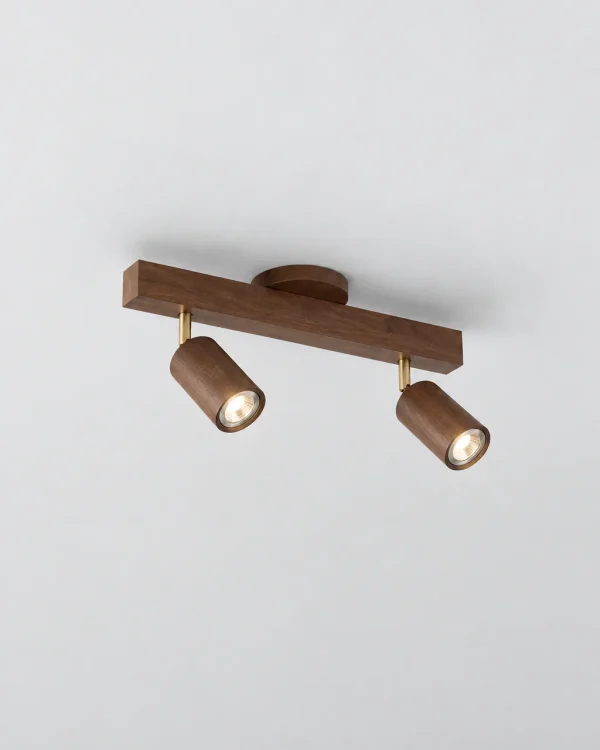
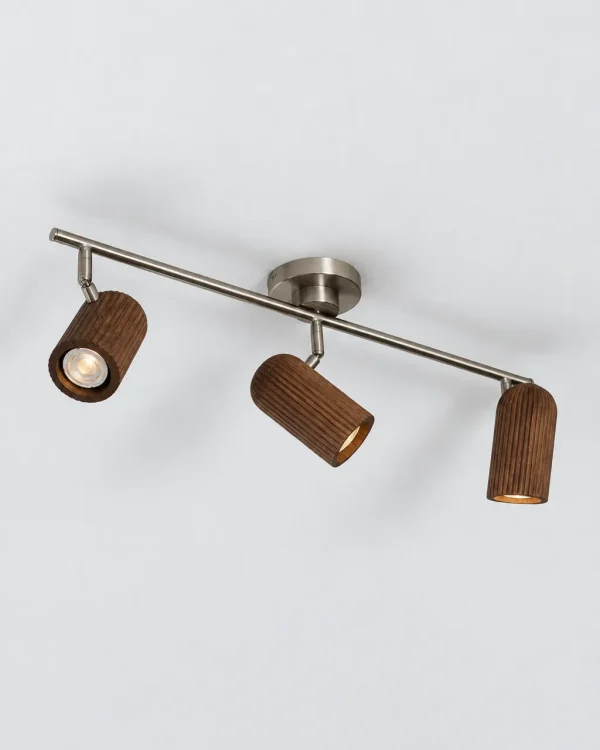
PORIA is a solid wood rail with two to five individually adjustable LED spotlights in warm white (3000 K), 42 to 120 cm (17 to 47 in) long, and it can also be mounted on the wall. NIKA carries three ribbed wooden spotlights on an 80 cm (31 in) bar, with GU10 sockets for your own bulbs. For a single work corner, SAKARI is a good fit: its wooden swing arm extends about 30 to 45 cm (12 to 18 in) and can be aimed precisely over the surface.
Which color temperature and which material suit the kitchen?
For an open kitchen, warm white at 2700 to 3000 kelvin is the best choice: it feels welcoming and blends with the light in the adjoining living and dining areas. If you prefer crisper light at the counter, you can use 3000 to 4000 K there. For bulbs, look for a color rendering index (CRI or Ra) of 90 or higher, so tomatoes, herbs and meat look the way they really are. Everything about kelvin, lumens and color rendering is explained in our guide How to Choose Color Temperature and Kelvin.
When it comes to material in the kitchen, care matters most:
- Glass cleans with water and a little dish soap and is the easiest choice over the island. Ribbed glass shows fingerprints less than smooth clear glass. More on this in our guide Glass Pendant Lights.
- Metal and ceramic wipe clean with a damp cloth, and both handle everyday kitchen life well.
- Travertine and alabaster are porous. Wipe them only with a barely damp cloth and keep them away from direct cooking steam, so not directly above the cooktop.
- Fabric, rattan and paper absorb grease and odors. They work over an eating area, but not over the stove or sink.
Common kitchen lighting mistakes
- Pendants too high: if the lower edge hangs more than 85 cm (33 in) above the counter, the lamp glares when you stand and the light gets lost.
- Shades too large: three 40 cm (16 in) shades over a 200 cm (79 in) island feel overwhelming. Stick to 20 to 30 cm (8 to 12 in).
- Pendants directly over the cooktop: steam and grease settle on them, and the light can get in the way of the range hood. Over a cooking island, keep the hood area clear.
- Only one switch: without separate circuits, the kitchen is either too bright or too dark.
- Mixed color temperatures: 2700 K over the island and 6000 K on the ceiling make the room feel disjointed.
If the kitchen opens straight onto the dining area, plan both zones together. How pendant, wall sconce and sideboard lighting work together in the dining room is shown in our guide How to Plan Dining Room Lighting. And for the path from the front door to the kitchen, see our guide to hallway light fixtures.
Frequently asked questions
How high should a kitchen light hang over the island?
The lower edge of a pendant light over a kitchen island ideally sits 65 to 80 cm (26 to 31 in) above the countertop. At a standard counter height of 90 cm (35 in), that’s about 155 to 170 cm (61 to 67 in) above the floor. You get enough light to work, and you don’t look straight into the bulb when you stand.
How many pendant lights do you need over a kitchen island?
Up to 120 cm (47 in) of island length, one or two pendants are enough; up to 180 cm (71 in), two; and from 180 to 240 cm (71 to 94 in), usually three. From about 240 cm (94 in), three to four pendants or a linear light work well. Leave 30 to 40 cm (12 to 16 in) free at both ends and space the lights evenly.
What is the right spacing between kitchen pendant lights?
The centers of two pendants are usually 60 to 80 cm (24 to 31 in) apart. Leave at least 20 cm (8 in) of space between the shades themselves. Small shades of 15 to 20 cm (6 to 8 in) can hang a little closer together than large 30 cm (12 in) ones.
How bright should a kitchen ceiling light be?
The guideline is 150 to 200 lumens per square meter (about 14 to 19 lumens per square foot) for general lighting from the ceiling. A 10 m² (108 sq ft) kitchen therefore needs about 1,500 to 2,000 lumens. For the countertop, add directed light from spotlights, wall sconces or pendants.
What color temperature is best for the kitchen?
Warm white at 2700 to 3000 kelvin suits most open kitchens and blends with the dining area. At the counter, 4000 K is also an option if you like crisper light. What matters is a color rendering index of at least 90, so food looks natural.
Can you hang a pendant light over the cooktop?
We advise against it. Above the cooktop, steam and grease settle on the shade, and the light can reduce how well the range hood works. Hang the pendants over the part of the island where you chop, plate or eat.
Which material is easiest to care for in a kitchen light?
Glass, metal and glazed ceramic are the easiest to clean in the kitchen. Natural stone such as travertine and alabaster is porous and should only be wiped with a barely damp cloth. Fabric, rattan and paper are better suited to the eating area than to the zone above the stove and sink.