Dining Room Light Fixtures: Height, Size and How Many
24–30 in (60–75 cm) above the table, about two-thirds of its width across: how to size, hang and space a light fixture or pendants over any dining room table.
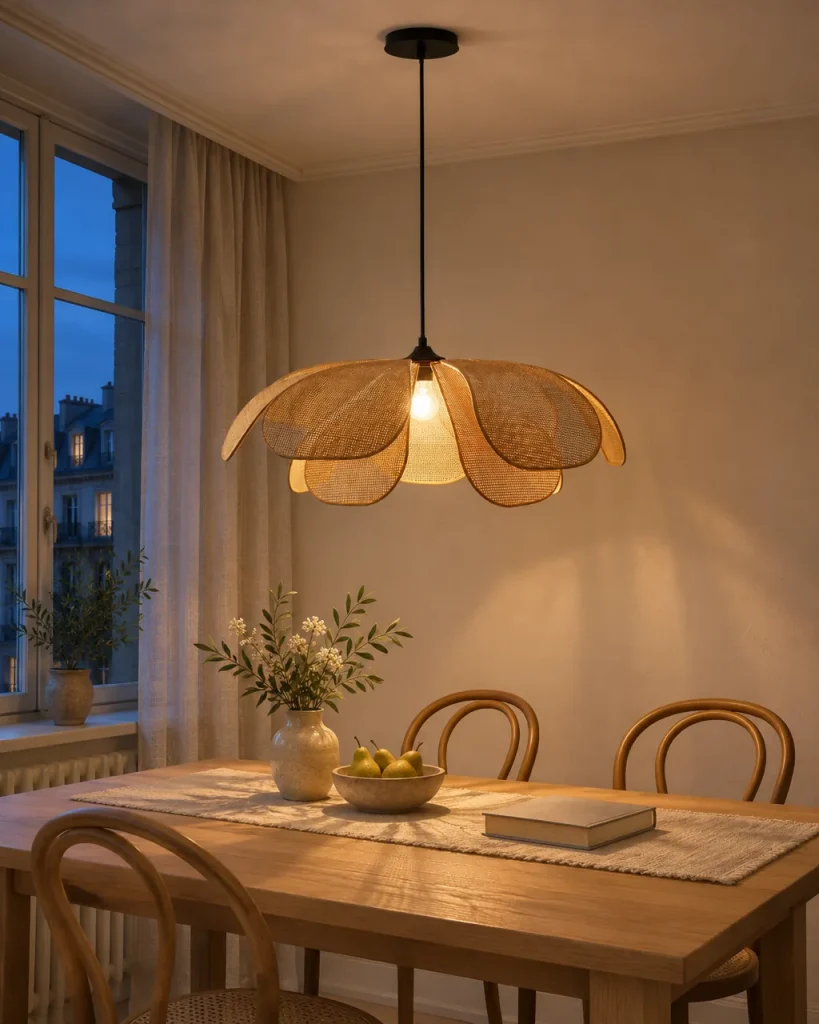
Dining room light fixtures should ideally hang so that the bottom of the shade sits 60–75 cm (24–30 in) above the tabletop. The diameter should be about half to two-thirds of the table’s width, leaving at least 30 cm (12 in) to every edge of the table. Over a 2 m (6.5 ft) dining room table, hang either two or three pendants in a row or one linear pendant 120–140 cm (47–55 in) long.
Below you will find every measurement you need to choose the right light over your dining table, with examples from a 90 cm (35 in) round table to a 2.40 m (7.9 ft) long one.
How high should a pendant light hang over a dining table?
The rule of thumb is 60–75 cm (24–30 in) between the tabletop and the bottom of the shade. Within this range, the light source sits above your eye line when you are seated, and you can still see the person across from you. The light forms a clear pool on the table instead of spilling into the room.
To work out the drop: ceiling height minus table height minus the gap you want gives the distance from the ceiling to the bottom of the fixture. With a 250 cm (8 ft 2 in) ceiling, a 75 cm (30 in) table and a 65 cm (26 in) gap, that is 110 cm (43 in). Subtract the height of the fixture itself and you have the length of the cord or suspension cable.
| Situation | Tabletop to bottom of shade | Why |
|---|---|---|
| Standard (ceiling 240–260 cm (102.4 in) / 8–8.5 ft) | 60–70 cm (24–28 in) | A pool of light on the table and a clear view across it |
| High ceiling (280 cm (110.2 in) / 9 ft 2 in or more) or older home | 65–75 cm (26–30 in) | Larger fixtures would otherwise feel heavy; the light fills the space above |
| Low ceiling (under 240 cm (94.5 in) / 8 ft) | 55–60 cm (22–24 in), flat shade | Flat shapes leave enough headroom when people stand up |
| Tall people in the household | 70–75 cm (28–30 in) | The light source stays out of view even at a higher eye level |
| Open shade with a visible bulb | closer to 60–65 cm (24–26 in) | Hang it lower so nobody looks straight into the bulb when seated |
With high ceilings, check the cord length before you order. Many pendant lights come with 120 or 150 cm (47 or 59 in) of cord. With a 300 cm (about 10 ft) ceiling and a 65 cm (26 in) gap above the table, you already need around 160 cm (63 in) to the bottom of the fixture, minus the height of the fixture itself. An adjustable cord or cable lets you fine-tune the height after installation.
What size dining room light fixture do you need?
A single pendant over a dining table should measure about half to two-thirds of the table’s width. For a round table, use the table’s diameter as your guide. As an upper limit: table width minus 30 cm (12 in), so nobody bumps their head on the shade when standing up and the shade does not visually overhang the edge of the table.
- Round table Ø 90 cm (35 in): shade Ø 45–60 cm (18–24 in)
- Round table Ø 120 cm (47 in): shade Ø 60–80 cm (24–31 in)
- Rectangular table 90 cm (35 in) wide: a single shade no larger than Ø 60 cm (24 in), or Ø 30–45 cm (12–18 in) each for several lights
Linear fixtures are measured against the table’s length: the light should cover about two-thirds of it and stop at least 30 cm (12 in) short of each end. If the fixture is as long as the table, it looks squat, and at the head of the table the light falls on the chair backs instead of the plates.
How many pendant lights over a dining room table?
The number depends on the length of the table. A round or square table needs a single, fairly large fixture. From around 160 cm (63 in) long, two lights or one linear pendant work better, and from 2.20 m (87 in), three lights. The chart below sums up the combinations that work well in practice.
| Table | Number of lights | Diameter per light | Alternative: linear fixture |
|---|---|---|---|
| Round Ø 90–100 cm (35–39 in) | 1 | Ø 45–60 cm (23.6 in) | 3-light round cluster |
| Round Ø 110–120 cm (43–47 in) | 1 | Ø 60–80 cm (31.5 in) | 3-light round cluster |
| Rectangular 140 cm (55 in) | 1–2 | 1 × Ø 50–60 cm (23.6 in) or 2 × Ø 30–40 cm (15.7 in) | 80–100 cm (39.4 in) |
| Rectangular 160 cm (63 in) | 2 | Ø 35–45 cm (17.7 in) | 100–120 cm (47.2 in) |
| Rectangular 180–200 cm (71–79 in) | 2–3 | 2 × Ø 40–50 cm (19.7 in) or 3 × Ø 25–35 cm (13.8 in) | 120–140 cm (55.1 in) |
| Rectangular 220–240 cm (87–94 in) | 3 | Ø 30–40 cm (15.7 in) | 140–160 cm (63 in) |
| 260 cm (102 in) and longer | 3–4 | Ø 30–40 cm (15.7 in) | 160 cm (63 in) or two linear fixtures |
Example: which pendant light for a 2 m (6.5 ft) dining table?
For a 200 × 90–100 cm (79 × 35–39 in) dining table seating six to eight, there are three tried-and-true solutions.
| Solution | Size | Position over the table | Effect |
|---|---|---|---|
| 2 pendant lights | Ø 40–50 cm (16–20 in) each | Centered at 50 cm (19.7 in) and 150 cm (59.1 in) from the end of the table (1/4 and 3/4 of its length), 100 cm (39 in) apart | Calm and symmetrical, good for large shades |
| 3 pendant lights | Ø 25–35 cm (10–14 in) each | Centered at 50, 100 and 150 cm (59.1 in), 50 cm (20 in) apart | Even light, a livelier rhythm |
| 1 linear fixture | 120–140 cm (47–55 in) long | Centered, 30–40 cm (12–16 in) short of each end | A clean line of light, needs only one junction box |
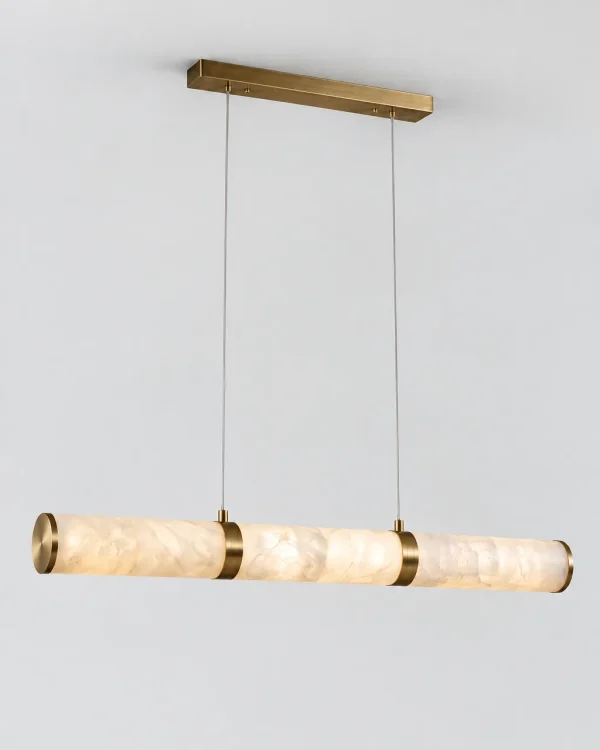
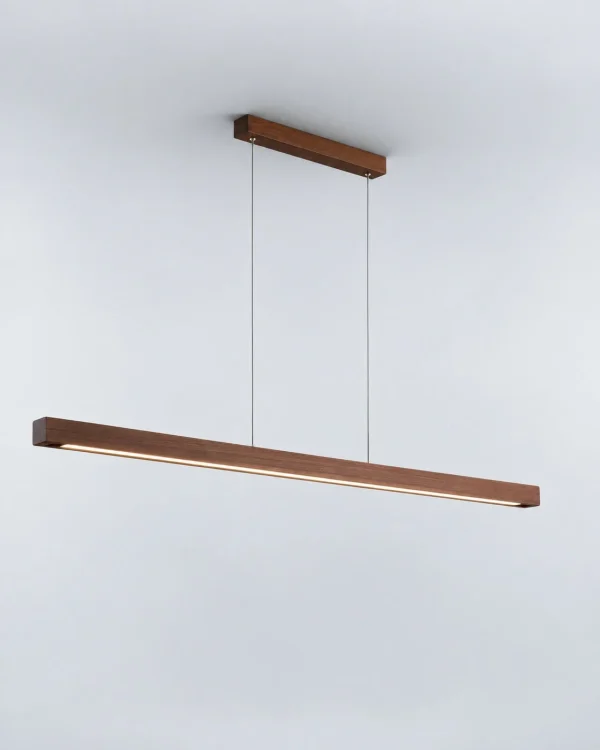
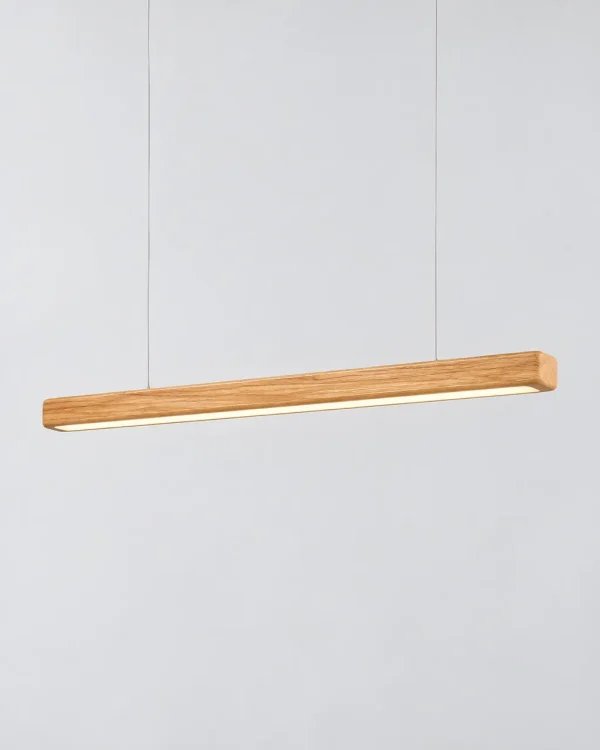
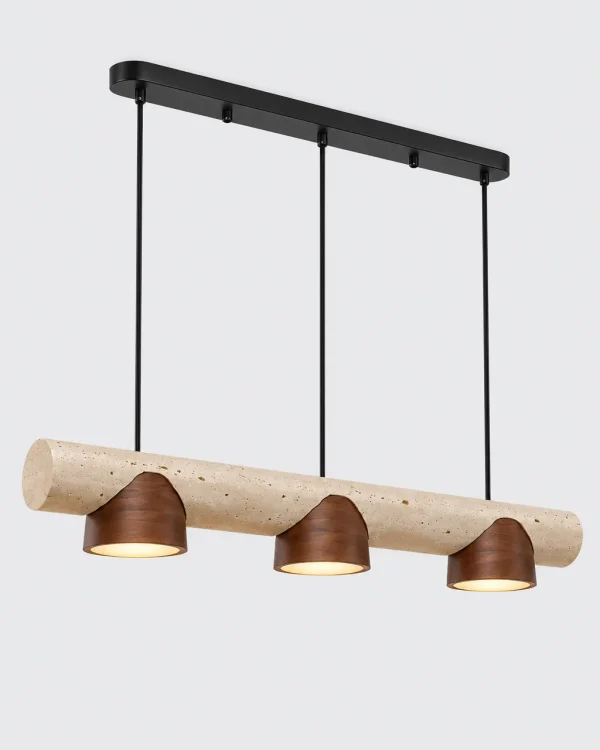
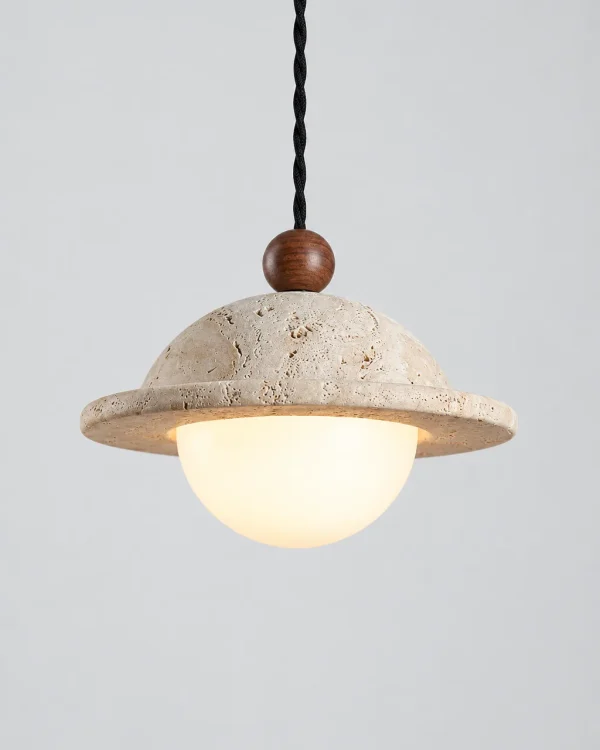
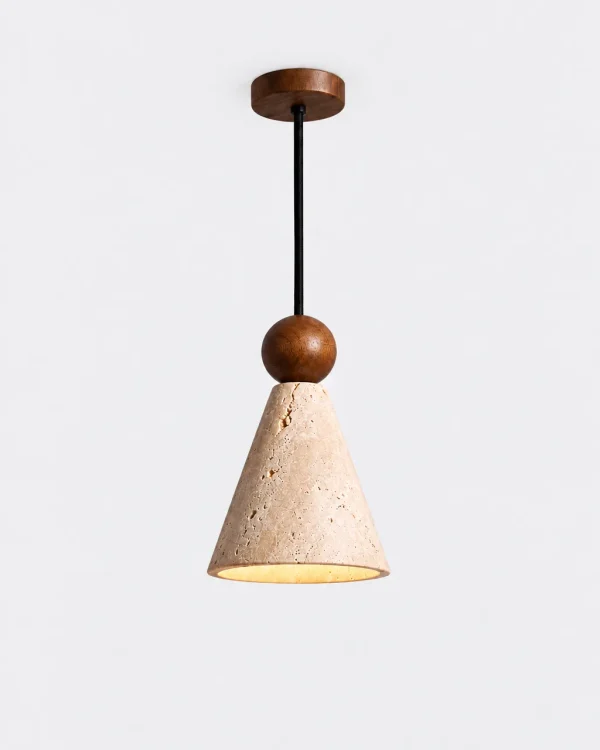
For the linear option, BALVO in genuine alabaster with brass is a natural fit: at 120 or 140 cm (47 or 55 in) long it sits perfectly over a 2 m table, and the 160 cm (63 in) version suits tables from 2.40 m. It is dimmable with a compatible dimmer and hangs from 150 cm (59 in) adjustable cables. ANOD in solid wood comes in 80, 100, 120 and 150 cm (59.1 in), in warm white at 3000 K and dimmable with a compatible wall dimmer. GRETA, an LED wood beam at 3000 K, covers tables from 160 to 200 cm (78.7 in) in its 100 or 120 cm (47.2 in) lengths. CADA combines an 80 cm (31 in) travertine bar with three walnut shades and is the right choice for tables 140 to 160 cm (63 in) long.
You will find more linear models and clusters in our range of dining room lighting.
How far apart should pendant lights be over a dining table?
When you hang several pendant lights over the dining table, divide the table’s length into equal sections and hang each light in the center of its section. With two lights, the centers sit at a quarter and three-quarters of the table’s length; with three lights, at one-sixth, halfway and five-sixths.
- Leave at least 15–20 cm (6–8 in) between two shades, otherwise they read as a single block.
- The center-to-center distance is usually between 50 and 100 cm (20 and 39 in), depending on shade size.
- The outer lights stop 30–40 cm (12–16 in) short of the table ends.
- All the lights hang at the same height; staggered heights only suit small glass pendants with a calm shape.
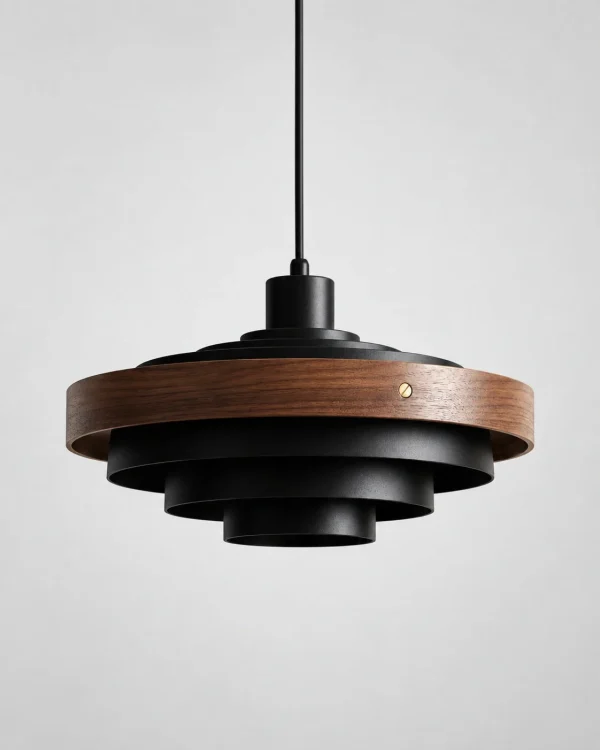
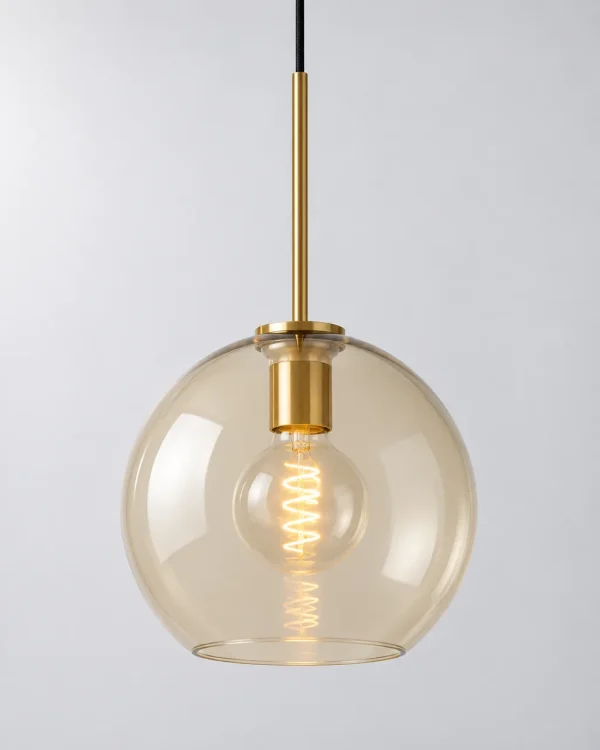
For two single pendants over a 2 m table, NOLA, with a metal shade and wood ring, Ø 40 × H 24 cm (16 × 9.5 in), works well: at 100 cm (39.4 in) between centers, there is 60 cm (24 in) of space between the shades. Three NOLA would be too tight over 2 m, because at 50 cm (19.7 in) between centers only 10 cm (4 in) would remain. Three LOTTA globes in champagne glass, Ø 20 or 25 cm (8 or 10 in), on the other hand, fit the 50 cm (19.7 in) grid exactly. The three-light version of SKADI hangs from an 80 cm (31 in) rail and needs only one junction box, ideal for tables from 140 to 180 cm (55 to 71 in).
Round table or long table: one oversized fixture or a row?
Over a round table, a single large fixture always looks most harmonious because it echoes the shape of the table. Over a long table, a single oversized light only works up to a table length of about 180 cm (71 in); beyond that the ends stay dark.
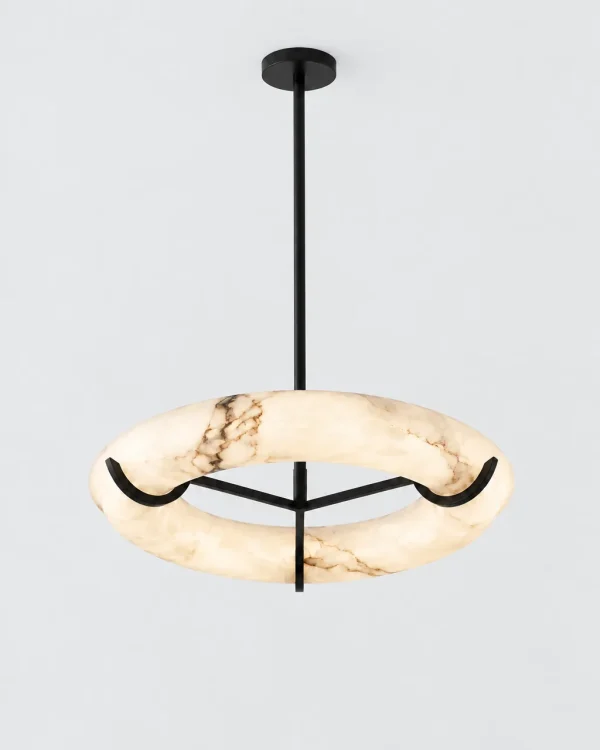
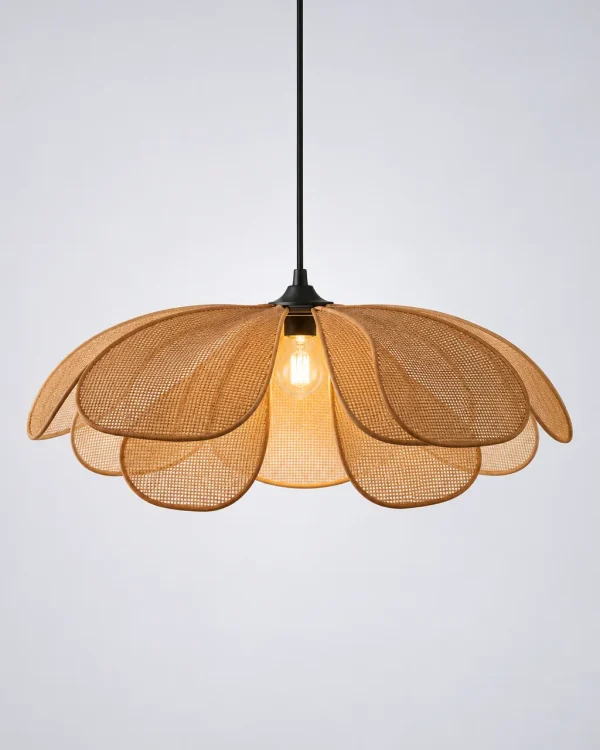
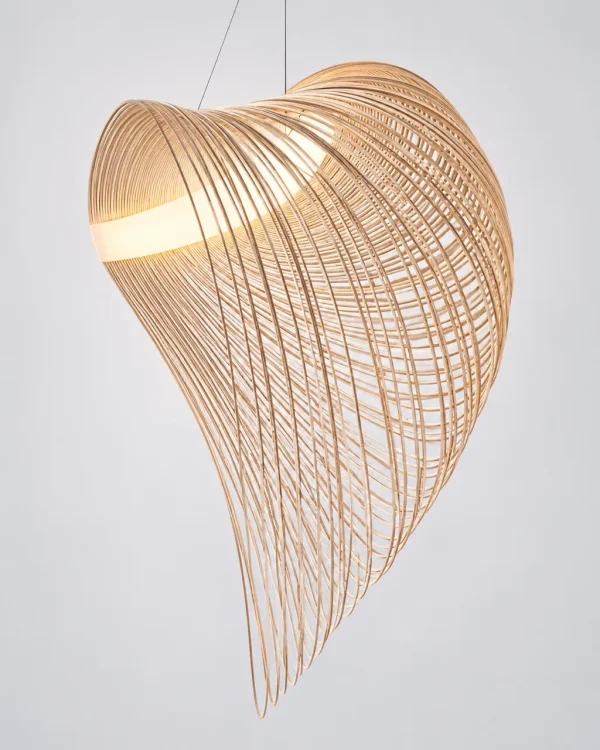
GURSI, a ring of genuine alabaster on a black frame, comes in Ø 60, 70 and 80 cm (24, 28 and 31 in): Ø 60 cm (23.6 in) suits a round table of 90–100 cm (35–39 in), Ø 80 cm (31.5 in) large round or oval tables. The ring spreads the light without glare and is dimmable with a compatible dimmer. ASTA, a rattan flower with ten petals, ranges from Ø 50 to 100 cm (20 to 39 in). BERIT, made of birch wood slats with a warm white LED, comes in Ø 40, 60 and 80 cm (31.5 in). If you prefer several points of light, choose EOS as a 3-light round cluster with a Ø 30 cm (12 in) canopy.
What light is best over a dining table?
Warm white light at 2700 to 3000 kelvin is right over the dining table. It makes food look appetizing and skin look natural. Neutral white from 4000 K feels cold in the evening, more like a kitchen or an office. With bulbs, also look for a color rendering index of CRI 90 or higher, so the colors of the food and table setting look true.
- Dimmer: The dining table is where you eat, work, play games and celebrate. A dimmer covers every situation with one fixture. For fixtures with a socket, you need dimmable bulbs and a compatible dimmer; with integrated LED, the fixture itself must be dimmable. You will find a selection under dimmable pendant lights.
- Glare: An open shade with clear glass shows the bulb. Choose a low-lumen filament or frosted bulb here, or hang the fixture a little lower.
- Open or closed shade: Closed shades in metal, wood or stone cast a clear cone of light onto the table and keep the room calm. Translucent materials such as alabaster, opal glass, fabric or rattan also send soft light into the room.
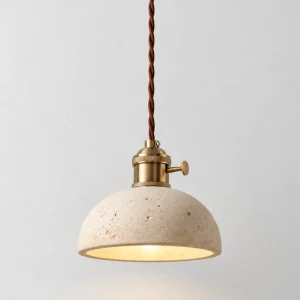 Collection · 49 designsDimmable Pendant LightsView all 49 designs
Glass, wood, travertine, metal or rattan: which material is right for you?
- Glass feels light. Clear glass shows the bulb, smoked or amber glass softens it. Ideal for rows. More in glass pendant lights.
- Wood adds warmth and suits oak, walnut and Scandinavian rooms. See wood pendant lights.
- Travertine and natural stone feel calm and refined; every piece has its own veining. See travertine and stone pendant lights.
- Metal directs the light downward and is easy to care for. See metal pendant lights.
- Rattan casts patterns on the ceiling and walls and suits Mediterranean and natural interiors.
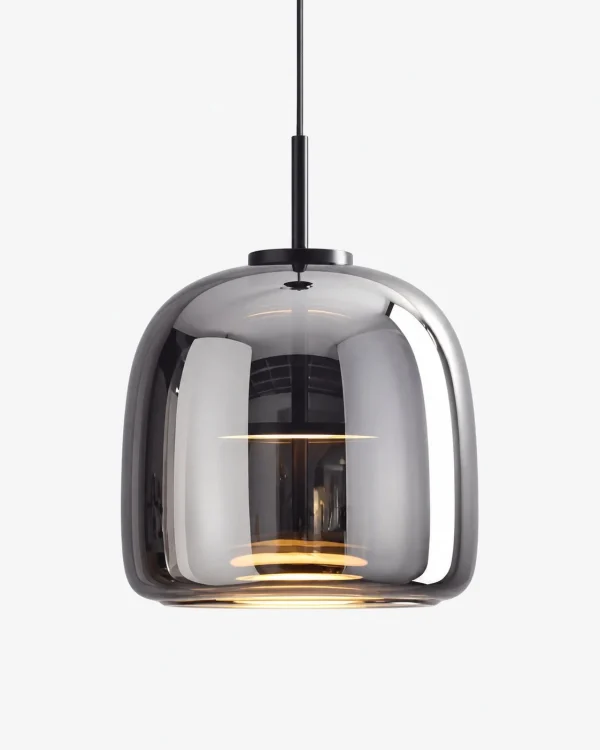
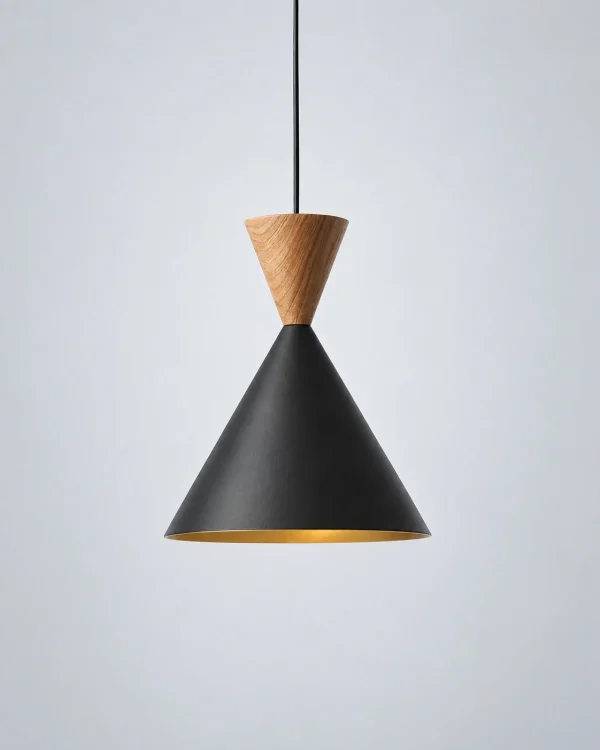
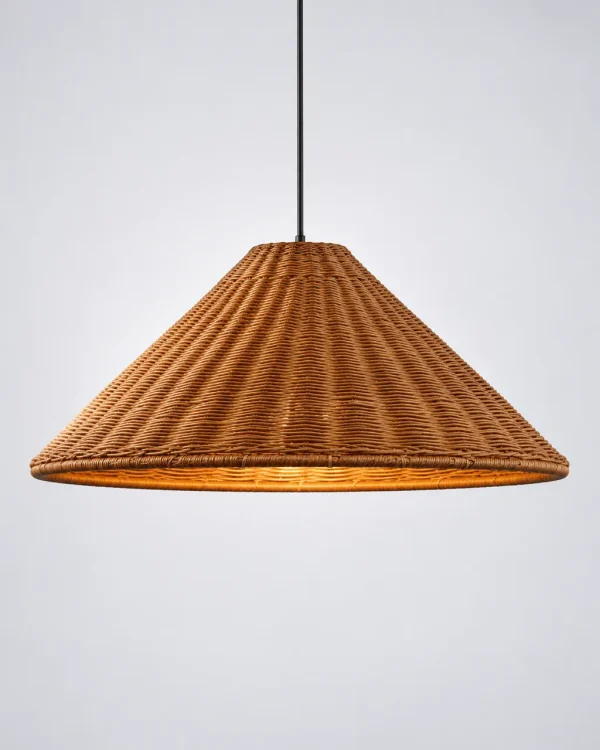
Three examples with very different effects: ZONID in mirrored glass, amber or smoke gray, Ø 16 to 38 cm (6 to 15 in), with integrated LED; it looks particularly good in clusters of different sizes, but is not dimmable. SOVA in solid brass with a wood top, Ø 20 × H 24 cm (8 × 9.5 in), focuses the light downward and works as a pair or a group of three. BINE, a flat rattan cone measuring Ø 60 × 24 cm (24 × 9.5 in), is a calm main light over the dining table.
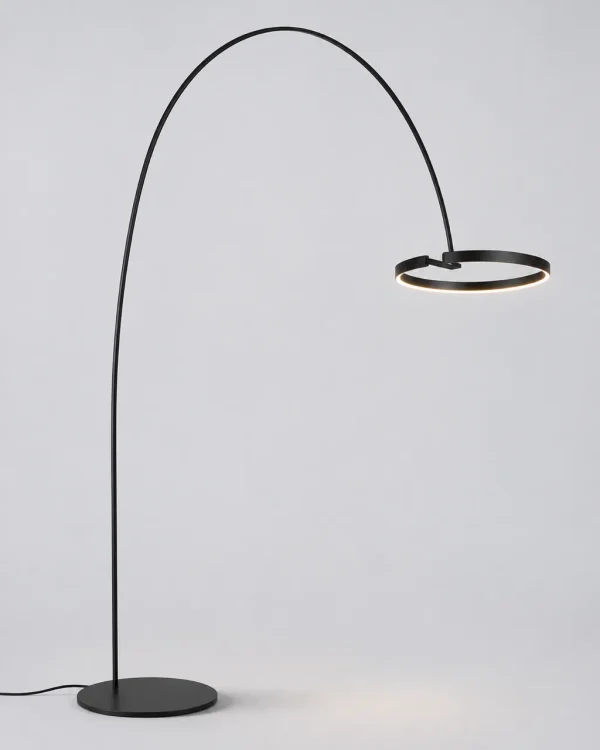
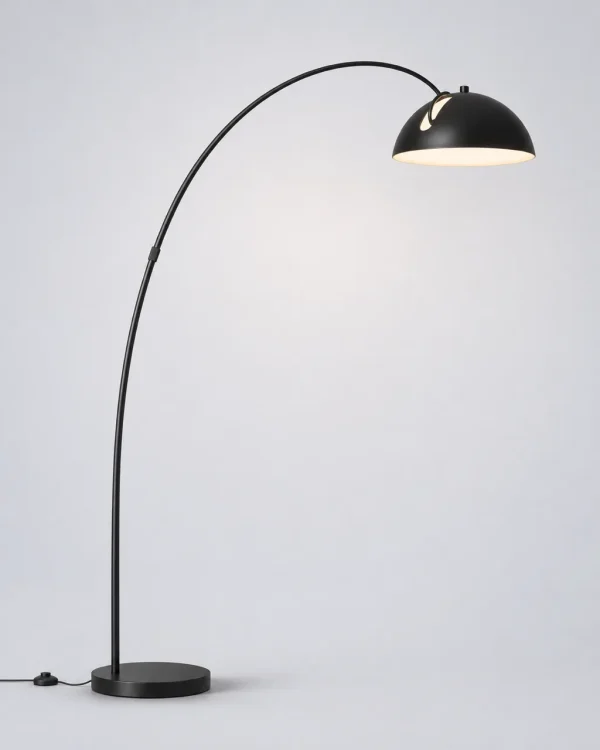
No junction box over the table? An arc floor lamp as a dining light
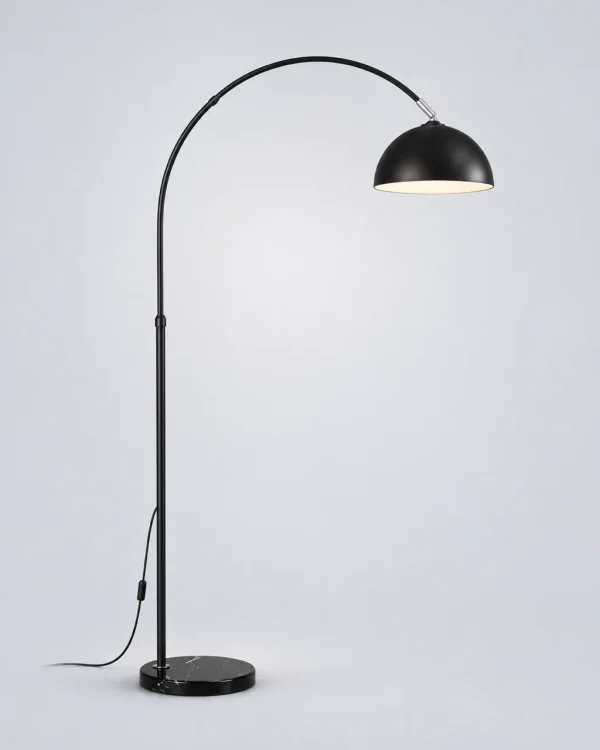
If there is no junction box above the dining table, an arc floor lamp is the simplest solution: it stands beside the table, plugs into an outlet and still brings the light from above. What matters is the reach, meaning the horizontal distance between the base and the shade. It has to be long enough for the shade to hang over the center of the table.
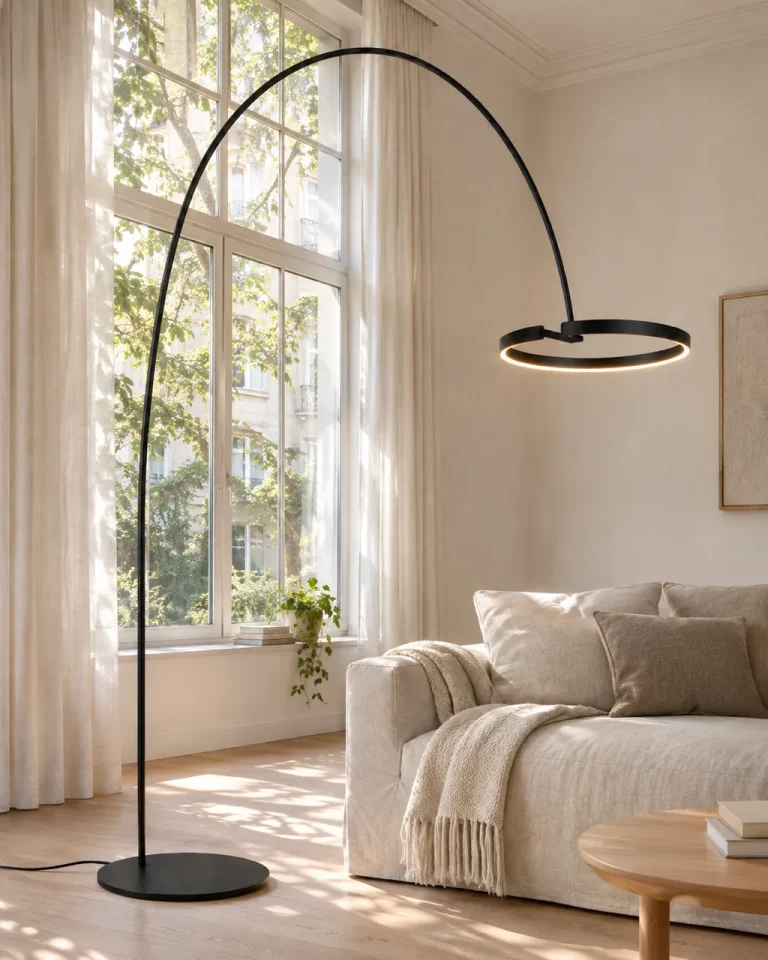
An arc lamp works best for round tables up to about 100 cm (39 in) or for the dining area of an eat-in kitchen. ALVA has a 94 cm (37 in) reach, adjusts in height between 145 and 180 cm (57 and 71 in) and carries a Ø 30 cm (12 in) dome shade on a marble base. NERA in its arc version is 220 cm (87 in) tall, 160 or 180 cm (70.9 in) wide, and suspends an LED light ring of Ø 40 or 60 cm (16 or 24 in) over the table. GILA reaches 185 cm (73 in) at the top of the arc; the arc is adjustable in length and the head tilts. You will find every model under arc floor lamps, and detailed advice on reach and stability in our arc floor lamp guide.
Common mistakes with light fixtures over the dining table
- Hung too high: Beyond 80 cm (31 in), the pool of light breaks up and the light glares from the side.
- Fixture too small: A single Ø 25 cm (10 in) shade over a 2 m table looks lost and leaves the ends dark.
- Aligned with the junction box rather than the table: The light belongs above the center of the table, not the center of the room.
- Cold light: 4000 K and above feels unwelcoming in the evening; stick to 2700–3000 K.
- No dimmer: Full brightness suits homework, not dinner.
- Forgetting the table leaves: Plan the number and length for the size the table usually is, not its extended length.
Planning the lighting for your whole living and dining area at once? Our guide to living room lamps and lighting shows how to combine a pendant light, floor lamp and wall sconces. With a second light source in the room, you can dim the dining table light way down in the evening without leaving the rest of the room in the dark.
 Collection · 112 designsDining Room LightingView all 112 designs
Frequently asked questions
How high should a light hang above a dining table?
The bottom of a light above a dining table hangs 60–75 cm (24–30 in) above the tabletop. With a 250 cm (8 ft 2 in) ceiling and a 75 cm (30 in) table, that means around 110 cm (43 in) from the ceiling to the bottom of the fixture. With high ceilings or tall people, go for 70–75 cm (28–30 in).
Which pendant light fits a 6.5 ft (2 m) dining table?
Over a 2 m (6.5 ft) dining table, choose two pendant lights of Ø 40–50 cm (16–20 in) each, three lights of Ø 25–35 cm (10–14 in) each, or one linear fixture 120–140 cm (47–55 in) long. Two lights hang at 50 and 150 cm (59.1 in) from the end of the table, three at 50, 100 and 150 cm (59.1 in).
What size should the light over a round dining table be?
The light over a round dining table should measure about half to two-thirds of the table’s diameter. A Ø 90 cm (35 in) table suits a shade of Ø 45–60 cm (18–24 in), a Ø 120 cm (47 in) table one of Ø 60–80 cm (24–31 in). Leave at least 30 cm (12 in) clear to the edge of the table.
How far apart should two pendant lights be over a dining table?
Two pendant lights hang at a quarter and three-quarters of the table’s length. Over a 160 cm (63 in) table, that is 40 and 120 cm (47.2 in) from the end of the table, so 80 cm (31 in) between centers. Leave at least 15–20 cm (6–8 in) clear between the shades.
What color temperature is best for a dining table?
Warm white at 2700 to 3000 kelvin is best for the dining table. It makes food and skin look natural. With a dimmer, one fixture covers everything from dinner to homework.
What if the junction box is not above the dining table?
Small offsets can be bridged with a long canopy or a ceiling rail, larger ones with a swag hook or by having an electrician move the box. With no junction box at all, an arc floor lamp with enough reach is the simplest solution.
Pendant or flush mount ceiling light over the dining table?
Over the dining table, a pendant light is almost always the better choice. It brings the light close to the table and creates a cozy pool of light. A flat ceiling light is better suited as general lighting for the whole room.